
Paver restoration: modern techniques
Paving stones on the site have darkened, the stones have loosened, grass has sprouted between the joints – in this case, the majority will think about replacing the pavement completely. In fact, 80% of problems are solved by restoration. Procedure of paver restoration costs 3-4 times cheaper than laying a new pavement. In the article we tell you when the pavement can be saved and what technologies professionals use for this purpose.
Paving stones on the site have darkened, the stones have loosened, grass has sprouted between the joints – in this case, the majority will think about replacing the pavement completely. In fact, 80% of problems are solved by restoration.
Procedure of paver restoration costs 3-4 times cheaper than laying a new pavement. In the article we tell you when the pavement can be saved and what technologies professionals use for this purpose.
When paving stones are still repairable
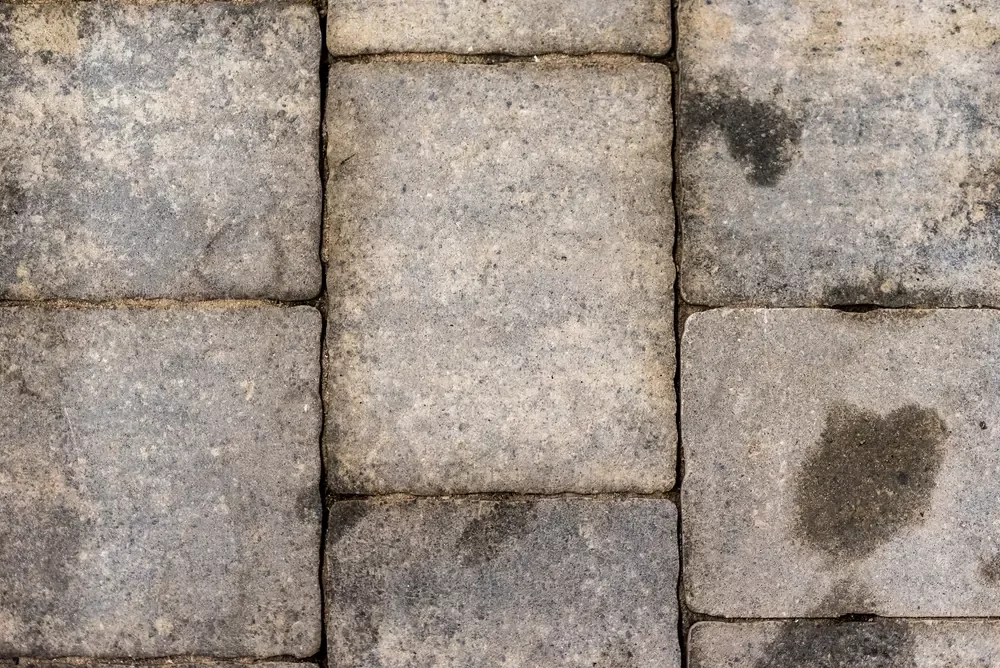
Black spots on stones appear due to microscopic algae. They feed on organic matter from fallen leaves and multiply in a moist environment — this situation is especially typical for Florida’s climate with its abundant rainfall and high humidity.
The problem seems cosmetic, but the algae produce acids that corrode the surface of the stone. After 2–3 years, the stains become so deeply embedded in the material that regular washing no longer helps.
Oil stains from cars penetrate the pores of the stone to a depth of up to 0,15 inch. Owners try to remove them with household chemicals, but only smear the contamination. Petroleum products crystallize inside the stone, causing microcracks to appear.
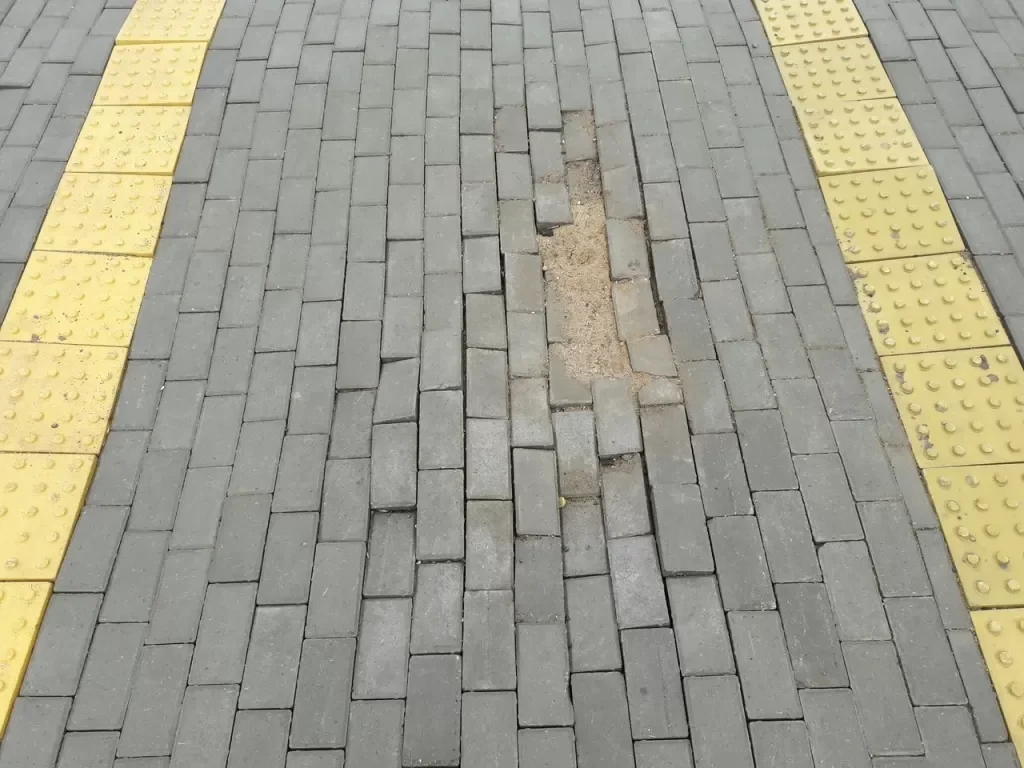
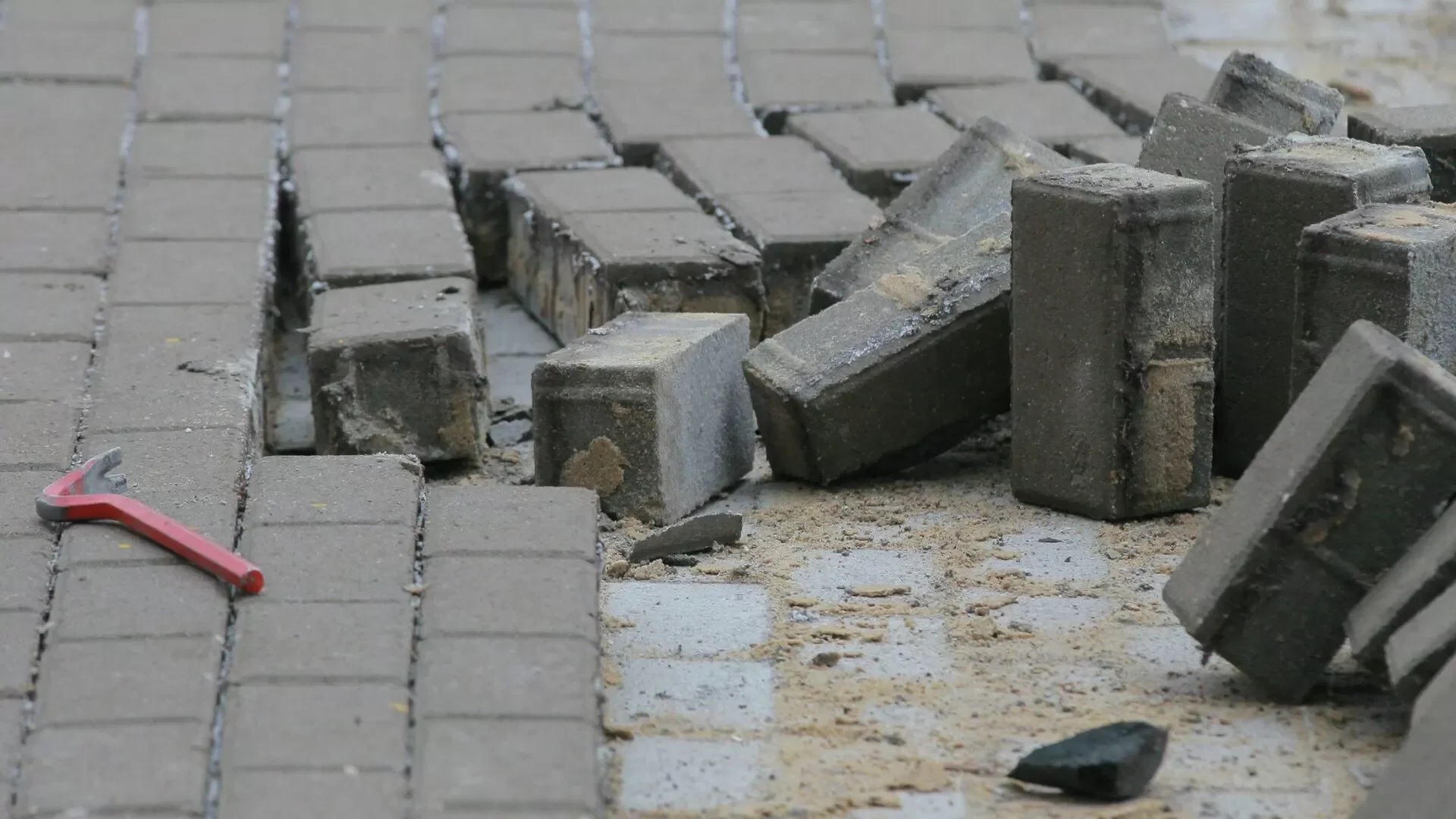
The most insidious problem is the destruction of the sand base under the stones. At first, small subsidence appears in some places. Owners do not pay attention, because it is still possible to walk.
Water gets into the base and washes out the sand. In a year or two, half of the site subsides, and the stones wobble underfoot.
Cracks are the result of pitting or overloading. If the crack is penetrating, the stone will have to be replaced. Damage up to 0,11-0,15 inch can be repaired with polymer compounds that are stronger than the stone itself.
3 proven methods for restoring natural stone paving stones
Sandblasting
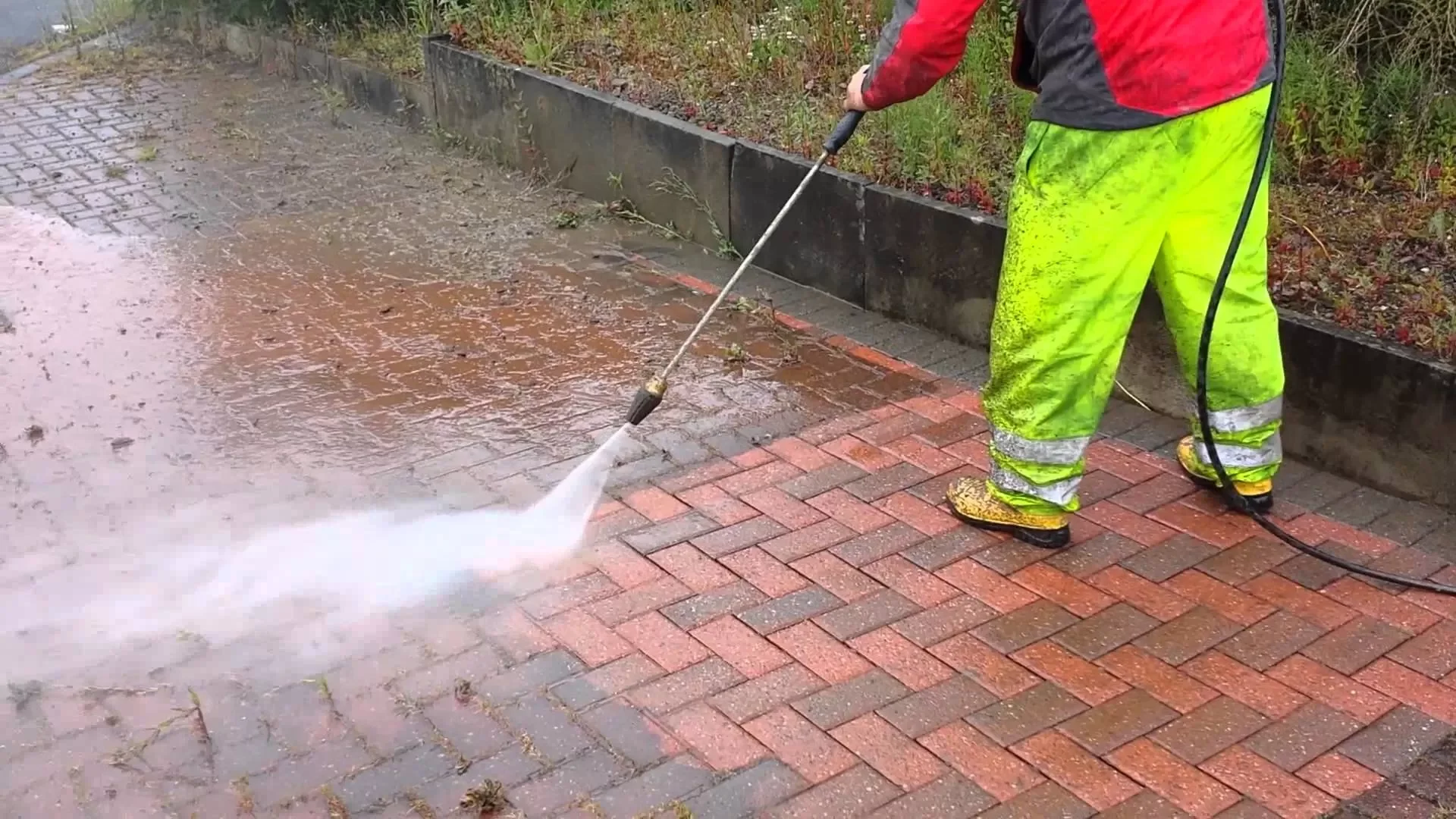
The method removes dirt that cannot be removed by high-pressure washing. Abrasive particles under the pressure of 6-8 atmospheres knock off the embedded dirt from the surface. The method is aggressive – it removes up to 0.02 inch of material, but the result is visible immediately.
The sandblasting method of paving stone cleaning is effective with the right choice of abrasive. For granite paving stone use quartz sand of 0.3-0.5 inch fraction. For soft rocks – glass microspheres.
Chemical Restoration of Paving Stones
Acidic solutions eliminate efflorescences – white streaks that protrude on the surface from ground salts. Alkaline chemistry decomposes organic pollutants at the molecular level.
The most difficult task is to remove oil stains. Ordinary solvents only smear oil products. Special extractors work – compositions that pull contaminants out of the pores of the stone. Restoration of the paved surface takes 2-3 days: apply the composition, cover with a film, wait for the reaction, wash off together with dissolved contaminants.
Polymer sand mixtures for joints
The method is called a revolution of recent years. Unlike ordinary sand, which washes out in a season, polymer composition hardens after moistening and lasts for years. The secret is in acrylic binders, which are activated by water and glue the sand grains into a monolith. Sealed paving stones can only be restored on dry joints.
How to properly restore paving stones
Diagnosis of the pavement determines 80% of the success of the work. An experienced craftsman taps each stone with a rubber mallet – the muffled sound reveals voids under the base.
Next, the specialist takes samples of dirt for analysis. What looks like ordinary dirt may turn out to be chemical deposits.
Dismantling starts with the most problematic areas. Stones are removed carefully – even damaged paving stones can be reused after repair. The sand base is checked to a depth of 15-20 cm. If the sand is contaminated with clay or organics, it is completely changed.
Restoration of the base is the most responsible stage. Sand is laid in layers of 5-7 cm with tamping of each layer. Moistened material should hold its shape, but crumble when lightly pressed.
Repairing cracks in paving stones requires jewel-like precision. The depression is widened with a bolgar by 0,01-0,11 inch and filled with repair compound. Modern polymer repairers set in 15-20 minutes, but gain full strength only after a day.
How to extend the life of the coating
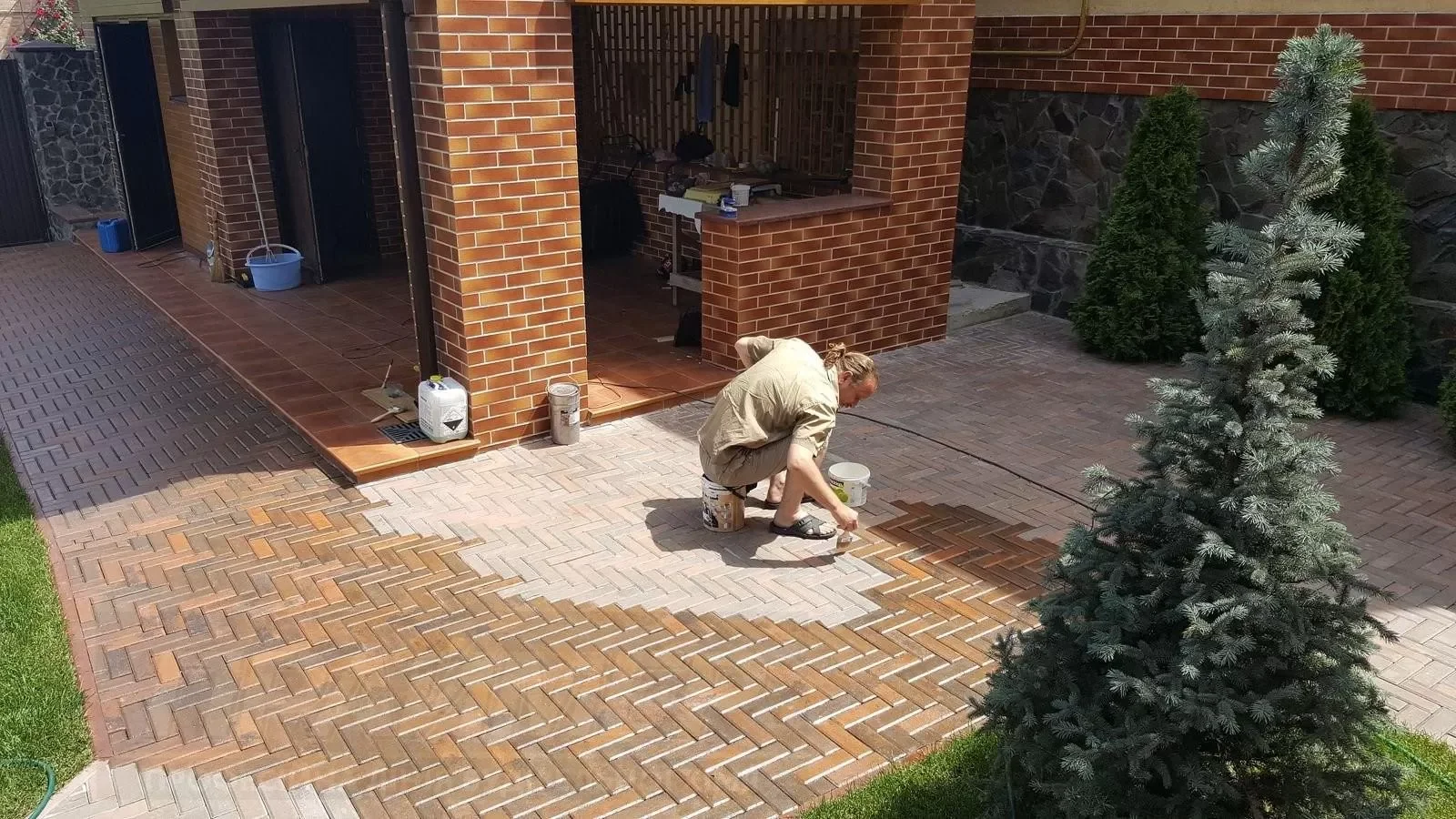
Treatment with water-repellent compounds protects the paving stone from moisture. Silicone impregnations penetrate the pores of the stone to a depth of 0,11-0,3 inch and repel water.
Maintenance of concrete paving stones is carried out in dry weather at temperatures above +10°С. Composition is applied in two layers with an interval of 2-3 hours. Consumption – 100-150 ml per square meter depending on the stone.
Biocidal compositions create a protective film on the surface, which kills spores of microorganisms. Treatment is repeated 1-2 times a year.
Drainage control is an underestimated factor of durability. Stagnant water destroys the base faster than any loads. Drainage trays are cleaned of debris twice a year – in spring after snow melt and in fall after leaf fall.
What to look for when choosing a contractor
A specialized company focused exclusively on paver work is your reliable partner in creating an ideal landscape.
Our extensive experience in paving construction and paver restoration has provided us with in-depth knowledge of all aspects related to working with stone, concrete, and natural materials. While general construction firms offer various services, our focused expertise allows us to continuously refine our craft within this specific domain, ensuring outstanding quality in every project we undertake.
A sandblaster, vibratory plate and professional high-pressure washer are the minimum set for quality work. If the contractor offers to do with improvised means, the result will be corresponding.
The estimate should contain specific items with a deciphering of materials. Formulations such as «restoration work» or «restoration of coating» without detailing – a reason to be wary. A conscientious contractor will specify the brands of compounds used, material consumption and labor costs.
When paver restoration is more profitable than replacement
Repair of brick paving stones extends the life of the pavement by 8-12 years. With preventive treatment every 3-4 years, the repaired area will last as good as new.
Restoration is advisable if the damage affects no more than 30-40% of the pavement area. If the damage is more extensive, it is cheaper to lay new paving stones.
