
Retaining Wall Design: Decoration Ideas and Concepts
A hidden advantage of a sloping site is the opportunity to create a multi-level landscape design. We guide you through transforming a concrete wall into an art piece and selecting the perfect lighting for masonry. We reveal professional techniques that turn slopes into the main decoration of the site.
A site on a slope seems to be a problem only at first glance. Retaining walls turn the relief into an advantage of the landscape, if it is properly designed. In this article we will show you how to create a spectacular design using stone, brick and concrete blocks.
When a slope becomes a piece of jewelry
Slope owners perceive relief as a limitation. Professionals, on the contrary, recognize the potential in elevation differences that flat areas lack.
For example, a small retaining wall of 5 ft creates two functional levels instead of one. At the same time, the solution works as an architectural decoration:
Sandstone wall provides a backdrop for an alpine garden.
Brickwork supports the English cottage style.
Concrete blocks accentuate the minimalist architecture of the house.
Moreover, terraces solve the problem of soil erosion while simultaneously increasing the usable area of the property.
For example, a small retaining wall of 5 ft creates two functional levels instead of one. At the same time, the solution works as an architectural decoration:
Sandstone wall provides a backdrop for an alpine garden.
Brickwork supports the English cottage style.
Concrete blocks accentuate the minimalist architecture of the house.
Moreover, terraces solve the problem of soil erosion while simultaneously increasing the usable area of the property.
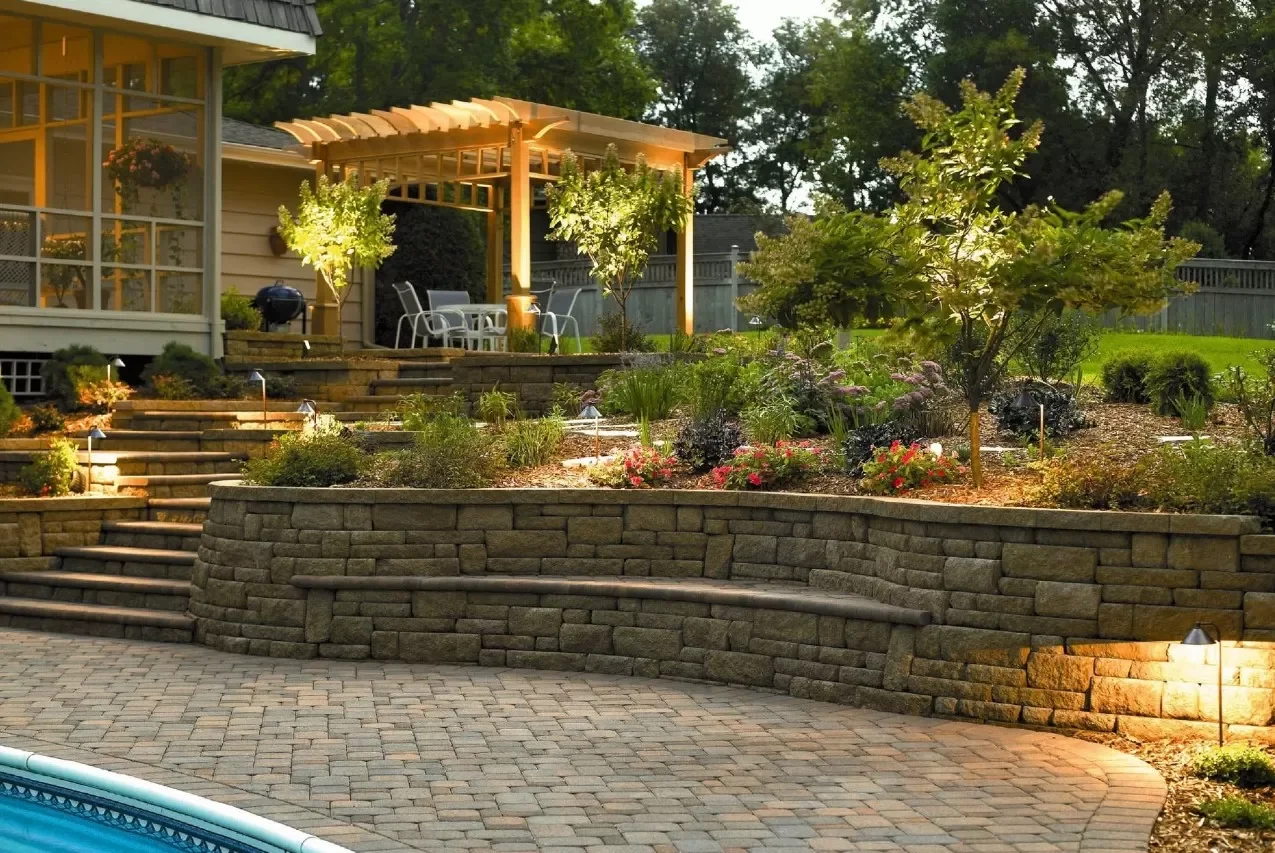
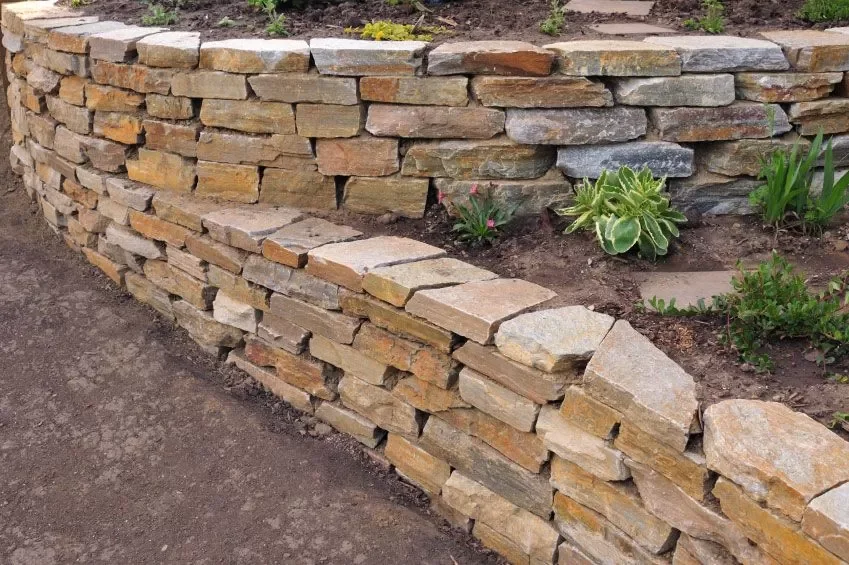
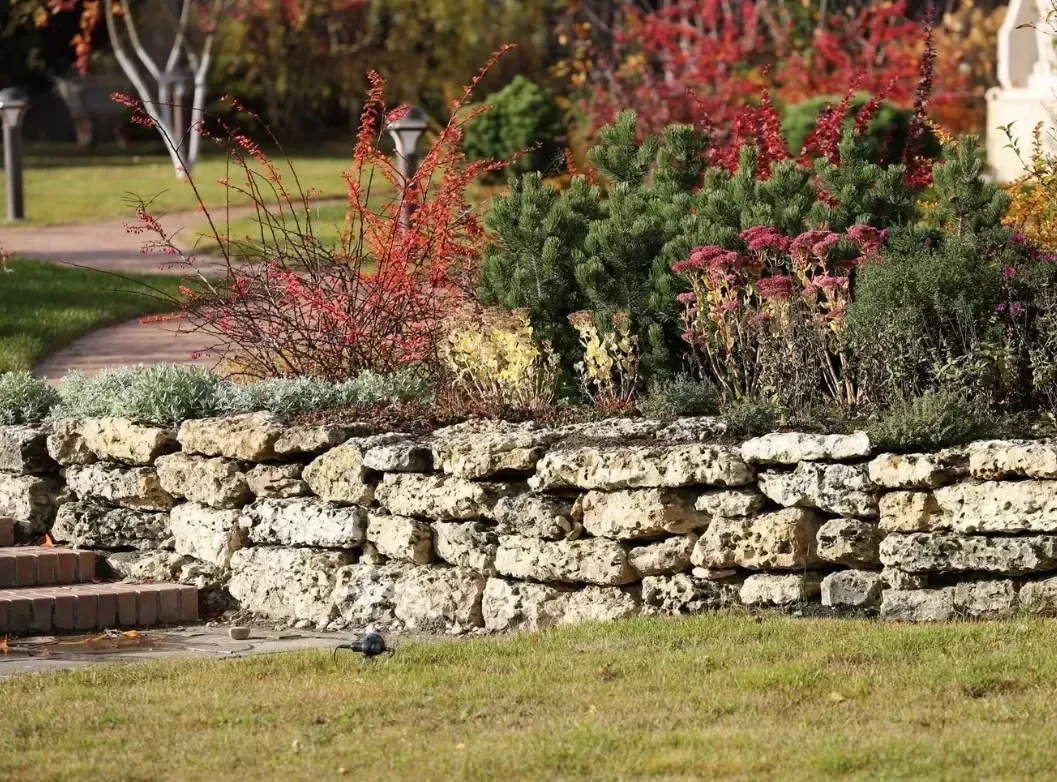
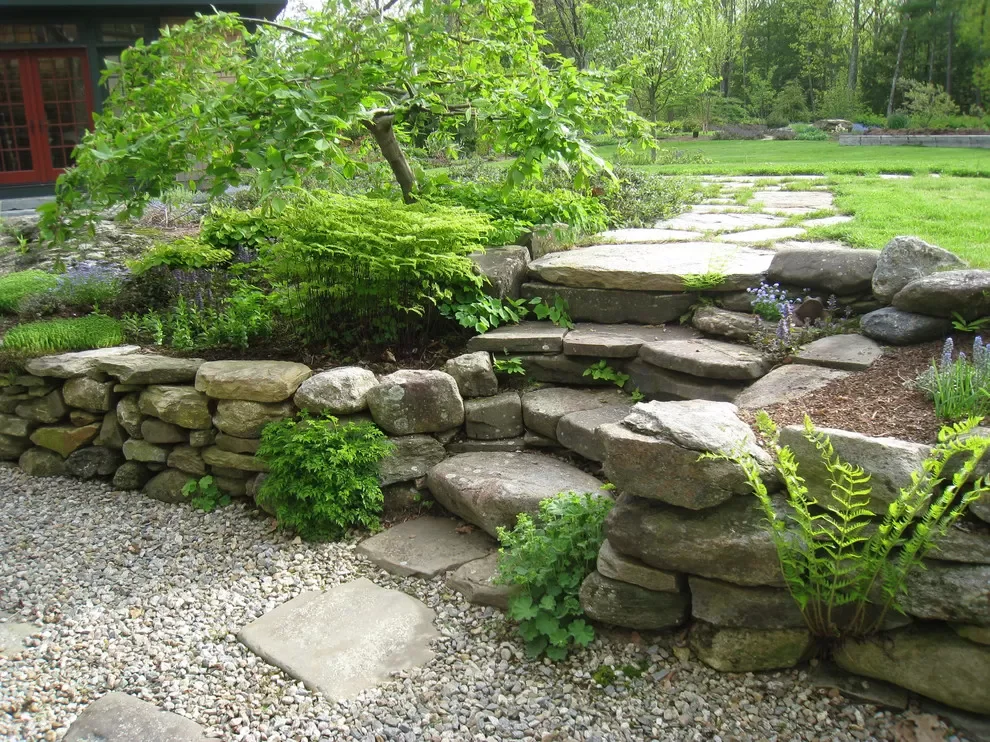
Stone retaining wall design
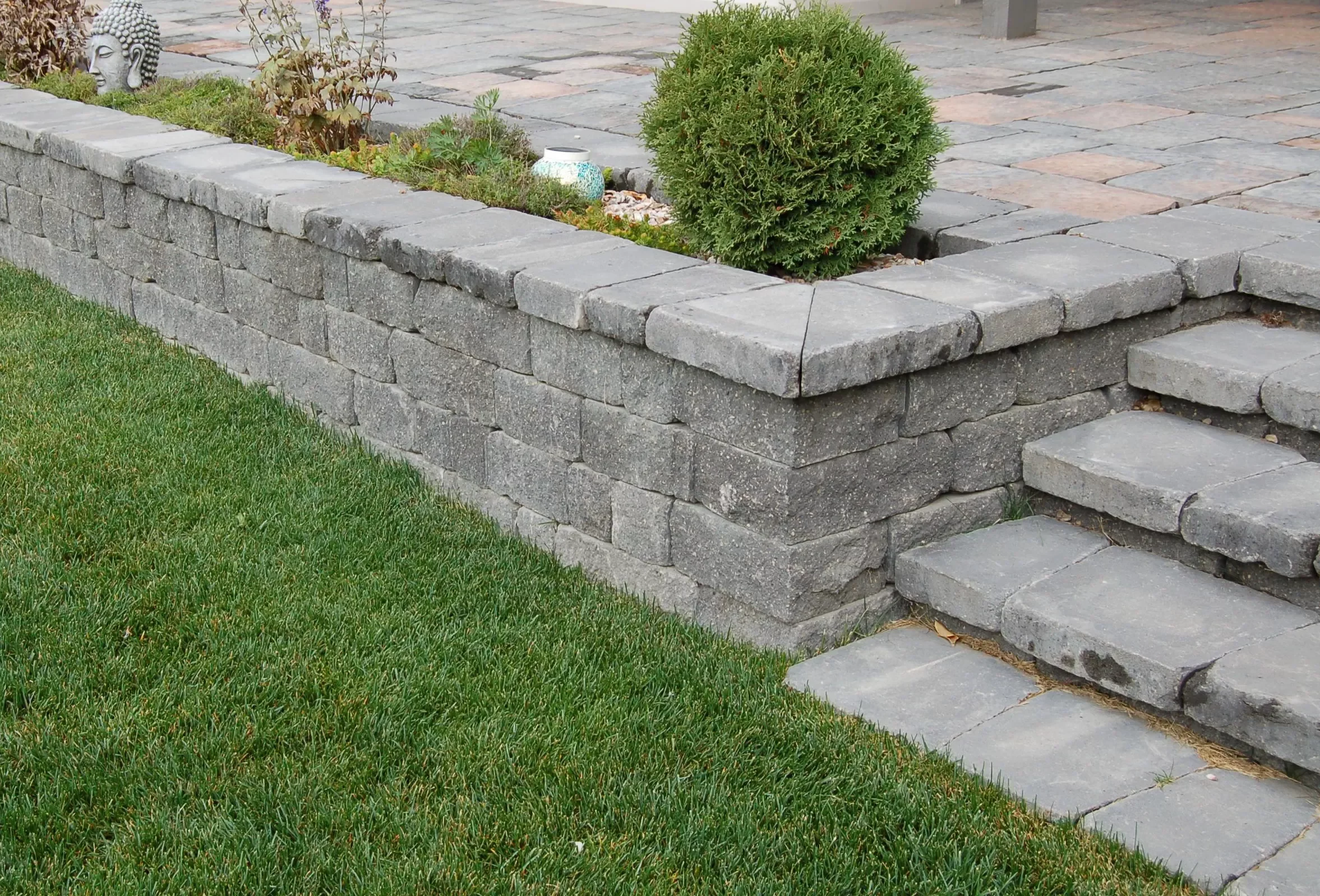
Sandstone with warm shades creates a cozy atmosphere on the site. Its layered structure allows to produce slabs of different thicknesses – from thin plates to massive blocks. The combination of shapes creates a picturesque masonry without monotony.
Limestone works as a neutral background for plants. The light tones of the stone do not compete with greenery, but emphasize it. The porous structure of limestone allows plants to be planted directly into the joints of the masonry. After a few seasons, the wall is covered with a picturesque carpet of moss.
Granite is suitable for creating monumental compositions. Its durability allows you to make thin elements – steps, parapets, decorative inserts. Polished granite contrasts with untreated granite, creating a play of textures on one surface.
Cobblestones and pebbles add a natural carelessness to the design. The result looks like a creation of nature, not man.
Brick retaining wall ideas
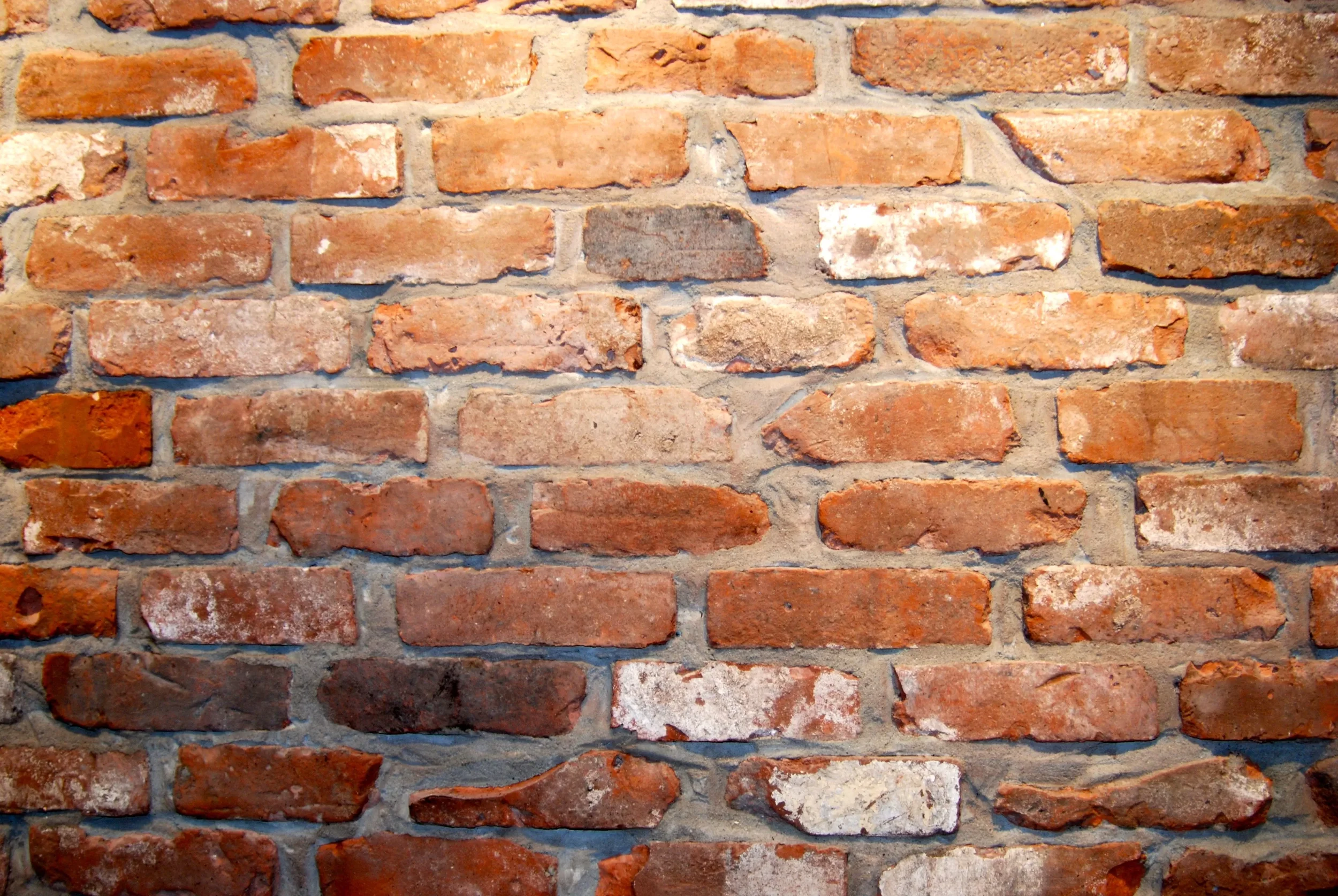
Aged brick is a special building material whose surface imitates the traces of time. Thanks to this treatment, the brick seamlessly integrates into the appearance of historical buildings.
The unique combination of new and artificially aged brick creates an impressive effect of an ancient wall reconstruction, harmoniously combining modern technology with the atmosphere of the past.
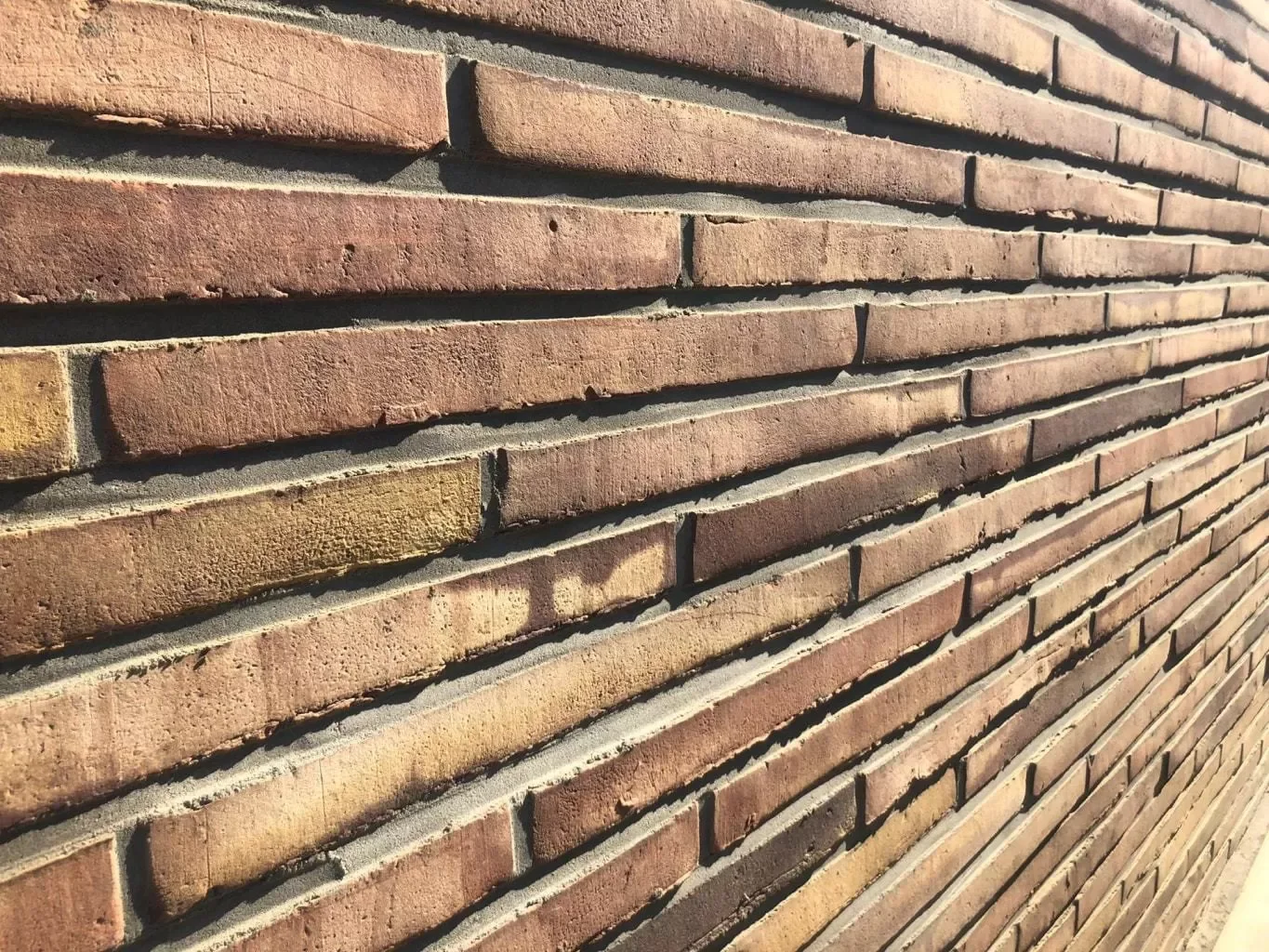
Long, narrow blocks are called transom bricks. They are used to create horizontal lines that visually expand the space. Vertical masonry, on the contrary, makes the wall taller and slimmer.
Concrete block masonry
Natural stone blocks are indistinguishable from the original, but are many times cheaper and easier to install. Large blocks speed up construction and create a modern, laconic look. Stones with a relief surface give an interesting play of light and shadow.
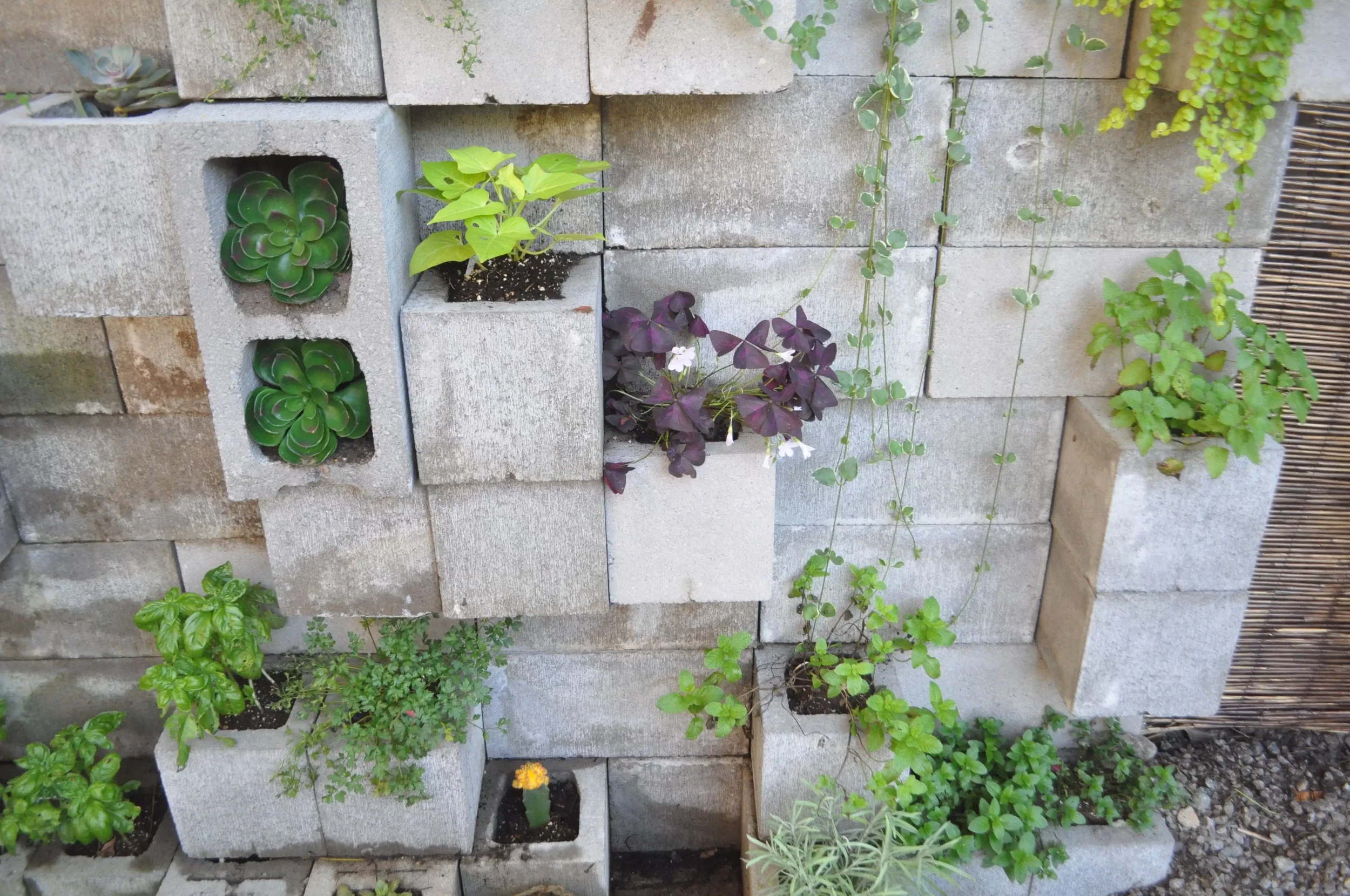
Special blocks for landscaping walls have holes for planting plants. Such a wall eventually turns into a vertical garden. Blocks of different heights create a stepped profile suitable for cascading compositions.
However, it is important to consider that such artificial blocks have a shorter service life compared to natural stone. When choosing a construction material, it is recommended to give preference to natural stone, which guarantees the durability of the structure. Artificial blocks can be a good solution for temporary structures or when working with a limited budget, but for long-term use, it is preferable to choose natural stone.
6 secrets to spectacular landscaping
The contrast of materials creates visual accents. Smooth concrete next to rough stone, dark clinker against light sandstone - such combinations make the composition balanced.
Built-in illumination turns the retaining wall into a night art object. Spotlights in niches provide soft flood lighting. The directional light emphasizes the texture of the material.
Constructing retaining walls with water elements adds dynamics to the landscape design. A small pond lined with natural stone becomes the central element of the composition. A cascade made of pavers leading to the pool mimics a mountain stream. A decorative waterfall constructed using large pavers and natural stone adds dynamics and freshness to the design.
The integration with plants softens the rigidity of the structure. Curly plants gradually cover the wall with a green carpet.
Steps and transitions between levels should not only be functional, but also beautiful. Wide steps made of the same material as the wall create a unified composition.
Drainage holes can be turned into decorative elements. Instead of simple pipes, decorative grates or stone gargoyles are used.
Conclusion
A decorative retaining wall becomes the main decoration of the site if you entrust its design to professionals. Specialists can implement any idea - from imitation of ancient ruins to futurism.
The success of the project depends on understanding the properties of materials, competent planning and attention to detail. Investments in the construction of a retaining wall pay off with a unique landscape that will delight for decades.
