Deck design for swimming pool areas
After 2-3 years, the coating around the pool cracks, becomes slippery, and loses color. Problems occur due to improper design of the pool deck, so guests fall on the wet surface and burn their feet on the heated slabs. Pool owners save money on finishing and entrust the work to inexperienced contractors. As a result, a complete redesign is required after a few years. If the work was done by professionals, the pool area deck design would create a luxurious atmosphere, ensure safety and harmonize with the landscape.
Materials
Concrete coatings are an economical solution that professionals do not recommend because of many nuances. Concrete is susceptible to cracking, water spalling. Therefore, repairing a concrete pad is more expensive than a complete replacement.
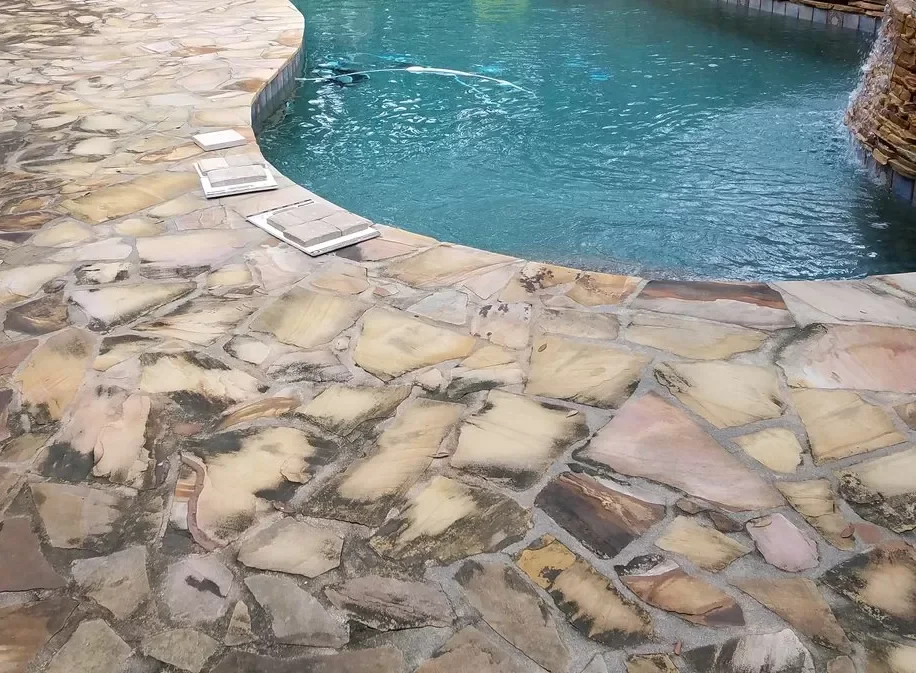
Natural stone is one of the most practical coatings for pool decks. Its porous structure maintains excellent adhesion even when wet. Sandstone slabs 0.80-1.20 inches thick can withstand significant loads and will not frost damage (unlike concrete).
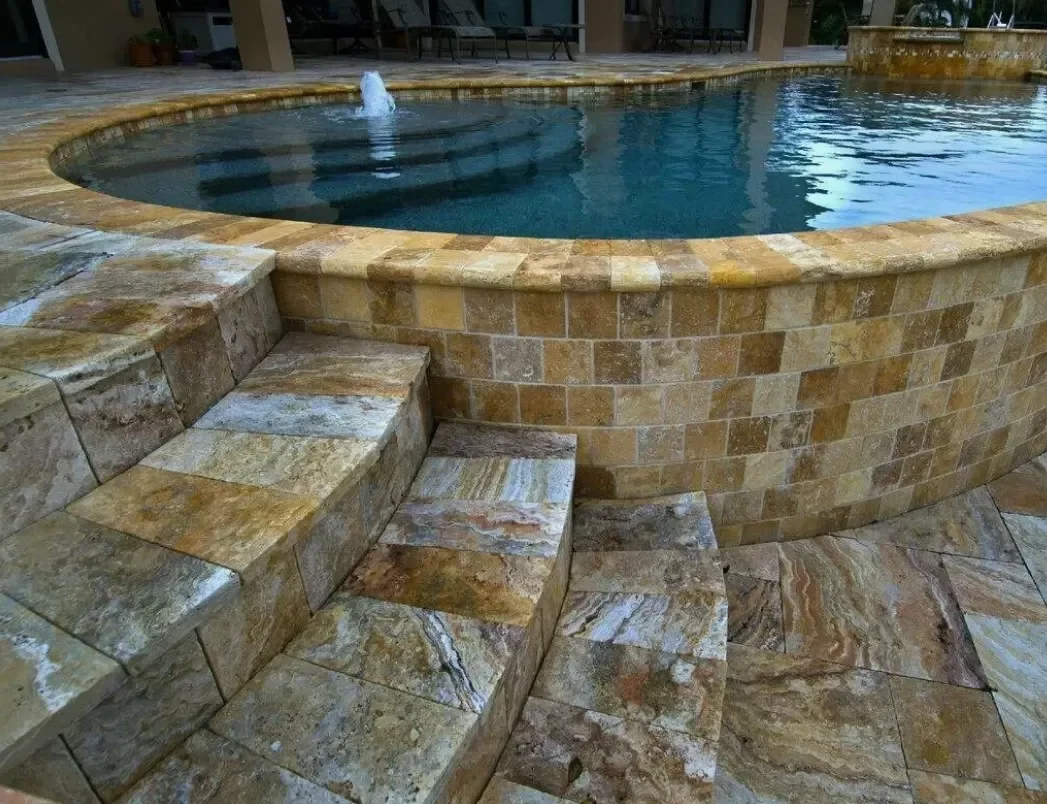
Travertine is considered an elite material for paving pool areas. Its porous texture prevents overheating - even in 100°F heat you can walk barefoot on the stone. Natural shades from milky white to walnut create a warm, cozy atmosphere in the recreation area.
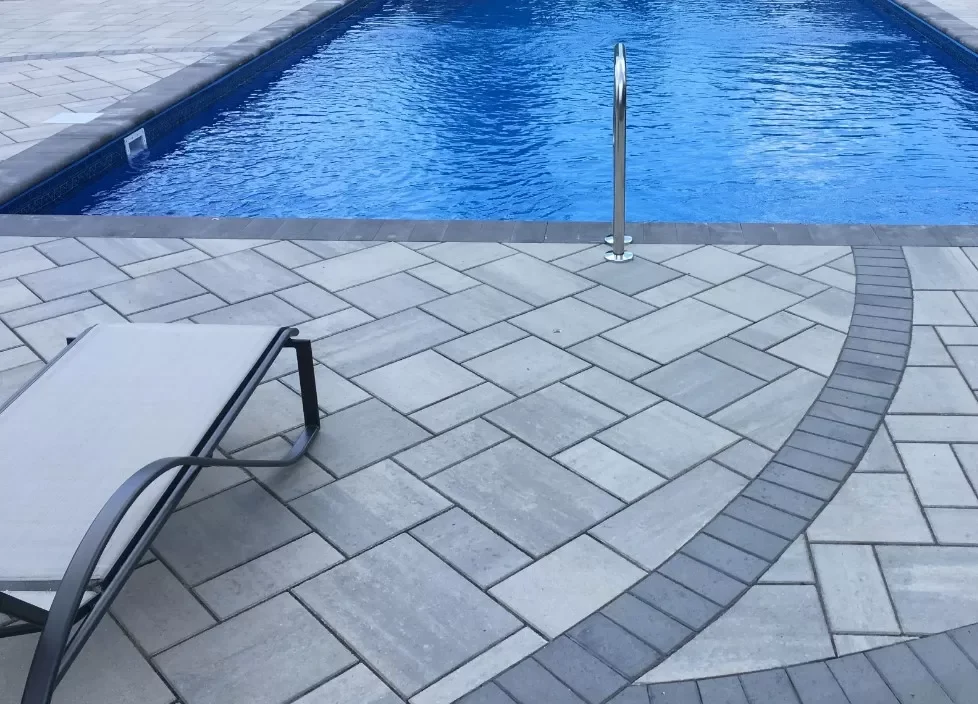
Paving stones combine the beauty of a man-made material with practicality. Firing at 2100°F creates a material that is stronger than natural stones. The variety of formats allows you to create complex patterns and to zone your terrace.
Swimming pool deck layout
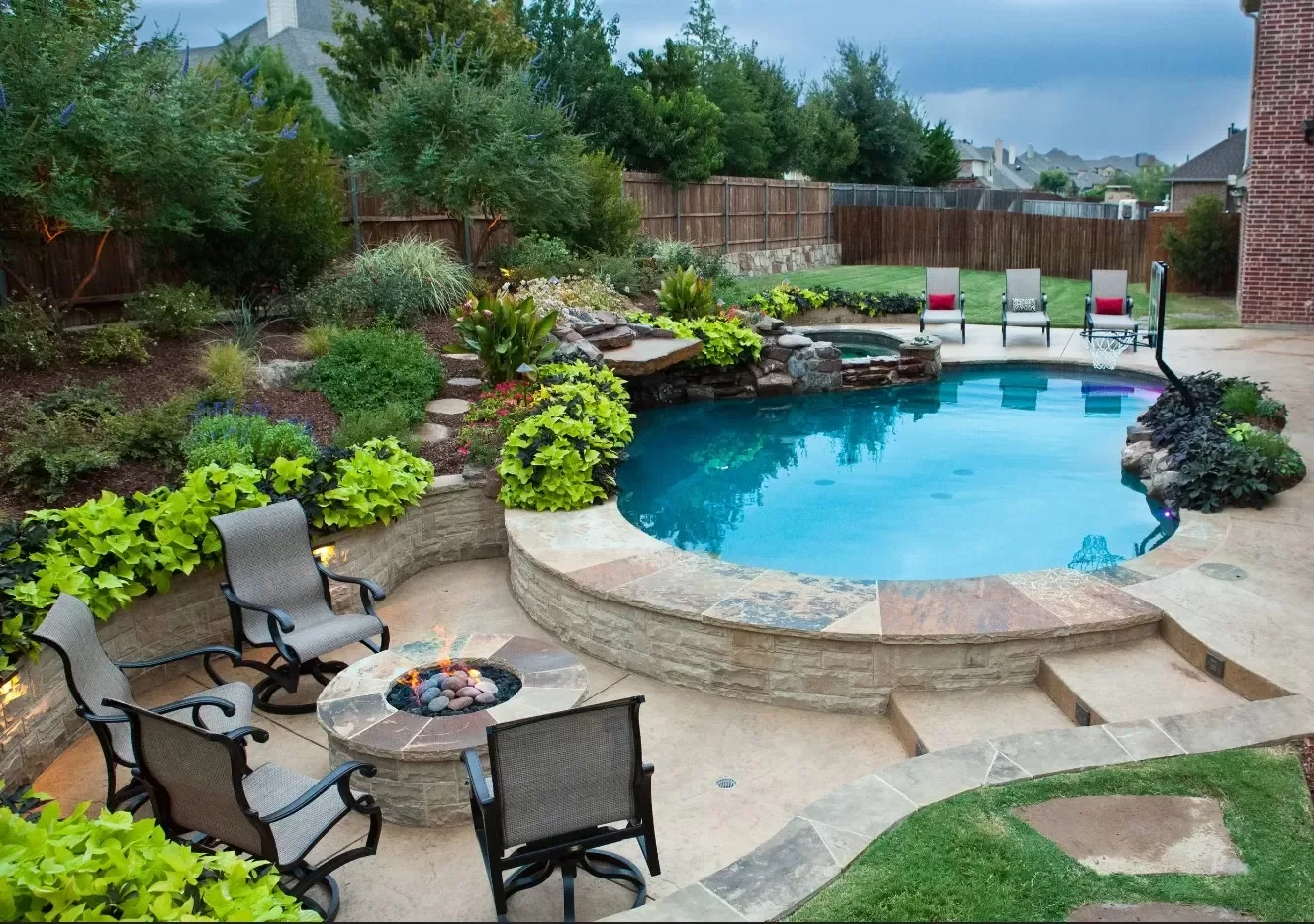
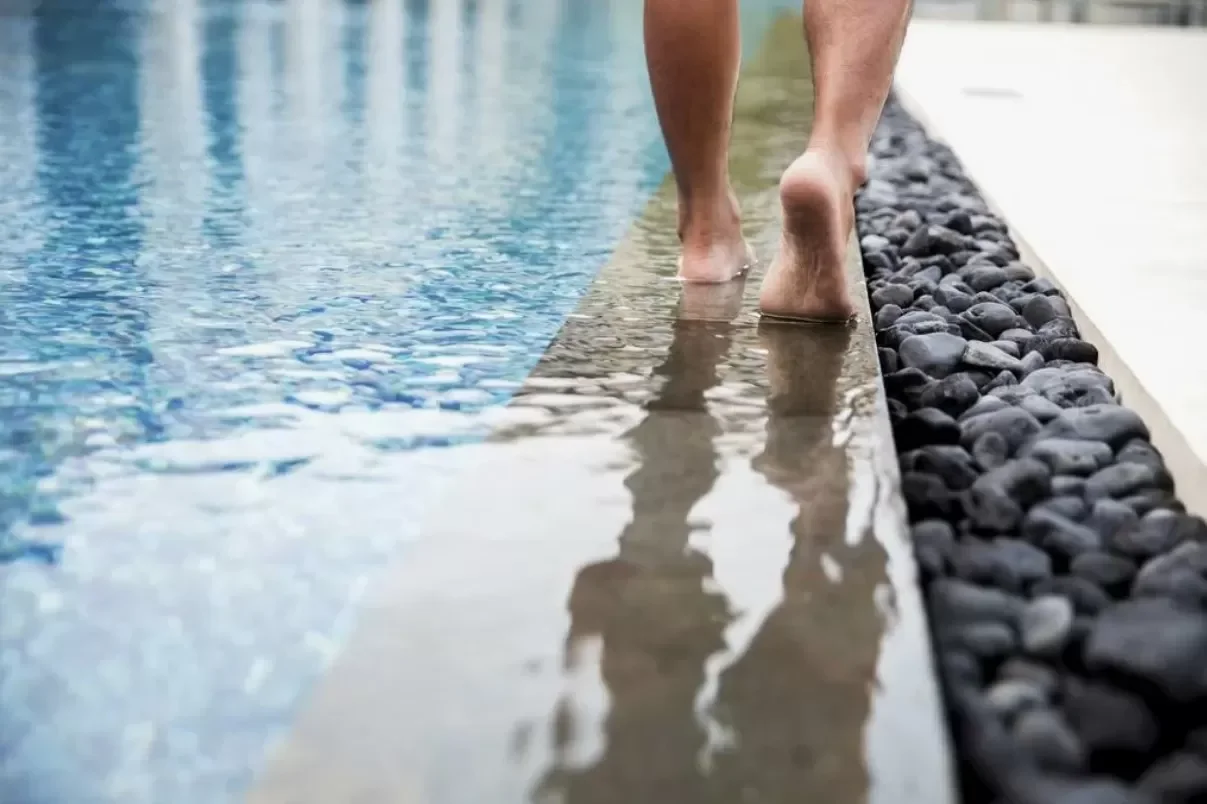
Most decks are designed on the principle of «the bigger the better». This results in empty, uncomfortable decks. A design project from experts takes into account that the pool deck will be comfortable if you create visual boundaries.
In the active recreation area, place sunbeds, umbrellas or canopies. The flooring should dry quickly and not get hotter than 113°F. Light colors of porcelain stoneware or travertine are the best choice.
Corners for secluded relaxation are located away from active areas. Soft coverings such as larch decking or premium composite boards are appropriate here.
The technical area hides the pool equipment, but must remain accessible for maintenance. Removable decking panels or manholes in the paving provide quick access to utilities.
Safety
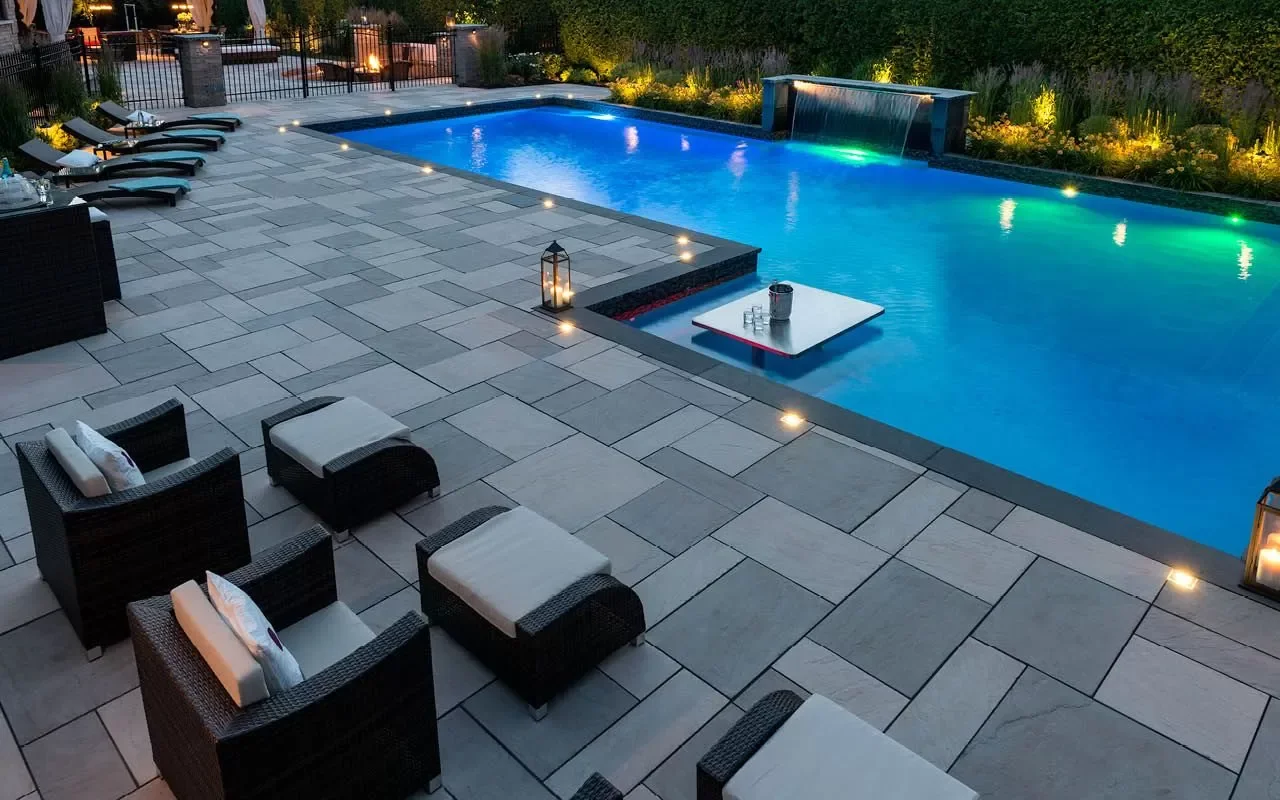
Most accidents do not happen in the water, but on the deck. Therefore, the coefficient of friction of a wet surface is a basic safety parameter. A value below 0.4 creates a real danger.
Surface micro-relief is more effective than coarse texture. The fine roughness of natural pool deck materials creates multiple points of contact and does not trap dirt.
A deck slope of 1.5-2% provides water runoff but does not create walking discomfort. Linear drains should be installed every 20-25 feet. The capacity should be calculated with an allowance for heavy rainfall.
The hidden dangers are in the details. Sharp corners of steps can cause injury if you fall, so round them off to a radius.
Lighting affects safety as much as the cover. Even illumination without harsh shadows helps to judge distances correctly.
Installation techniques
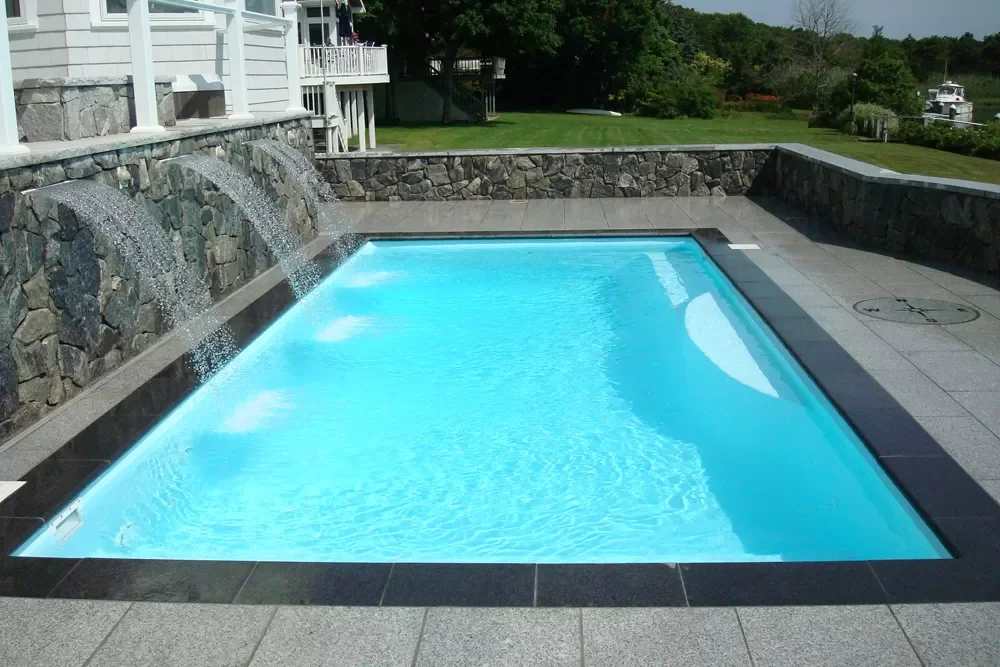
Traditional cement-sand screed laying is becoming a thing of the past. Wet processes are weather-dependent, take time to dry and create a risk of errors. Modern dry technology is devoid of these disadvantages.
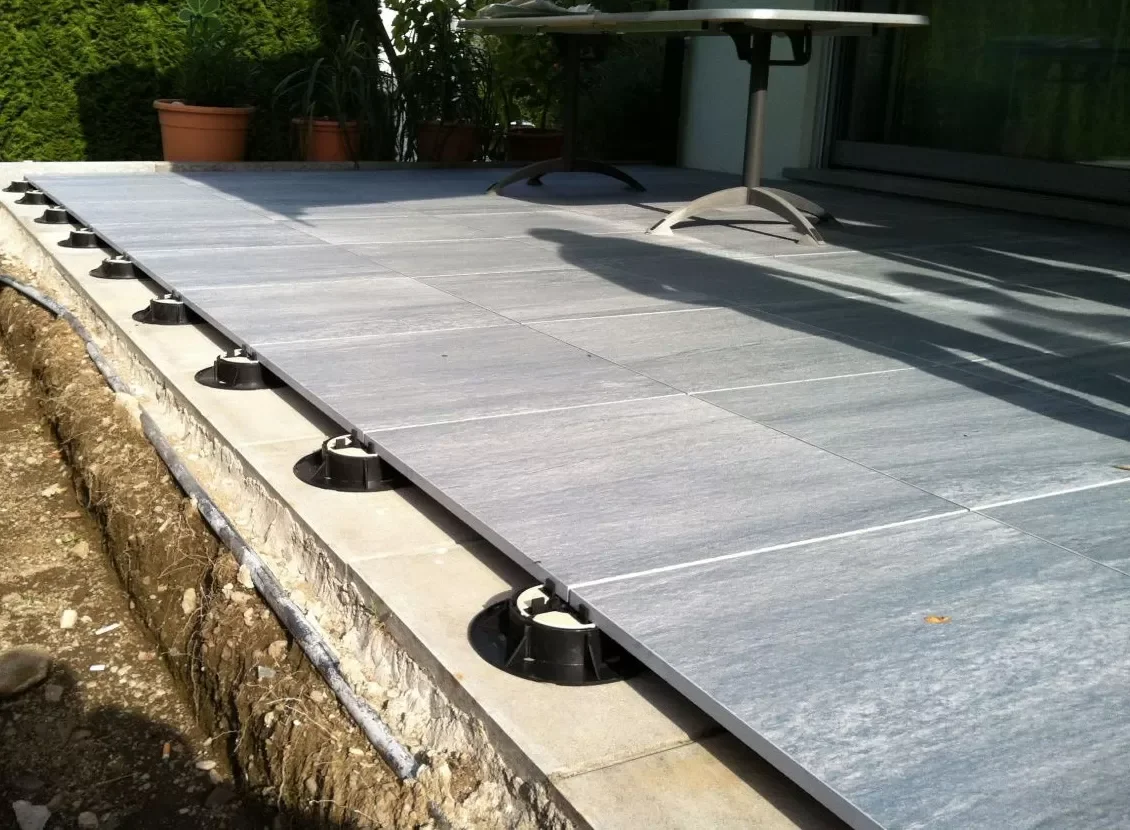
Adjustable supports help to create a perfectly flat surface on any terrain without concrete work. The height of each support is adjustable from 0.5-21 inches.
Advantages of the technology:
all-weather installation,
immediate availability,
easy access to utilities,
dismantling and reuse.
Floating decks on supports are not rigidly connected to the base. This prevents cracks from ground movement and temperature deformations. This is especially important for heaving soils and regions with sharp temperature fluctuations.
Laying large-format slabs requires special equipment. Vacuum suction cups allow safe movement of slabs weighing up to 220 lbs.
Durability
The service life of a deck depends not only on the material, but also on the quality of the substrate, compliance with technology, and maintenance. Savings at the construction stage turn out to be more expensive during operation.
A deck made of quality materials from professionals lasts 25-30 years. Replacement of individual damaged elements is many times cheaper than a complete remodeling.
Regular washing prevents the accumulation of dirt, sealing of joints protects against moisture penetration. Special impregnations for natural stone restore water-repellent properties.
Conclusion
A pool deck is an investment in comfort and safety for decades to come. Material selection, design and quality installation create a deck that will last up to 30 years.
Saving money during the construction phase will inevitably cost more in the future. Entrust the design and construction of the deck to professionals – this is a guarantee of longevity and safety of your pool.