Paving Steps: Proper Installation Guide
If the paving steps are destroyed 2-3 years after installation, the reason is not in the quality of the material, but in violation of installation technology. Unfortunately, novice builders ignore the peculiarities of working with paving stones on vertical surfaces, so the steps creep and crack. When done by professionals, paver stone steps can withstand up to 500 pounds and last up to 30 years. The secret to longevity lies in choosing the right stone and reinforced base.
Materials for installing sidewalk steps
Not every stone is suitable for steps:
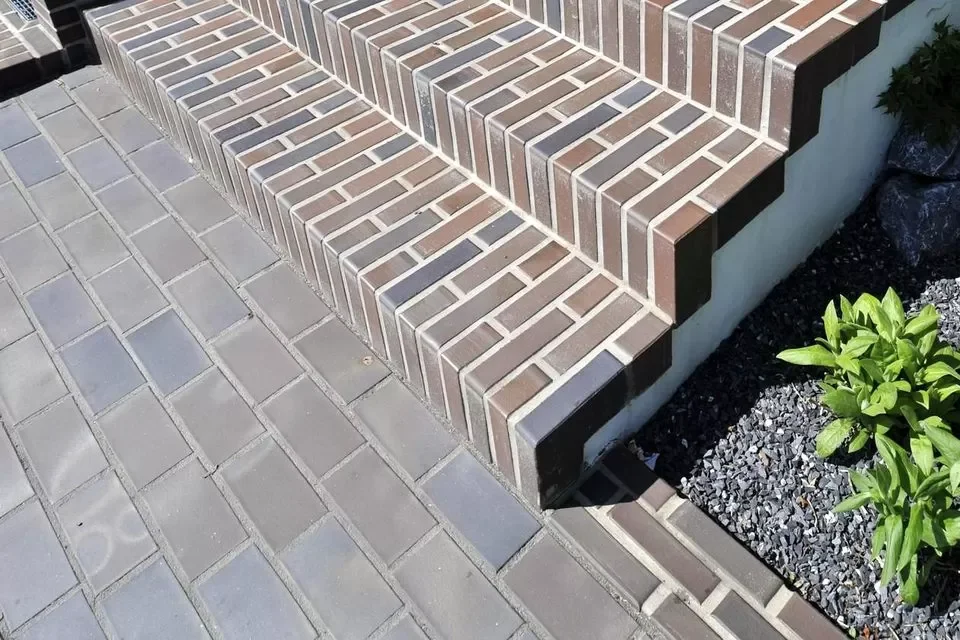
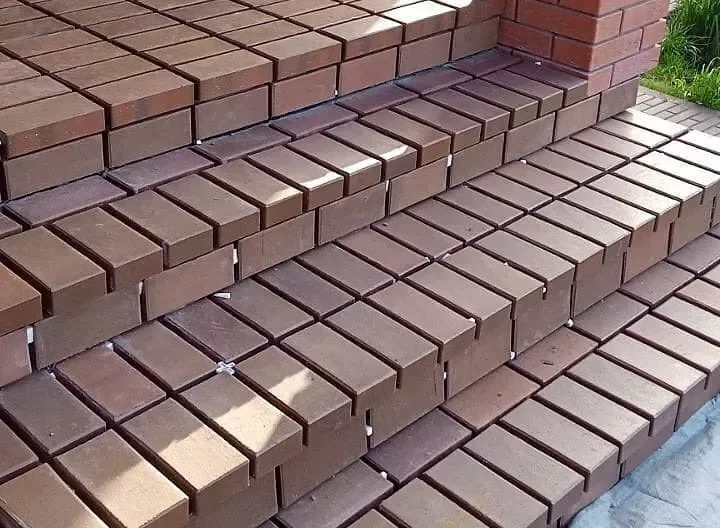
Clinker paving stones 2-3 inches thick provide the necessary strength and abrasion resistance.
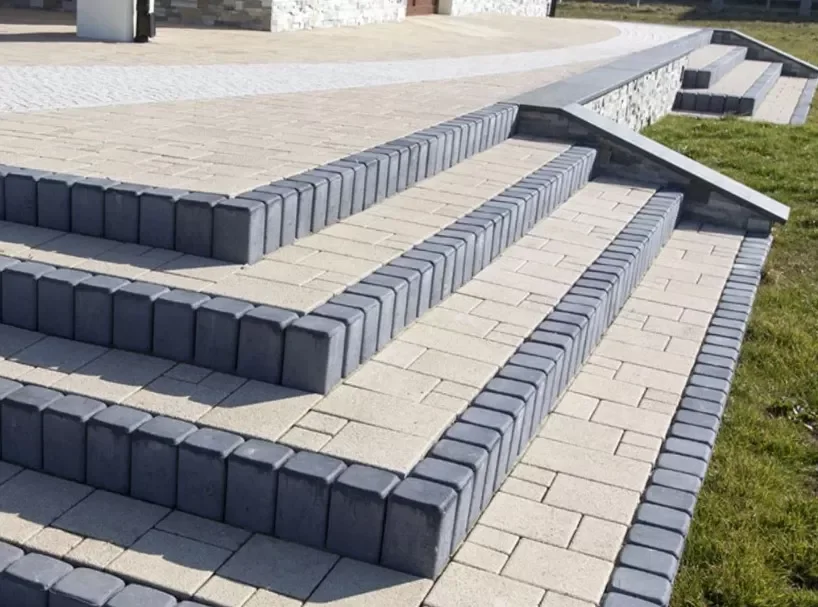
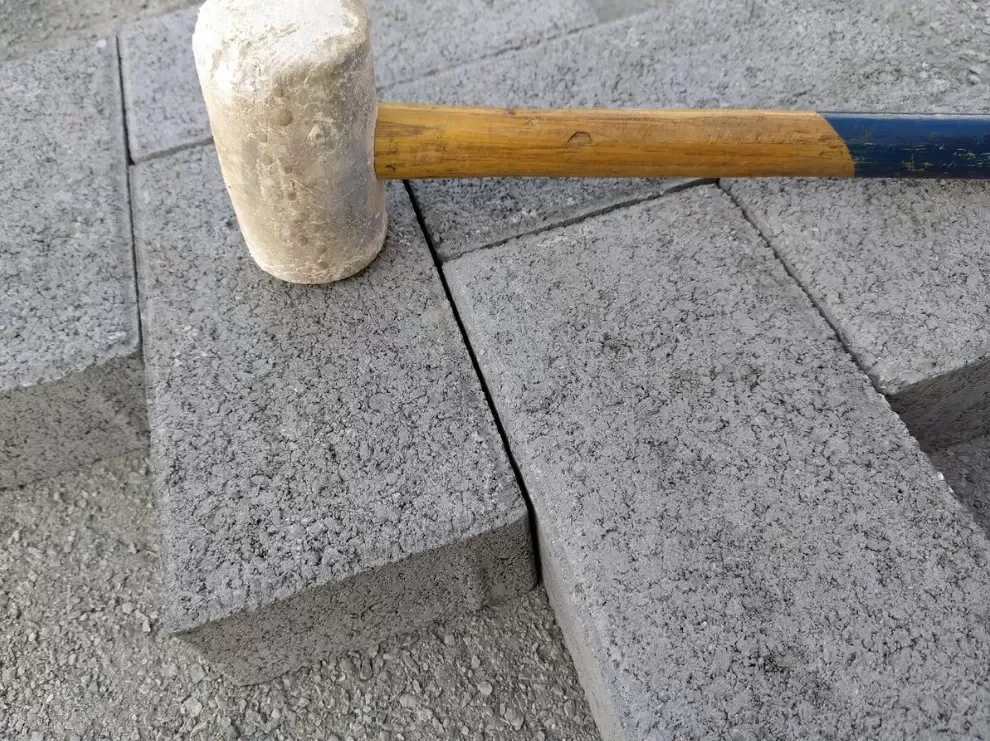
Concrete pavers at least 2.5 inches thick also perform well when laid properly.
Natural stone requires special attention to rock selection. Sandstone and limestone are less commonly used because they are less durable and wash out more quickly
The surface of the paving stone should have an anti-slip texture. Smooth stone becomes traumatic when wet, especially in winter.
How to correctly install paving steps
Minimum set of tools:
2-3 pound rubber mallet,
construction level 4 feet long,
15-20 pound tamper,
angle grinder for cutting.
The longevity of the steps depends on the quality of the base. Crushed stone fraction of 0.5-1 inch is used for a drainage layer 6-8 inches thick. Sand of medium coarseness forms a leveling layer of 1-2 inches.
A 1:3 cement-sand mixture is used to anchor the paving stones. Geotextile prevents weeds from germinating and mixing the base layers.
Concealed drainage is installed directly into the construction of concrete steps. Gaps of 0.2 inches are left between the paving stones, which connect to drainage channels in the base. Water is not trapped on the surface and does not infiltrate into the base.
Design options for paving stone steps
The width of the step should be at least 12 inches for normal mobility. Comfortable tread height is 7 inches.
Choosing a style of stairs
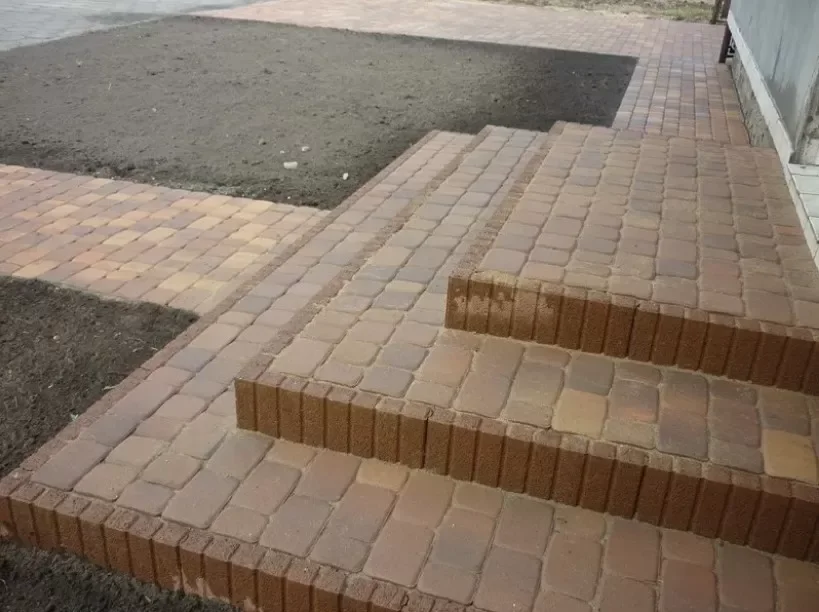
The classical style involves the use of rectangular paving stones laid in parallel rows. The solution is suitable for traditional architecture and creates a strict, orderly appearance.
Modern style allows for a mix of different sizes and colors of paving stones. To create a minimalist look, 12x8 large format paving stones are used.
Rustic style uses irregularly shaped or artificially aged paving stones. This design harmonizes with natural materials and country architecture.
4 tips for the care and maintenance of paver steps
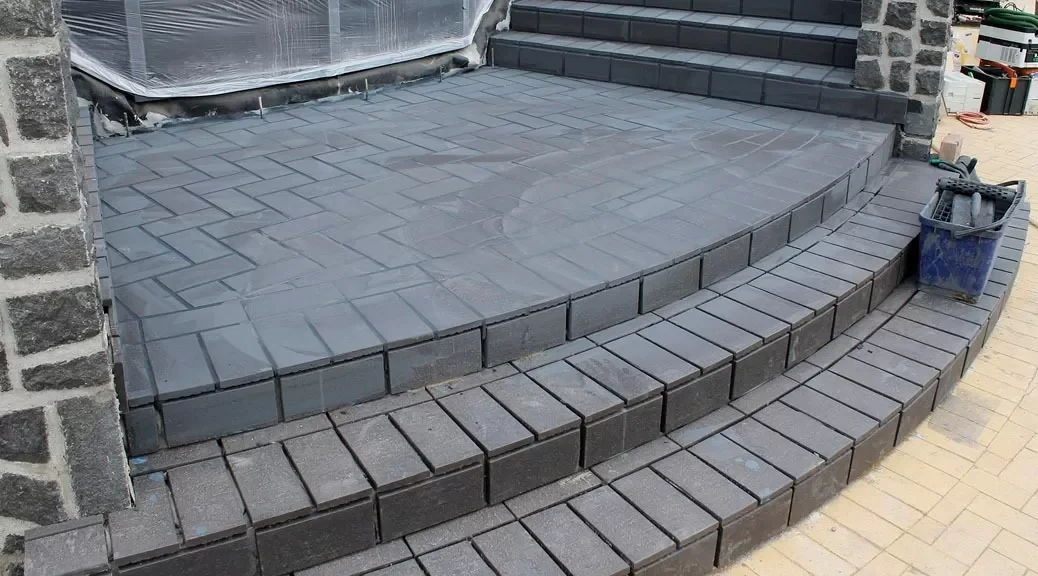
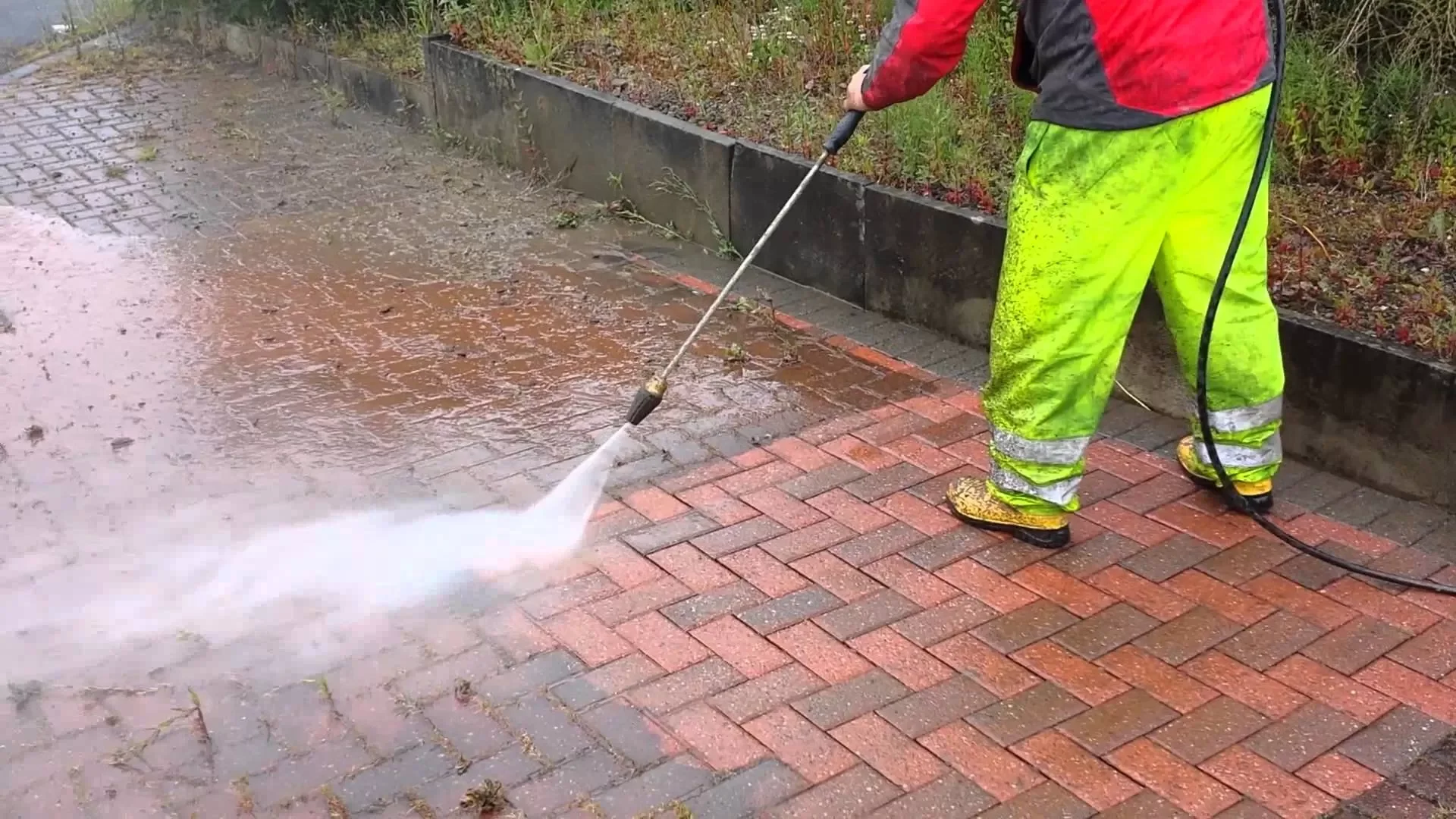
Monthly treatment with hydrophobizer extends service life 2-3 times. The compound is applied to a clean, dry surface at temperatures above 50°F. An invisible film repels water and prevents the penetration of contaminants.
Sand from the joints is washed out by rain in 2-3 months. Professionals use two-component polyurethane compounds that last 10-15 years.
Metal scrapers damage the paving stone surface, creating microcracks. Plastic scrapers with a rubber edge remove ice without damage.
Restoration of the worn surface is carried out by grinding with diamond disks of 400-800 grit. The procedure removes the top layer 0.02-0.04 inches thick and returns anti-slip properties.
How to choose a contractor
Most construction companies do not understand the specifics of working with paving stones on steps. They apply paving tile laying techniques, which leads to the destruction of the structure
It is recommended to choose a contractor who has been working with paving steps for at least 3 years. The presence of specialized equipment indicates a professional approach. Vibratory plates, levelers and diamond disks for cutting paving stones are part of the standard set of tools. The warranty for the work should be at least 3 years.
The cost of the work depends on the complexity of the project and materials. Simple rectilinear steps cost from $25-35 per square foot. The estimate should include a detailed breakdown of materials and labor. Underpricing hides the use of substandard materials or a violation of technology.
Radial steps and complex geometric shapes increase the cost to $45-60 per square foot. The use of natural stone adds 30-50% to the base price. Additional work for drainage, retaining walls and lighting is charged separately.
Conclusion
Installing paver steps requires a professional approach. The base, the type of stone and professional installation ensure the longevity of the structure. Regular maintenance extends the life of the steps and preserves their appearance.
Choosing an experienced contractor guarantees quality results and avoids future problems. Saving on professional services leads to a complete redesign in a few years.