
Landscape Maintenance
Cloudy Paver Sealer: What to Check Before Resealing
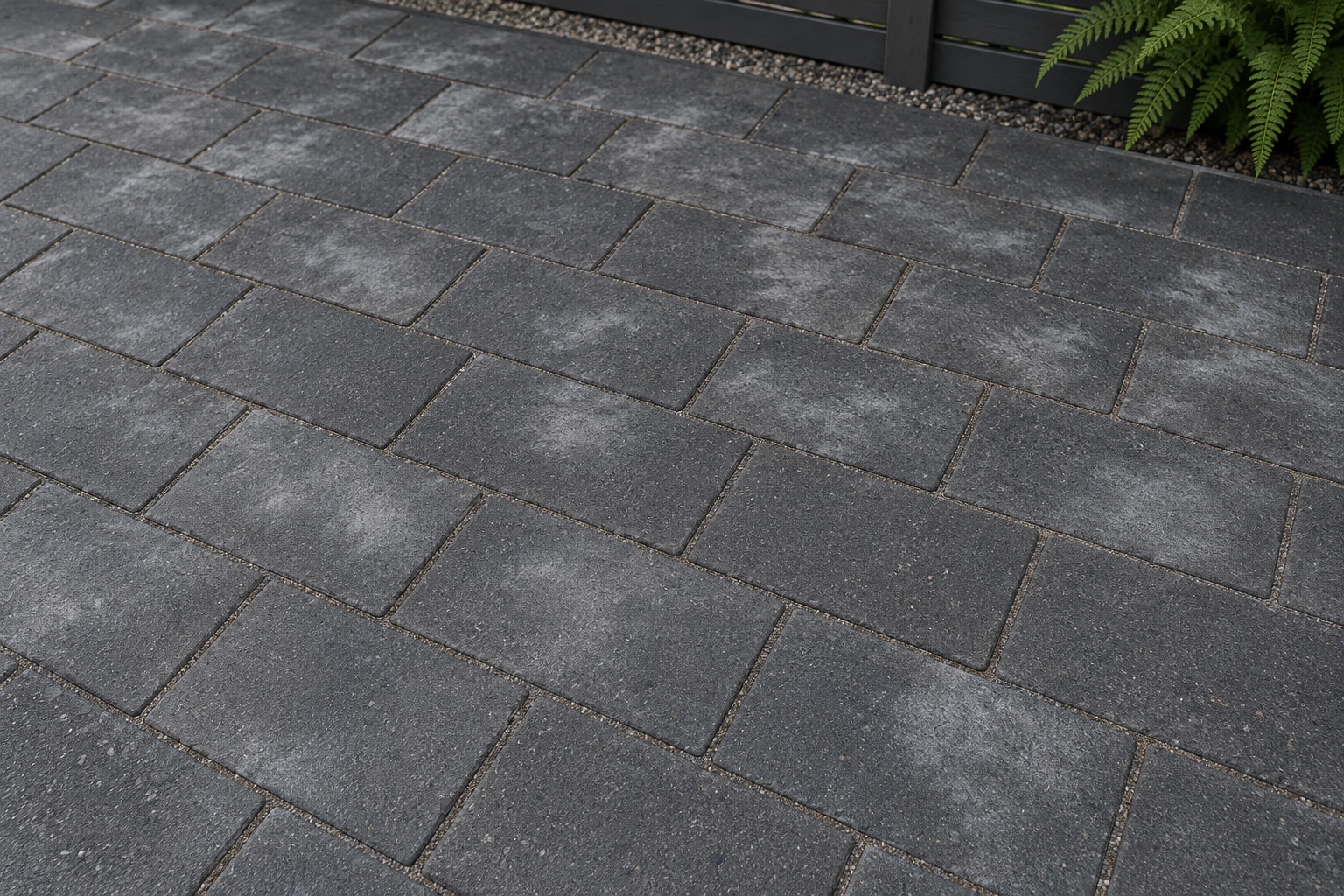
A milky or uneven finish on driveway pavers is a reason to pause before adding another coat of sealer. Gather the coating history, document the dry surface, and have the condition assessed before approving work. An unknown coating does not, by itself, justify replacing sound pavers. The decision is what preparation your existing surface actually needs.
For a Hollywood homeowner, paver cleaning and sealing services should begin with an assessment of the pavers and existing finish. That gives you a basis for comparing proposals and protecting the appearance of an otherwise sound driveway.
Hero: AI-generated illustration of mottled paver finish. It does not depict a completed project or establish the cause of cloudiness.
Build a record before anyone changes the surface
Photograph the same dry area from the same position, including a wider view that shows where each patch sits. Keep the original files without filters. Note whether the pictures followed rain, irrigation, cleaning or a recent application. Record what you observed without assigning a cause: where the appearance changed, when you first noticed it, and whether it has stayed consistent.
Look for the previous invoice, product label, container photograph and application date. If someone maintained the property before you owned it, request those records. Include any later spot treatments, even when you do not know the product name. Write down the gaps instead of guessing. A contractor needs to know which parts of the history are documented and which remain uncertain before proposing another layer or removal.
Mark any section you know was treated separately. An entrance walk added later or a previously touched-up patch deserves its own note, even when everything now appears to be the same color.
Color alone cannot identify the problem
CMHA’s Cleaning, Sealing and Joint Sand Stabilization of Interlocking Concrete Pavement advises identifying stains before treatment, trying products in a small inconspicuous area, and following their instructions. It also describes whitish efflorescence that can arise from concrete itself, independently of a coating. A pale patch alone therefore cannot establish that the sealer failed or identify the treatment needed.
The Wet Look (WL5) Paver Protector Technical Data Sheet gives a product-specific example: it cautions against application over a hazed or blotchy surface and says excess buildup can cause whitening. For that system, an unknown previous coating calls for removal with an appropriate stripper. The sheet also warns that WL5 makes surfaces more slippery when wet. These are instructions for this particular product, not evidence that Perfect Pavers uses or sells it, or that every sealer behaves alike.
Make a small trial answer a clear question
Before authorizing a trial, agree on its location and purpose: evaluating cleaning, coating removal or the proposed finish. Have the contractor explain the products and how the result will be assessed after proper drying under their instructions. Judge the dry trial before approving broader treatment.
Keep an adjacent untreated area available for comparison. Photograph both together, and record what improved and what remains visible. A useful outcome may be a clearer understanding of the limits. If the appearance remains unacceptable, ask for a revised proposal before expanding the work. Decide whether the trial is separately priced and whether further testing needs your approval.
Separate the work you are being asked to buy
A proposal labeled simply as resealing leaves too much unresolved when the old finish is unknown. Ask which condition each line item addresses. The options below can be combined when justified, but each should have a defined area and purpose.
| Scope | Decision to resolve | What to put in writing |
|---|---|---|
| Cleaning only | Can the agreed appearance goal be met without coating removal or another application? | Cleaning area, treatment limits, joint sand work if needed, and the point for reviewing results. |
| Coating removal and preparation | Does the assessment support removing a failed or incompatible finish before further treatment? | Removal area, proposed system, cleanup and disposal, plus whether a new finish is included. |
| Localized repair | Are there loose, damaged or sunken pavers that require a separate physical correction? | Affected locations, repair limits, replacement pieces if needed, and the separate finishing scope. |
When comparing proposals, highlight any allowance or assumption. Ask how you will be notified if the findings change the proposed work, who can authorize that change, and when you will receive an updated price. A separately priced first phase can be useful when the history is incomplete, provided you understand what it buys and which decisions remain afterward. Agree on a stopping point before work begins.
If you also see movement or uneven levels, have paver repair and re-leveling assessed separately. Cleaning and sealer cannot reset a sunken area. Conversely, a finish concern alone is insufficient evidence for a complete rebuild. Require an explanation tied to the conditions observed at your property.
Request a consultation to discuss the surface and your goals. Our consultation and estimating process starts with a property visit. Bring your records and photographs so the assessment can inform the work area and written proposal, with unresolved questions recorded before treatment.
Two Broward projects show why the scopes differ
In our Broward cleaning and sealing project, the documented work included stripping the previous epoxy sealant over two days, followed by cleaning, re-sanding and a new sealer. That is an individual project record. It does not establish a universal removal schedule or explain the original coating’s failure mechanism.
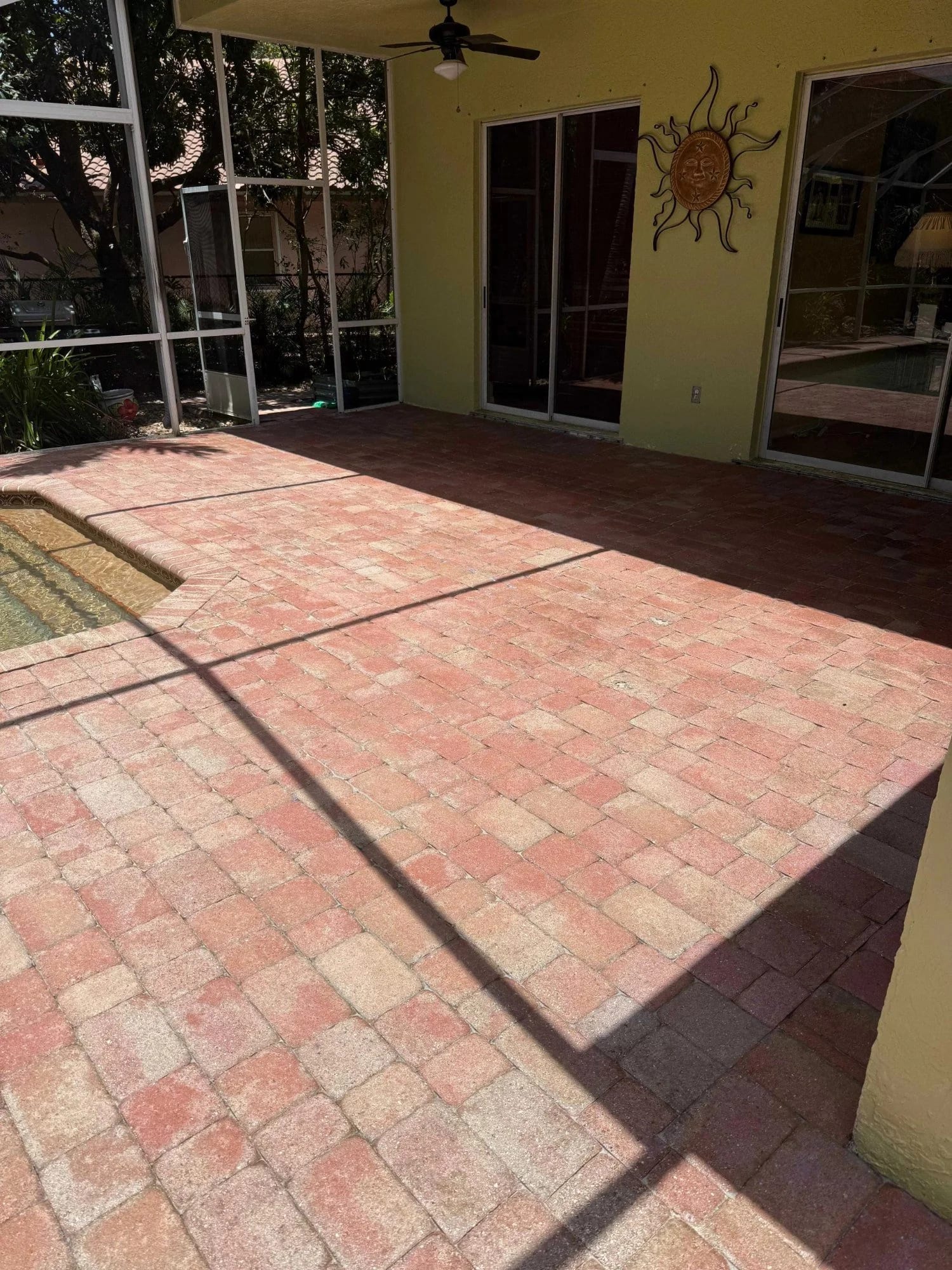
Actual photo from the Broward portfolio project. The image alone cannot diagnose the original surface condition or determine what another property needs.
Our North Lauderdale residence cleaning and sealing project documents pressure cleaning, re-sanding and sealing. Its description makes no coating-removal claim. Together, these records illustrate why two proposals with similar service names can cover different work. When reviewing your estimate, confirm whether removal is included, excluded or awaiting the trial result, and whether the price assumes the existing finish can stay.
Make the written proposal usable at home
Draw the work boundary on a photograph or simple sketch. Include borders, the entrance walk and any separate sections only if they belong in the agreement. Confirm whether the measured area matches what you expect to see treated. A driveway price should not leave you guessing about the walkway beside it.
The preparation section should identify the planned treatment, joint sand work and any separate repairs. Have the proposal address protection of adjacent surfaces and landscaping, collection and disposal of removed material, and cleanup responsibilities. List exclusions plainly, including stains or appearance differences the contractor cannot promise to eliminate.
For your Hollywood property, work through vehicle parking and the route between the house and street before scheduling. Identify who moves vehicles and furnishings and how access will be restricted during treatment. Ask how weather, drying and the selected system’s requirements affect the sequence and return to use. Avoid treating a promised single-day finish as evidence of a complete plan.
Agree on the outcome before approving the full job
Describe the finish you want in ordinary terms: less patchiness, an acceptable level of sheen, and a result you have seen in the trial area. Document any remaining differences you are prepared to accept. Perfect original color should not be assumed, and an unfamiliar coating should not be treated as identified merely because a contractor recognizes the look.
Your approval should connect the observed condition, the selected treatment and the written price. At handoff, keep the product name, treatment areas and completion records in your home maintenance file. Those details give the next maintenance decision a documented starting point instead of another unknown coating history.
For a cloudy driveway in Hollywood, request a paver cleaning and sealing consultation with Perfect Pavers. Share photos of the dry surface and whatever coating records you have. The next step is a site assessment to discuss preparation, any separate repairs and the scope of a written proposal, with unresolved questions identified before you commit.