
Paver Repair in South Florida: Why Pavers Sink and How They Are Properly Restored
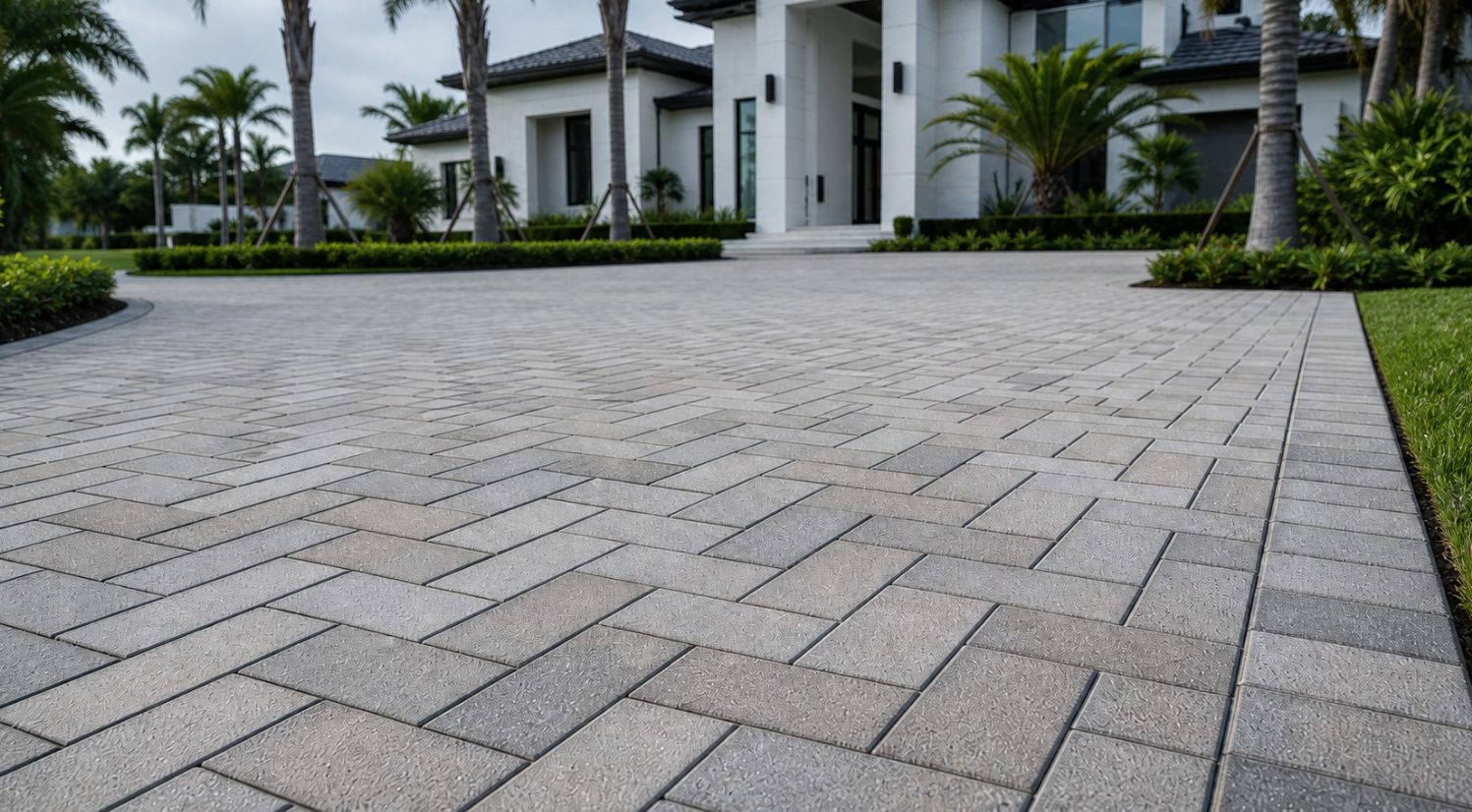
If a corner of your patio has dropped, a joint has opened, or your driveway dips after a summer downpour, the good news is simple: your pavers are almost never the problem. Sinking pavers and uneven pavers are a signal that the base or the drainage beneath the surface has moved, and that is a condition a professional can correct. Because interlocking concrete pavement is designed to be opened and closed like a zipper, quality paver repair usually reuses your original stones and leaves no patch behind. You do not lose the surface. You restore it.
This guide explains why pavers settle in South Florida specifically, how a proper repair works, and how to tell a lasting fix from a cosmetic one that will settle again.
Why Pavers Sink in South Florida
Settlement here is rarely random. It traces back to the ground our pavers sit on and the weather that runs across them.
Sandy, fast-draining subgrade. According to UF/IFAS, Florida's surface soils are predominantly sandy, low in organic matter, and drain rapidly. That kind of low-cohesion soil holds little structure, so when it is saturated and loaded it is far easier to erode and displace than a dense clay would be.
Heavy, seasonal rain and washout. The South Florida Water Management District reports a district-wide 30-year normal of roughly 53 inches of rain a year, with about three-quarters of it falling in the June-to-October wet season. When water is channelized, for example roof runoff hitting the pavers without a gutter, industry standards note that it can wash bedding and joint sand out of the pavement and weaken it. That is the mechanism behind pavers sinking after rain: the sand that supports and locks the surface is being carried away.
Undercompacted base. Industry guidance from ICPI is blunt on this point: adequate compaction of the subgrade and aggregate base is essential, and proper compaction is what minimizes settlement. When the original base was not compacted to standard, it consolidates under use and the surface drops with it. This is the single most common root cause of a sunken patio, and no amount of surface work will cure it.
Lost or improvised edge restraint. Edge restraints are an essential component of a paver system; they hold the units tightly together so the surface stays interlocked. Per CMHA guidance, soil is never an acceptable restraint, and the flat plastic or metal landscape edging sold for flower beds does not provide enough lateral support to hold pavers. Without a proper restraint, the perimeter creeps outward, joints open, and edges drop.
Buried trenches and tree roots. Compaction next to curbs, catch basins, and utility structures is specifically called out as essential to preventing settlement, because soil disturbed by a utility trench often was never restored to full density. Roots can lift and disrupt a section as they grow. Contractor repair guides corroborate root disruption and base washout as common patio failure causes.
What does not apply here: frost heave. Northern repair advice often blames frost heave, the freeze-and-thaw cycle that lifts pavements in cold climates. South Florida ground does not freeze, so frost is not your cause. If you have read that your pavers sank because of frost, that guidance was written for a different climate.
How the Professional Paver Repair Works
The professional fix is called reinstatement, and it is the spine of proper paver repair. Because a segmental pavement can be opened and closed, ICPI describes the result plainly: reinstatement leaves no ugly patch and no reduction in service life, and after a short time the repaired area becomes undetectable. Here is how it goes on a sand-set installation:
Lift the affected pavers. The settled units are marked and pried up. Every undamaged paver is kept for reset. Any cracked units are replaced from a stockpile and scattered through the field so color and weathering differences do not show.
Correct the real cause. The base is excavated and rebuilt, compacted in thin lifts, with density monitored because that step is what prevents the settlement from returning. Where the subgrade is soft or the failure was washout-driven, geotextile fabric is added to keep soil from pumping up into the base and to help hold the sand in place. If the true cause was drainage, that is addressed now, not papered over.
Reset the edge restraint. A proper restraint is installed or repaired along the perimeter, with the base extended out past it, so the repaired section stays locked rather than creeping again.
Re-screed the bedding sand. A nominal one inch of bedding sand is spread and screeded. Critically, sand is never used to level an uneven base. Standards are explicit that unevenness in the sand will telegraph up through the surface over time, so the base must be made right first.
Reset the original pavers and re-sand the joints. The same units go back to the original lines and pattern, the surface is compacted, and the joints are refilled. Where running water is a factor, a stabilized joint sand resists the washout that started the problem.
Reading the Signals: What Settlement Patterns Tell You
The way pavers settle often points to the cause. A short diagnostic:
What you see What it usually signals
A dip that deepens after heavy rain Bedding or joint sand washing out; a drainage or channelized-water problem
One isolated low spot A localized undercompacted or disturbed area, often over a trench
Edges spreading, joints opening near the perimeter Missing, failed, or improvised edge restraint
A broad, gradual sag across a large area Undercompacted base consolidating under load
Heaving or lifting near a tree Root growth disrupting the base
DIY Versus a Professional Fix
The common DIY approach, seen across tutorials and forums, is to pry up the low pavers, add sand underneath, reset them, and refill the joints. Homeowners understandably ask whether that is worth the effort. For a single settled spot with no underlying base or drainage defect, a careful re-level can hold.
The honest limitation is this: re-leveling the surface does nothing about undercompaction, washout, or a drainage fault. Standards are clear that sand must not compensate for a bad base, so if the real cause is beneath the pavers, the low spot simply returns. That is the difference between a cosmetic re-lay and a repair. A professional diagnoses the cause, corrects the base and drainage, and only then resets the surface.
One more distinction matters. Sand-set pavers can be cleanly lifted and reset. Pavers bonded in bitumen, mortar, or adhesive, sometimes used at gutters or channels, cannot simply be pulled up and reused, so those areas call for a different, more involved approach.
Restoring a Premium Surface
A paver patio or driveway is a significant investment, and it deserves a repair engineered to last, not a patch that hides the symptom until the next storm. Done correctly, reinstatement is close to forensic: find the true cause, rebuild the base to standard, restore the restraint and drainage, and reset your own pavers so the surface returns to like-new and the repair disappears.
If your pavers are sinking or going uneven, have the cause diagnosed before anything is reset. To have your surface evaluated and restored, reach out to our team for an assessment. You can also learn more about our paver repair and restoration services and about keeping a restored surface protected with cleaning and sealing.