
Landscape Maintenance
Seasonal Paver Maintenance in South Florida: An Inspection Plan
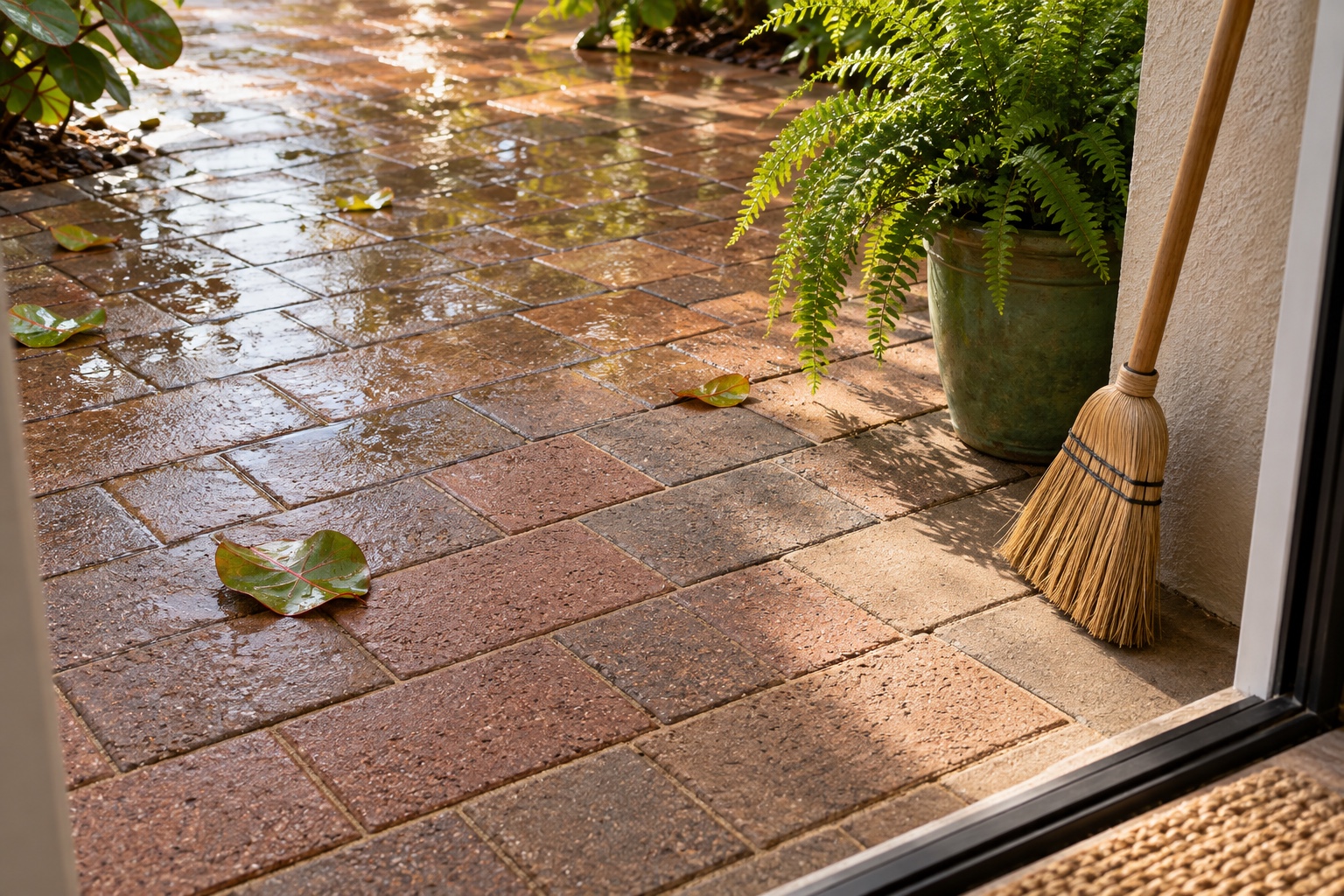
Inspect your pavers before frequent rains, watch how they behave through the wet months, review changes as the rains ease, and use suitable drier weather for planned work. Keep cleaning, joint replenishment, repairs and optional resealing separate in your maintenance plan. Each addresses a different need; an annual reminder alone is no reason to order all four.
Perfect Pavers’ paver cleaning and sealing services can help turn those observations into a defined scope. This guide covers ordinary sand-jointed concrete pavers. Clay pavers and permeable systems need their own maintenance guidance. A Town of Palm Beach restoration below provides a documented example of cleaning, re-sanding and sealing together.
Let weather guide the inspection calendar
The National Weather Service’s Duration of Summer Season in South Florida describes warm, humid summers with frequent showers and thunderstorms, followed by winter conditions with lower humidity and less frequent rain. For maintenance planning, a rain event offers a chance to observe the surface; a suitable dry forecast offers an opportunity to arrange treatment.
CMHA’s Operation and Maintenance Guide for Interlocking Concrete Pavement recommends twice-yearly inspections and identifies rain as a way to spot ponding, settlement and incoming runoff.
For southeast Florida, we recommend fuller inspections before frequent rains and as they ease, with brief checks between as conditions warrant.
Before frequent rains: establish a baseline
Begin with an ordinary walk from the house to the areas you use. Include the route to the side gate, the chairs under cover and the exposed patio beyond them. Collect fallen leaves and loose debris so you can see the surface. Look at the places partly hidden by furniture as well as the view from the back door.
Take an overview photograph and closer views of anything you want to watch. Use a fixed landmark, such as a doorway or planter, so you can find the same area later. Save a short note with each photograph: what caught your attention, whether it was wet or dry, and whether you remember seeing it before. A small, readable record is easier to maintain than a folder of unidentified close-ups.
Find any paperwork from earlier maintenance. Keep the contractor’s description of the work and the product name if one was recorded. If you inherited the pavers with the house, label that history as unknown. You can still document their present condition without guessing what a previous owner applied.
During wet months: follow up on specific spots
Revisit the same spots after thunderstorms have passed and it is safe to go outside. Look across the surface from the doorway, then along the edge by the lawn. Note water that collects in the same place and joints that look emptier than in your earlier photographs.
When you take a close-up, step back for another photograph that shows its location. Date both. Include the side gate or another landmark in the wider view so the person visiting can find the spot even when the surface has dried. Avoid assigning a cause from the photograph alone.
Keep displaced outdoor items out of the walking route. An unstable area or a change that affects walking warrants prompt assessment; keep people away from it. If nothing needs attention, a brief dated note completes the check.
As the rains ease: choose what needs attention
Return to the original viewpoints and compare your notes. Describe each unresolved item in plain language: a mark by the grill, a patch beside the gate, a changed edge near the lawn. Keep observations separate from proposed work until someone has examined the surface.
Sealant cannot repair a failed base. Repeated sand loss, displaced edges or uneven pavers need assessment before a cosmetic treatment is selected.
| Work | What it addresses | What to establish in the scope |
|---|---|---|
| Cleaning | Dirt and identified surface stains | Areas included and treatment of individual marks |
| Joint replenishment | Missing joint material | Where it is needed and why material was lost |
| Repair | Movement, damaged units or support problems | The affected area and the cause to be corrected |
| Optional resealing | A selected surface protection or appearance goal | The desired finish and the proposed product |
You may find that different parts of the property need different work. Request separately described items so you can decide what to authorize. A mark under a dining table and an uneven entrance should have their own entries, even when the contractor proposes handling them during the same visit.
Where an assessment points to driveway reconstruction or replacement beyond cleaning and sealing, review driveway pavers installation services. Have that work described separately, including which existing areas would be retained. A clear boundary helps you compare proposals and understand how much of the entrance would be involved.
In a drier period: prepare for the selected work
CMHA’s Cleaning, Sealing and Joint Sand Stabilization of Interlocking Concrete Pavement recommends identifying stains, testing an inconspicuous area, and using products intended for concrete pavers according to their labels. Address individual stains before overall cleaning. Plan where cleaning runoff will go and coordinate irrigation with the work. For an existing coating, establish compatibility before choosing another treatment. Cure depends on temperature, wind and humidity, so preparation, application and reopening must follow the selected system’s instructions and suitable site conditions.
Sealing is optional, based on the surface, your needs and manufacturer guidance. An automatic yearly application is unnecessary. Review a sample of the proposed finish before authorizing the whole area.
Use the planning conversation to settle household logistics. Decide where outdoor furniture will go, which door the household will use, and how deliveries will reach it. Tell the contractor about regular garden visits or other appointments that cross the work area. Put these arrangements in the same calendar as the work, so everyone sees the access plan.
Leave room to change the appointment when conditions do not suit the chosen treatment. If you are planning a gathering, discuss that date before booking the work. Agree on how a postponement would be handled so guests do not arrive at a closed entrance.
To plan paver cleaning, re-sanding and sealing, request a site visit with Perfect Pavers and bring your seasonal photographs and maintenance history. During the visit, walk through the areas of concern and explain how you use them. Ask for a written scope separating the proposed work, any repair assessment, access arrangements and conditions that could change the schedule before you approve it.
A documented restoration and its practical lesson
Our Palm Beach residence pavers restoration documents pressure cleaning, re-sanding the joints, sealing, and blocking entrances while the surface cured. The photograph shows peach and gray rectangular pavers in front of a yellow single-story home, with a concrete sidewalk crossing the driveway.
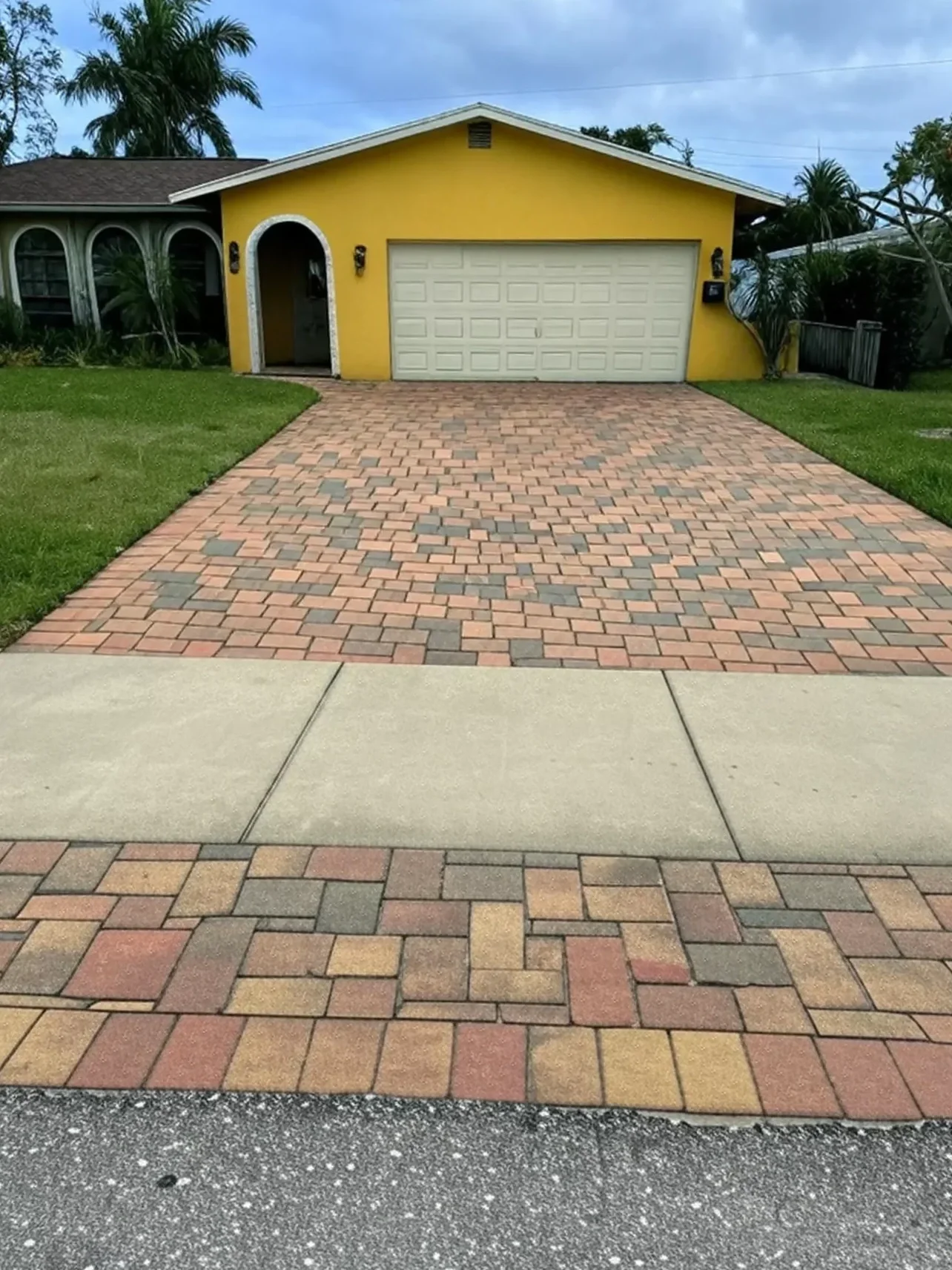
Real project photograph from our portfolio. The opening patio image is a generated illustration.
Use the visible sidewalk crossing as a reference when describing which sections of an entrance need work. The documented entrance closure also makes access part of the job discussion. For your own property, identify the route to the door that would remain available and who would be responsible for keeping visitors off the treated surface.
If an adjoining walkway or pool deck needs work, our Palm Beach pavers and outdoor surface services describe the wider range of projects. Identify those areas during the visit so the written proposal shows the boundary of each requested job.
After any approved work, keep the completed scope and care instructions with your baseline photographs. Record what was treated, what remains to be assessed and where you will look during the next inspection. If several people help maintain the property, give them the same record so the next visit starts with the work already documented.
Contact Perfect Pavers to arrange a site visit for your South Florida home, including the Town of Palm Beach. Share the areas you want reviewed and any recurring observations. Use the visit to agree on priorities, then request a written scope identifying the selected work, product details where applicable, access arrangements and any unresolved repair questions before scheduling.