
Pavers Ideas
Brick Paver Sealing: Confirm Clay or Concrete First
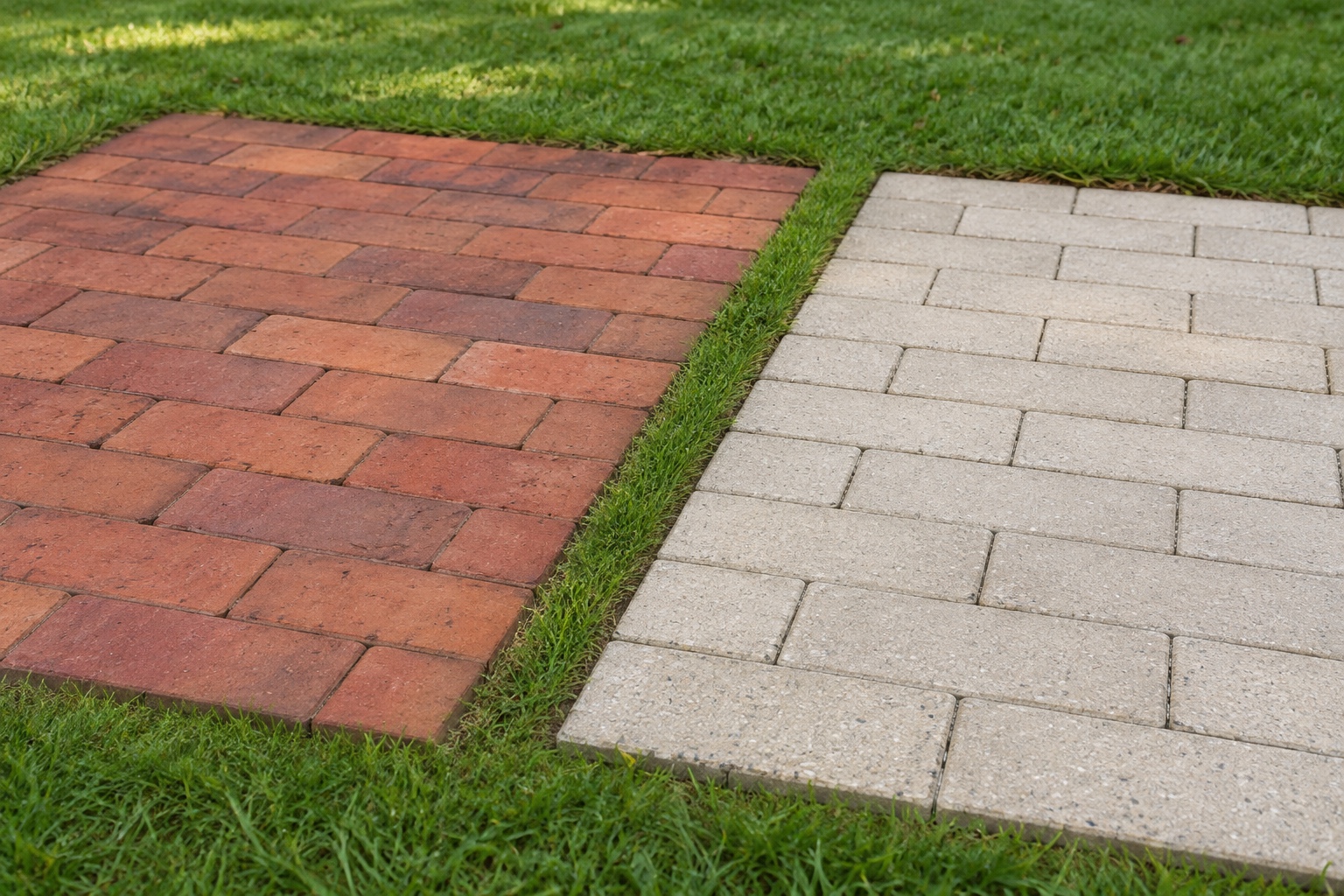
Before approving brick paver sealing, establish whether the surface is fired clay or colored concrete, and identify any existing coating. The everyday label brick pavers does not settle either question. Color alone cannot identify the material. Look for product records, invoices or manufacturer confirmation, then have the proposed treatment assessed for that surface. Sealing should be a decision with a stated purpose, not an automatic addition to every cleaning job.
For a Fort Lauderdale home, a paver cleaning and sealing assessment should address those material questions before you choose a finish or approve work across the property.
AI-generated illustration of separate clay and concrete sample panels, not completed work. The colors illustrate these samples; they are not a guide to identifying material by appearance.
Confirm the product behind the brick appearance
Ask for the original product name, manufacturer and order information. An installation invoice may help, but a line describing only brick pavers is not confirmation of clay. Look for a product reference that can be matched to the installed area. If records concern several deliveries or later repairs, establish which surface each record describes.
The Brick Industry Association’s Clay Pavers describes units made from clay and shale, with color fired through their bodies. This explains a manufacturing distinction; it does not identify the pavers at your home.
Share any spare units, packaging photographs or installation records with the contractor. Ask what evidence supports the identification and what remains uncertain. A spare unit is useful only if its connection to the installed surface can be established. Do not treat a similar red rectangle from another project as a match.
Have the assessment record confirmed clay, confirmed concrete or unresolved material, with the supporting evidence. An unresolved entry should lead to further identification before a treatment specification is accepted.
Map material boundaries and coating history together
Walk the property with the contractor and mark the areas included in the request. Distinguish the driveway field, border, entrance path and pool deck where applicable. A continuous color scheme does not establish that every section is the same product. Record later additions and replacement patches separately until their identity is checked.
Suppose the driveway record identifies concrete pavers but describes the border only as brick edging. Keep the border’s material unresolved until it is confirmed. The driveway paperwork does not settle the border, and a darker color does not make it clay. If both are eventually confirmed as concrete, still record whether they are different products and whether previous coating work covered both.
Add the coating history to the same map. Gather previous sealing invoices, product names and any available application records. Separate what the paperwork confirms from what you remember. If the old coating remains unidentified, write that down rather than treating the surface as uncoated.
For each zone, the map should connect the material evidence, coating information and current concern. A homeowner might want the driveway cleaned while leaving a contrasting border’s appearance unchanged. That preference belongs beside the marked boundary so it can inform the proposed work.
Photographs help locate the areas under discussion. They should accompany the records, not replace product identification or a site review.
Give each material its own decision
For confirmed clay, ask the contractor to explain the proposed work using information applicable to that clay product and its existing finish. A recommendation written for concrete does not answer that question.
For confirmed concrete pavers, CMHA’s Cleaning, Sealing and Joint Sand Stabilization of Interlocking Concrete Pavement recommends products intended for concrete pavers, a small cleaning test and sealing when required. This guidance addresses concrete; it is not a specification for clay.
For an unresolved surface, ask what additional identification is needed, who will obtain it and which work must wait. If a contractor proposes treating every brick-looking area alike, request the material basis for that proposal. A single specification needs justification for every surface it covers.
Match the trial to the area it represents
Agree on the trial locations using the surface map. Each location should answer a stated question about an identified material and its existing condition. A result on the main driveway does not establish what has been demonstrated for an untested border or a later addition.
Before authorizing the trial, ask the contractor to record the proposed preparation, treatment and review point. Distinguish a cleaning trial from a proposed finish sample. If both are under consideration, make clear which stage you are being asked to accept.
Keep photographs and notes tied to each location. At review, discuss the appearance you accept, any remaining marks and any change you do not want carried across the full area. Ask what the trial leaves unresolved. A satisfactory sample should not silently expand the approved work to every surface on the map.
If the proposal changes after the trial, request a revised description before wider work begins. The record should show what changed, which zones it affects and whether your earlier approval still applies.
Arrange a site review with Perfect Pavers and share your product records and surface map. Ask us to review the material evidence, coating history and proposed trial areas, then provide a written scope identifying the work that can be specified and the decisions still pending.
Decide what sealing is meant to accomplish
Describe your goal before approving an added finish. Are you seeking a particular appearance, addressing a defined maintenance concern or simply repeating what a previous owner did? Ask the contractor to explain the proposed benefit for the identified product and your intended use of the area.
Discuss a cleaning-only option where appropriate. If sealing is proposed, ask why it belongs in this scope and what appearance you should review before committing. Avoid making a preferred sheen the substitute for confirming the underlying material.
Do not accept a universal chemical, cleaning pressure or recoating rule based only on the word brick. Have the contractor identify the applicable product instructions and explain how the proposed method relates to the documented surface and coating. This article supplies decision questions, not application settings.
Keep reconstruction outside the surface-treatment decision
Point out uneven areas, displaced edges or drainage concerns during the review. Ask whether they require a separate assessment before the cleaning scope is finalized. Any proposed lifting, base work, slope correction or edge-restraint work belongs in a defined paver repair scope, with its extent and sequence explained.
Our published Pompano Beach driveway and pool deck project records replacement work with a rebuilt base, slopes for drainage and secured edge restraints. It is not a clay-cleaning or sealing result. Its relevance here is the distinction between treating an existing surface and reconstructing the system beneath and around the pavers.
Use that distinction when reviewing your proposal. A surface-treatment decision should not leave proposed reconstruction hidden inside a general preparation line.
Put conditional treatment in writing
The final scope should refer to the same dated surface map used during assessment. For each zone, record its material identification, existing coating information, approved work and any exclusions. Attach the agreed trial record and identify which result supports each proposed treatment.
Make unresolved decisions visible. State what evidence or review is needed before the affected work proceeds, who will obtain it and who may approve the next step. If a zone remains outside the current authorization, mark its boundary clearly. Do not let a conditional option become permission to proceed without that review.
Use our paver cleaning and sealing estimate scope guide to check the wider proposal once the material decisions are recorded. Confirm that later substitutions or expanded work will be described and agreed in writing, including any change to price or schedule.
Keep the final identification and treatment record with your property documents, adding any later repairs or coating work. When the home changes hands, pass on the material names and zone boundaries. The next owner should have more to work with than another invoice describing everything as brick pavers.
For a home in Fort Lauderdale or elsewhere in Broward, contact Perfect Pavers through our paver cleaning and sealing services to request a site review. Ask for the resulting written scope to distinguish each material, proposed treatment and pending decision before you approve the work.