
Pavers Ideas
Paver Cleaning and Sealing Estimates: Compare the Scope
AI illustration: conceptual samples and estimate sheet, not company samples or a project record.
Compare paver cleaning and sealing estimates by the assessed surface, preparation, treatment of old coatings and stains, joint work, named sealing product and finish, exclusions, and the process for approving changes. A price per square foot becomes useful only after those items describe comparable work. Each quote should identify the included areas and edges, explain why their condition changes the work, and separate confirmed tasks from items that depend on an assessment or test.
For homeowners in Broward and Palm Beach counties, paver cleaning and sealing services should begin with the existing surface. The useful comparison is what each contractor proposes to do to your particular driveway, patio or walkway, and what remains unresolved.
Put every estimate on the same footprint
Walk the boundaries before comparing totals. Does the driveway description include the entrance walk, border, narrow strip beside the garage and pavers beneath movable planters? Are step treads included while vertical faces are excluded? Mark those differences on the same photograph or simple sketch for every bidder.
Separate materials and previously treated sections. A decorative border or later addition deserves its own description if the proposed treatment differs. Ask why that section requires different work, rather than accepting an unexplained area adjustment.
Your rough measurements help start the conversation. Label them as homeowner estimates. The contractor’s measured scope should identify the areas counted, any deductions, and how separately treated edges or steps are listed. Resolve different measurements by comparing boundaries before debating the rate. A larger measured area may simply include work missing from another proposal.
Bring a small, useful property record
Give each contractor the same information so the proposals begin with the same known conditions:
- Overview photos: show each work area from end to end, including borders, steps and adjoining surfaces that need protection.
- Condition photos: pair close views of stains, worn patches, missing joint material or uneven pavers with wider views locating them. Note whether the surface was wet or dry.
- Product records: gather previous sealer labels, invoices, application dates and any available product sheets. Mark unknown products as unknown.
- Previous work: identify repaired sections, additions, past stripping or spot treatments, and recurring trouble after earlier maintenance.
Include access constraints and household use: parked vehicles, furniture, irrigation and routes that must remain available. Ask who moves belongings and protects adjacent finishes. Photographs make the consultation more productive, but they do not replace measurements or establish which old coating is present.
Separate preparation from the new finish
CMHA’s Cleaning, Sealing and Joint Sand Stabilization of Interlocking Concrete Pavement advises identifying stains, evaluating a small inconspicuous test area, and following product directions. It distinguishes cleaning, joint stabilization and sealing, while explaining that some product functions overlap.
Translate that distinction into separate scope descriptions. Ask what general cleaning covers, which stains receive specific treatment, and whether old coating removal is included. A line reading “clean and seal” does not answer those questions. Ask how any remaining discoloration will be discussed before the finish is applied.
For a proposed test, record its purpose, location, what it includes, and who reviews the result. Establish whether it is included or separately priced. If coating condition is the unresolved issue, our guide to cloudy paver sealer before resealing explains what information to gather. A photograph alone cannot justify a particular removal method.
A Broward case shows why removal needs its own line
Our Broward cleaning and sealing project documents stripping the previous epoxy sealant, resanding the joints and applying new sealer. Those are distinct tasks. A proposal that includes existing coating removal covers different work from one that assumes the surface is ready after cleaning.
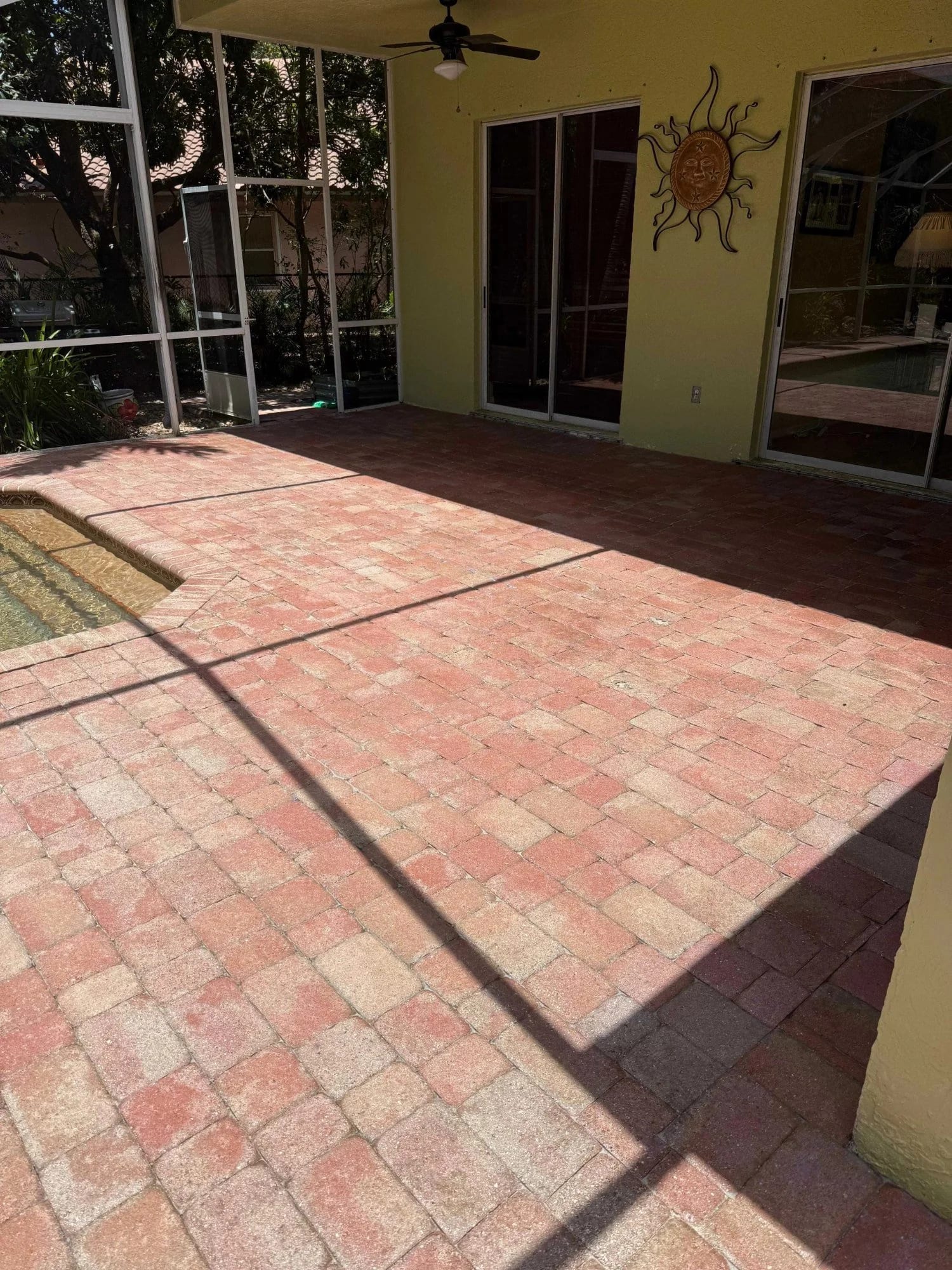
Real project photo, Broward: the documented scope included previous epoxy sealant removal, joint resanding and new sealer.
This case explains a scope difference. It does not identify the coating on your property or establish which treatment your pavers need.
Name the joint work and the actual sealing product
Ask whether joint work means replenishing selected areas or removing and replacing existing material across a defined section. Have the proposal name the joint material and explain why that approach fits the assessed condition. If stabilization is proposed, clarify its role and whether it is included in the sealing system or listed separately.
For the finish, request the actual product name, its current technical information, the proposed appearance and the areas where it will be used. Descriptions such as “premium sealer” leave too much open. Ask the contractor to explain suitability for the surface, existing treatment and intended use, including wet walking areas where relevant.
Keep appearance decisions specific: desired color enhancement, sheen and acceptable variation. If a trial finish is proposed, agree how it will be reviewed before authorizing broader application. Retain the approved product record for future maintenance.
Ready to turn those notes into a proposal? Use our consultation and estimate process to arrange a discussion with your photos and product records. Request a site assessment, then a written scope identifying the measured areas, preparation and proposed finish.
Keep physical repairs separate
CMHA’s Operation and Maintenance Guide for Interlocking Concrete Pavement treats joint sand loss and inspection for distress as maintenance concerns. It identifies settlement and ponding as conditions to investigate. These observations call for assessment beyond choosing a surface finish.
Cleaning and sealing do not lift sunken pavers, rebuild a failed base or correct drainage. Ask for repair locations and responsibilities to be stated separately. Consider driveway pavers installation only when the assessed condition warrants rebuilding or replacement. An unfamiliar coating or a wish for a different sheen alone does not establish that need.
Sort the proposal into included, conditional and excluded work
Use three short lists beside each estimate:
- Included: measured areas, specified preparation, defined joint work, selected sealing system, protection and cleanup covered by the base proposal.
- Optional or conditional: elective additions, allowances or unresolved work, with the location, reason and decision needed before proceeding.
- Excluded: surfaces and tasks outside the proposal, plus any work another contractor or the homeowner must arrange.
Keep an elective finish upgrade separate from an unknown coating-removal requirement. The first is a choice; the second may affect whether the proposed work can proceed. Where an allowance appears, ask what it covers, what remains uncertain and what finding would change it. “As needed” should lead to a defined review step.
For example, one estimate might include general cleaning while leaving stain treatment pending a test. Another might include treatment of the marked areas. Request that distinction in writing before treating the totals as comparable.
Agree who receives findings after a test or newly exposed condition, who can approve changed work, and how the revised scope and price will be presented before proceeding. Keep that decision with the estimate so nobody has to reconstruct it from scattered conversations.
Choose a scope you can review at completion
Before approving work, be able to point to each included area, identify the preparation and finish, and explain every unresolved item. Ask what completion review and product care information will be provided, including instructions for reopening the surface to household use. Compare the finished work against that agreed scope.
For your Broward or Palm Beach County home, request a paver cleaning and sealing consultation with your photos, previous product records and estimate questions. Ask for a site assessment followed by a proposed scope separating confirmed work, conditional items and exclusions, so your decision rests on what your property needs.
Planning access during the work? Our patio furniture and access guide helps you agree who clears, stores and returns movable items before cleaning and sealing begins.
For suspected driveway stains, compare the assessment steps in our oil spots on driveway pavers guide before authorizing cleaning, localized replacement or a new finish.
If orange marks keep returning, use our recurring orange stains on pavers guide to organize the photo history and separate cleaning from assessment of a possible source.
Before choosing products for a brick-look surface, our guide to clay and concrete paver sealing explains why the material needs to be identified first.