
Pavers Ideas
Orange Stains on Pavers: What to Check Before Cleaning Again
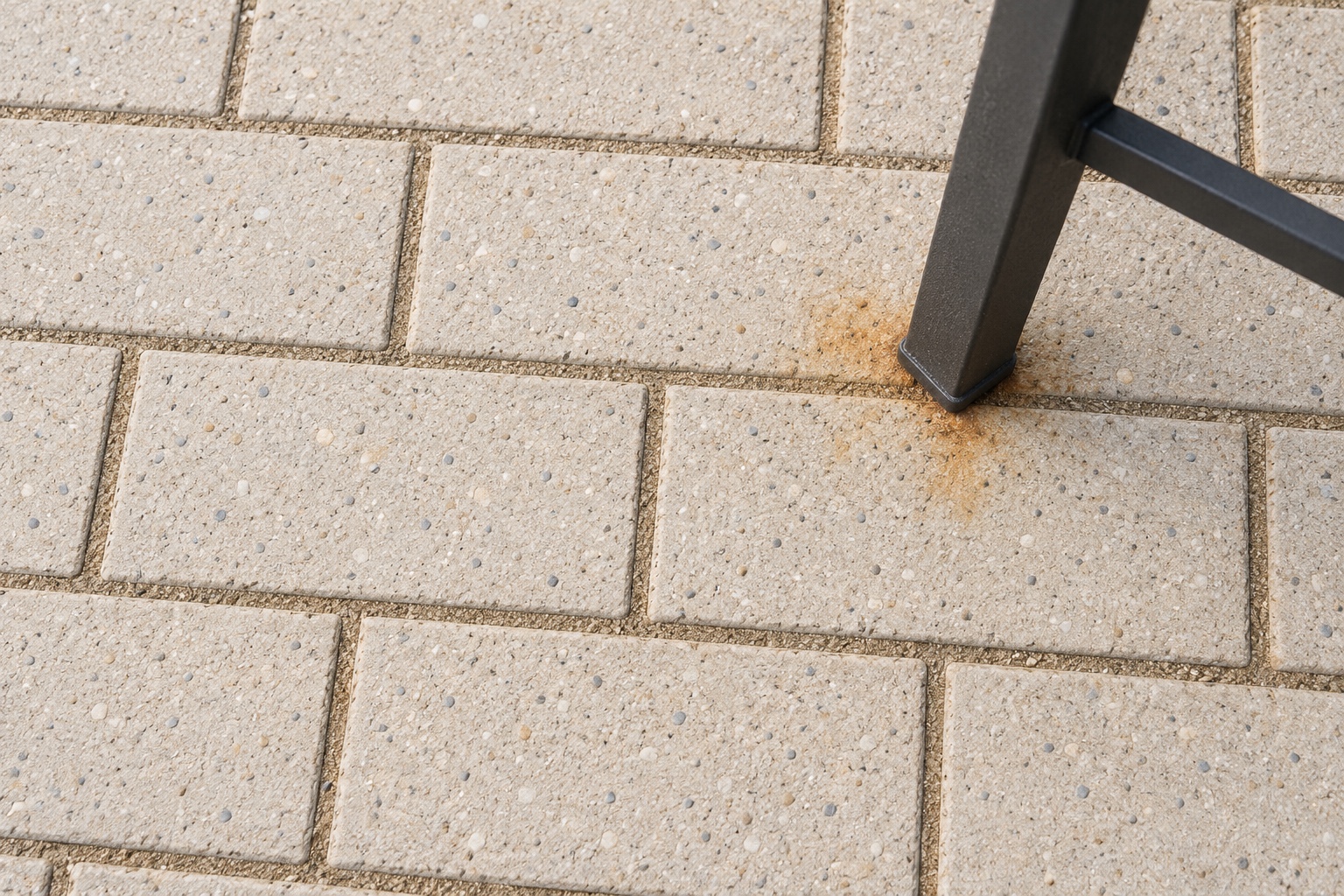
For recurring orange or brown marks on concrete pavers, record where they return and what happened between cleanings before booking another treatment. Color alone does not prove rust, iron or well water. For a Broward homeowner, the useful starting point is a dry photo record, a short history of nearby furniture and sprinklers, and details of previous products. A cleaning appointment can address the surface; it cannot establish that a suspected source has been corrected.
Our paver cleaning and sealing services provide a starting point for discussing the marked area and the work it may need. Bring observations, including what remains unknown, so the consultation begins with your property rather than a presumed diagnosis.
AI-generated illustration: an orange mark beside a metal chair foot on concrete pavers. It does not depict completed work or establish the mark’s cause.
Record the same patch before changing anything
Take an overview locating the discoloration within the patio, walk or driveway, then closer photographs showing its edges. Use a recognizable joint intersection to find the same spot again. Keep dry before-and-after photographs from the previous cleaning if you have them. Label any wet photographs so they are not mistaken for the dry result.
Write down whether the mark remained visible after cleaning or disappeared and was noticed again later. If nobody checked the dry surface immediately afterward, say so. That gap matters when describing the problem: a lingering mark and an apparent recurrence are different histories, even when today’s photograph looks similar.
Describe the pattern without naming a cause. Is it concentrated around a furniture foot, spread across several blocks, or repeated along an edge? Include nearby unmarked areas in the record. Save the original images without filters, and note when each was taken. A useful comparison keeps the location, viewpoint and surface condition as consistent as practical; it does not need professional photography.
Reconstruct what happened nearby
Make a short timeline of cleaning visits, furniture moves and sprinkler service. Add anything you actually observed between visits, such as water reaching the marked area. Separate firsthand observations from suggestions made by a previous contractor. An invoice describing rust treatment records what was purchased; it does not by itself confirm what caused the discoloration.
Photograph nearby metal furniture, fixtures and their contact points before rearranging them. Note whether a chair or planter normally sits elsewhere. For sprinklers, record changes you know about and share existing service records. Do not infer water chemistry from the stain’s color or assume proximity proves a connection.
If the history points toward equipment or metalwork, arrange an assessment with the relevant irrigation or metal specialist. Ask that trade to explain its findings and proposed work separately. Pavers cleaning is not a promise to repair irrigation or correct a metal component. Keep those responsibilities clear when coordinating appointments, especially if different people maintain the property.
Make the proposed treatment a reviewable decision
CMHA’s Cleaning, Sealing and Joint Sand Stabilization of Interlocking Concrete Pavement recommends identifying stains and evaluating a limited test, with suitable products and surface preparation before sealing. Compatibility is product specific; a result is not guaranteed. Have the contractor test a suitable cleaner on your concrete pavers. Do not transfer concrete chemical guidance to natural stone.
Before authorizing that visit, agree on its purpose, location and deliverable. Who will photograph the selected area, explain the findings and ask for your decision? Specify whether the visit ends with a review or already includes permission for broader work. This avoids an uncertain handoff between assessment and treatment.
Bring previous cleaner and sealer names, invoices, application dates and any available product records. Mark missing information as unknown instead of selecting a likely product from memory. Include prior spot treatments as well as whole-area work.
Request a consultation with Perfect Pavers using that photo history and your records. The next step is to discuss what happened, arrange an assessment of the affected area and define what needs your approval before further work. Identify any separate trade visit still pending when you contact us.
Agree on the appearance you will accept
Describe your priorities in ordinary viewing terms. A mark beside the dining chairs may matter differently from one at the far driveway edge. Show where you normally stand or sit and which areas draw your attention. This gives the discussion a practical target beyond making every block look identical in a close photograph.
Ask the contractor to document any residual marks before you approve the next stage. Decide whether the proposed appearance is acceptable, whether you want another discussion, or whether replacement deserves consideration. Avoid approving an undefined series of repeat visits simply because the first visit is already booked.
If replacement is proposed, compare candidate units alongside the surrounding pavers and discuss a possible mismatch in color, texture and wear. Agree on the specific units involved and your tolerance for visible variation before removal. Retain that approval with the photographs so the eventual review uses the same expectations.
Give maintenance concerns their own scope
CMHA’s Operation and Maintenance Guide for Interlocking Concrete Pavement distinguishes joint condition, movement and ponding from cosmetic cleaning. It places sealing after cleaning. Flag these conditions for assessment separately from discoloration; a stain appointment should not silently stand in for a repair evaluation.
For a driveway, clarify whether the discussion concerns existing pavers maintenance or a broader installation decision. Our driveway pavers installation service is relevant if the assessment leads you to consider replacing an area. Orange marks alone are not a reason to commission a new driveway. Ask what observed condition supports any proposed expansion of the work, and request its boundaries in writing.
A Broward project illustrates separate stages
Our documented Broward cleaning and sealing project involved stripping an old epoxy coating, re-sanding the joints and applying new sealant. Those are separate stages that a homeowner can look for when reading a proposal.
The project is included here to explain scope separation. It is not a rust-treatment example or evidence that a recurring stain source was corrected. Its coating removal does not establish that your surface needs stripping. Use your own records and assessment to discuss the work, rather than requesting every stage from a portfolio project with a different history.
Separate the decisions in the written proposal
Ask for cleaning, repairs and sealing to appear as separate items, with the affected areas identified. Any coating removal or replacement should also be explicit. The paver cleaning and sealing estimate scope guide provides a fuller way to compare those boundaries across proposals.
For this recurring-mark problem, add who will review the appearance, how additional work is authorized, and which questions remain for another trade. Confirm who moves furniture and when the documented contact points can be photographed again. Keep a copy of the agreed scope and the products actually used.
If marks reappear, continue the same photo record rather than starting a new account from memory. Send the dated comparison with a description of what changed nearby. Ask what new information would justify another treatment and what remains unresolved about the potential source.
For your Broward property, arrange a paver cleaning and sealing consultation with the before-and-after dry photos, nearby furniture and sprinkler history, and available product records. We can begin by reviewing that history and discussing an on-site assessment. Use the resulting proposal to agree on the treatment area, acceptable residual marks and separately listed work before booking the next stage.