
Pavers Ideas
Can You Lay Pavers Over Concrete?
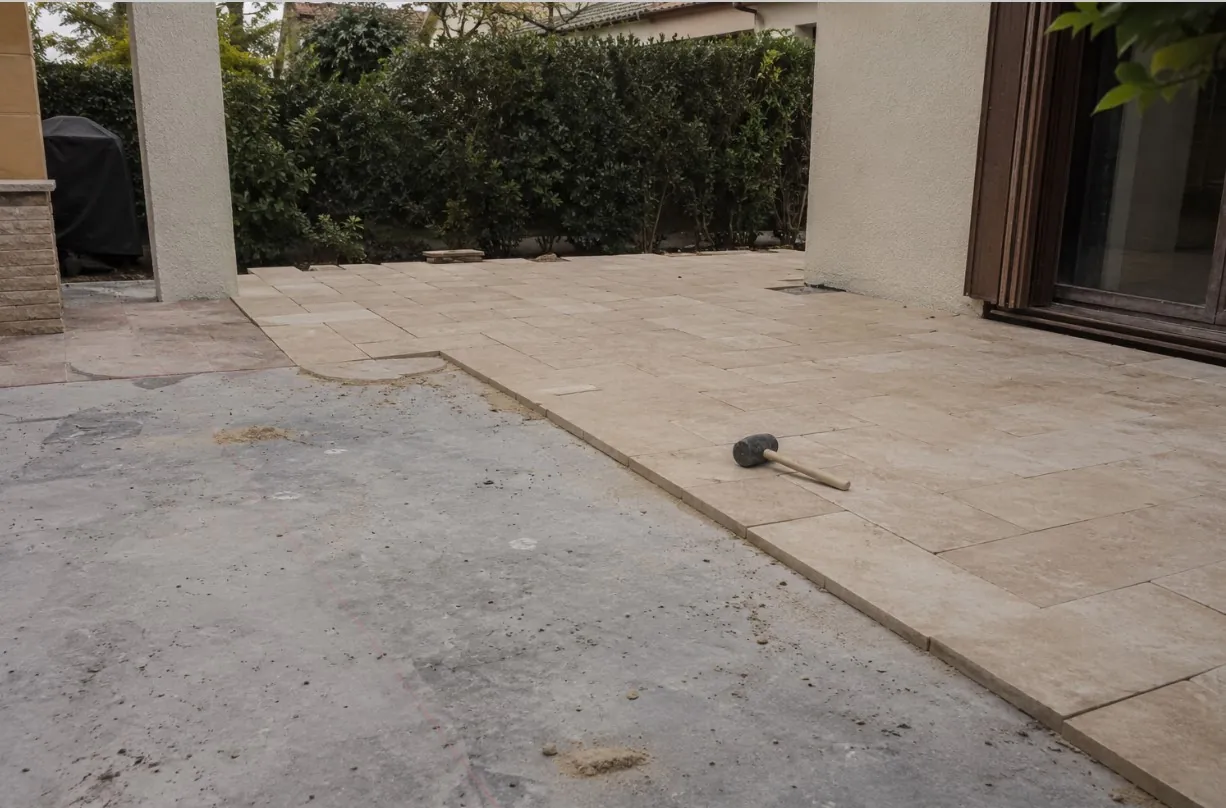
If you have a tired concrete driveway, patio, or pool deck, tearing it all out sounds expensive and messy. So the obvious question is whether you can simply lay pavers on top instead. The answer is yes, you often can, and it is a common way to get a fresh paver surface without demolition. But it only works when the concrete underneath is in the right condition, and doing it over a slab that is not fit for the job just moves the problem up an inch. Here is how to tell the difference.
When laying pavers over concrete works
An overlay works when the existing slab is sound and stable. That means:
- The concrete is structurally solid, with no major cracks, heaving, or sunken sections.
- It drains properly and does not pond water after rain.
- There is enough height to add the pavers without fouling doors, thresholds, or the pool coping.
If your slab meets those conditions, it makes a strong, ready-made base. You avoid the cost and disruption of demolition and hauling, and the job goes faster. This is one of the most popular ways to give a dated but solid concrete patio or pool deck a completely new look.
When you should not lay pavers over concrete
If the slab is failing, an overlay is a mistake. Pavers laid over cracked or shifting concrete will move exactly as the concrete moves underneath them, and the cracks telegraph up through the new surface within a season or two. In these cases the honest answer is to remove the old concrete and build a proper base.
Tear out and start over when:
- The concrete has large or active cracks, or sections that have heaved or sunk.
- Water pools on the surface, which points to a drainage or slope problem an overlay will not fix.
- Adding height would block a door, raise the surface above the pool coping, or create a trip hazard.
Covering a bad slab does not repair it. The same forces that broke the concrete will work on your new pavers.
How it is done right
When the slab passes, the method matters. There are two main approaches.
The first uses thin overlay pavers, around 30mm, made specifically to go over concrete. These keep the added height to a minimum, which is why they suit spots where clearance is tight, like a pool deck against fixed coping. Our guide to paver thickness explains where the thin overlay pieces belong and where they do not.
Whichever pavers are used, three details make or break the result:
- Drainage. Water has to have somewhere to go. A good installer accounts for how water moves off the slab so it does not get trapped between the concrete and the pavers.
- Edge restraint. The perimeter needs a solid edge so the pavers cannot creep or spread, since they are not dug into a gravel base the usual way.
- Height and transitions. Doorways, garage aprons, and coping all need clean transitions so the new surface sits right.
This is not a surface to improvise on. Done well, an overlay lasts for decades. Done carelessly, it traps water and lifts at the edges.
Overlay or tear out: the quick verdict
Ask one question first: is the concrete underneath sound and well drained? If yes, an overlay is a smart, cost-effective way to get a brand-new paver surface without demolition. If no, spend the money on removing it and building a proper base, because anything you lay over a failing slab will fail with it.
Not sure which camp your slab is in? Reach out for a free on-site visit. We will check the condition and drainage of your concrete and tell you honestly whether it is a good candidate for an overlay or a better candidate for a fresh start.