
Pavers Ideas
Landscape Lighting Beside a Paver Driveway: Plan Before Installation
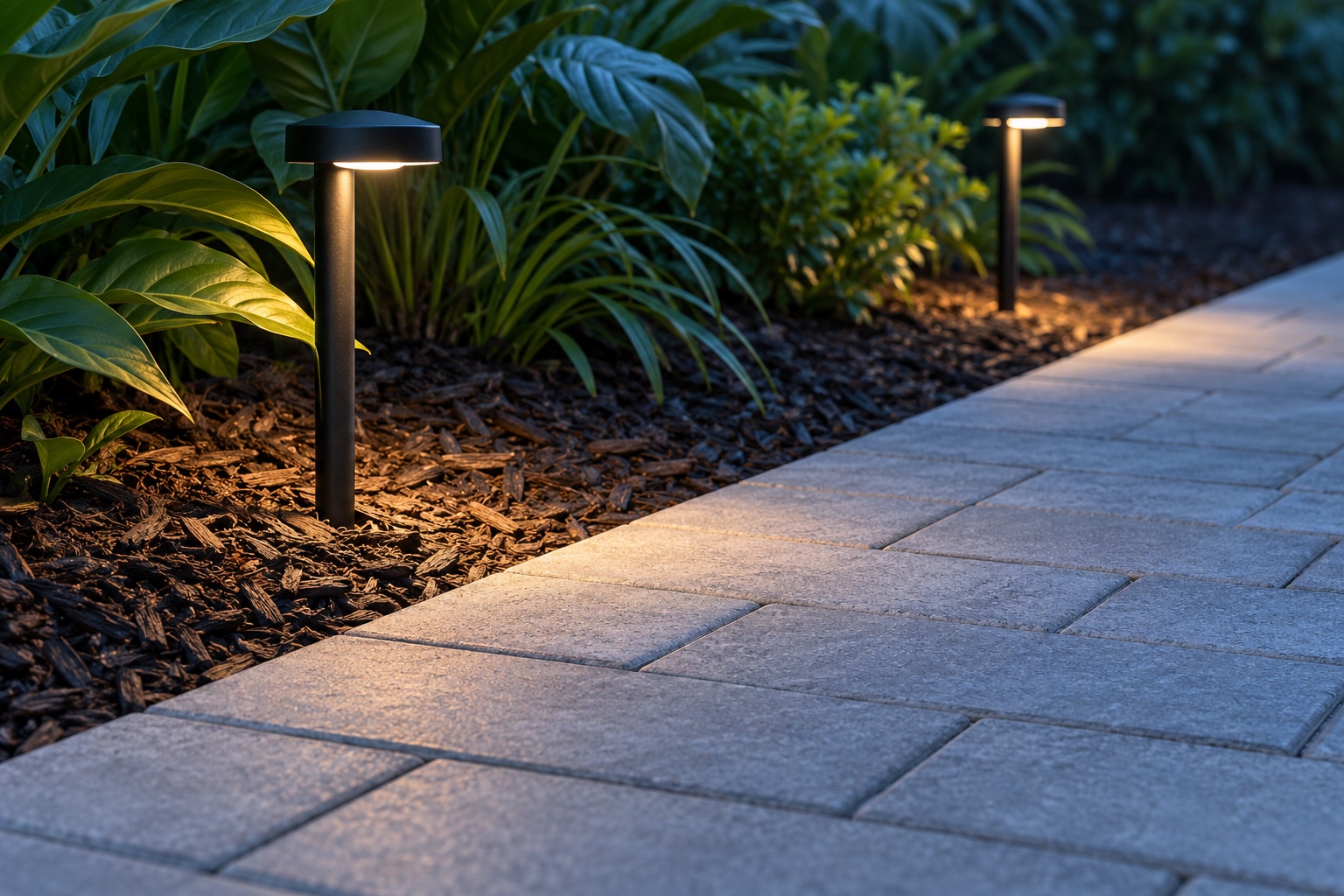
AI illustration of a lighting layout concept, not a completed project or an electrical installation detail.
Plan new landscape lighting alongside your driveway replacement, before approving the paver layout. Bring your walking route, parking habits and planting priorities to a shared review with the lighting installer and paver contractor. Agree where fixtures belong, how the work meets at the driveway edge, who completes each stage and how someone will reach the lights for maintenance. Any proposal that crosses the paver area needs a solution agreed for that site.
For a Broward or Palm Beach County home, make these decisions part of your driveway pavers installation plan. A fixture selection alone leaves too much of the driveway arrangement undecided.
Start with the route you actually use
Describe what you want the lighting to help you see. The route from a parked car to the entrance, the driveway boundary and a planting feature are different priorities. Rank them before reviewing decorative fixture choices. That gives the lighting designer a clear brief when those priorities compete for the same space.
Walk through an ordinary arrival: where you park, which door you leave the car through, where you carry groceries and how visitors approach. Include the route when another vehicle occupies the usual parking spot. Show these movements on your proposed driveway sketch rather than assuming that the shortest line to the front door is the route everyone takes.
If replacement also changes the entrance path, review the walkway and driveway layout together. Identify where people leave the vehicle area and join the path. Ask the lighting designer to assess those transitions alongside any planting accents. A photograph of an attractive illuminated garden can communicate mood, but it cannot settle the arrangement for your parking and walking routes.
Test fixture locations against everyday access
Review proposed fixture positions with your vehicles parked as you normally use them. Point out door openings, the space needed to step out and the route around the rear of the car. Include house doors that open toward a bed or driveway. A fixture symbol on a plan should be checked against those movements before its location is accepted.
Consider a position in the planting bed outside the pavers as an option for review. Ask whether people, vehicles and routine garden work can pass without that location becoming an obstruction. Moving a light into a bed still leaves questions about plant growth, pruning access and the view from the driver’s seat.
Give the lighting designer both daytime and nighttime priorities. You may want discreet fixtures during the day, a clear walking route after dark and limited visual distraction from the driveway. Ask how the proposed arrangement will be evaluated with cars present. Keep those expectations in the lighting scope, with performance assessment assigned to the lighting professional.
Keep lighting choices separate from driveway support
CMHA’s Edge Restraints for Interlocking Concrete Pavements explains that restraints hold pavers together and resist spreading under traffic. Its discussion of site fixtures also connects their installation with edge restraint arrangements. Landscape lights do not replace the driveway’s edge restraints; their positions must be coordinated with the paver design.
Show the paver installer where tires travel during parking and turning, including any proposed change to the driveway outline. Have that installer assess the driveway support and edge arrangement for the intended use. The lighting designer needs that boundary when considering fixture positions; the fixture layout should not become an instruction to alter the driveway structure.
If a fixture or proposed sleeve crosses the paver area, the designer or electrician and paver installer should agree the site-specific solution. Ask them to define its purpose, location, responsibilities and effect on the paver work. A sleeve is not a universal requirement for a new lighting layout.
Agree on the drawing and the work sequence
CMHA’s Construction of Interlocking Concrete Pavements addresses utility coordination and vehicle and equipment access in job planning, then establishes the work area and levels through layout. These are planning responsibilities to resolve before construction progresses. The publication does not supply a landscape-lighting design for your property.
For your project, put the driveway outline, adjoining path, planting boundaries and proposed fixture positions on the same drawing. Have both installers review the same revision. Record which items you have accepted and which still need a professional decision. An attractive lighting concept and a separate driveway sketch are not yet an agreed combined plan.
Ask for a sequence that identifies dependencies: which decisions must be settled before affected paver work, what access the lighting installer needs and who confirms readiness for the next stage. The teams should determine that order for the actual design. Name the person who will communicate changes and obtain approval if a fixture moves or the driveway boundary changes.
When comparing proposals, look for the work behind the fixture symbols. Ask each contractor to identify coordination visits, agreed bed restoration and any paver work associated with the lighting layout. Clarify how a later design change would be reviewed and priced. If part of the design is still undecided, have the proposal identify that open item instead of treating the overall total as a complete description of the work.
Request a driveway layout consultation with Perfect Pavers. Use our paver driveway site visit guide to prepare your sketch and questions, then ask the team to assess the driveway footprint and identify the decisions to resolve with your lighting installer before agreeing the paver scope.
What the Pompano Beach project demonstrates
Our Pompano Beach driveway and pool deck installation documents paver installation in both areas, base reconstruction, slope for drainage and secured edge restraints. It is an example of coordinated paver work, not evidence that lighting was installed on that job.
Use that distinction when discussing your own proposal. A paver portfolio can support a conversation about the surfaces and construction work it documents. Ask your lighting professional to explain the lighting design and its separate scope. Keep each contractor’s responsibilities tied to what they have actually agreed to provide.
Leave room to maintain the fixtures
Before accepting the layout, ask the lighting installer how each fixture will be reached for cleaning, adjustment or replacement. Review that access with the planting plan. A position that looks open before planting should also be considered alongside the intended mature planting and the gardener’s working route.
Discuss what happens if a later service visit affects the pavers. Identify who would assess the affected area, agree any removal and restoration, and approve the work before it starts. Keep fixture maintenance responsibilities and paver restoration responsibilities explicit in the relevant agreements.
If you intend to add more lighting later, label that part of the drawing as future work. Have the professionals assess what, if anything, needs to be included now. Distinguish a planned future option from work included in the current contract so neither team relies on an assumption.
Keep an approved plan and useful handover records
Before work begins, retain the drawing approved by you and the responsible installers, with its revision identified. Keep the paver proposal and lighting proposal alongside it. Check who supplies the fixtures, who arranges the lighting work and who handles any agreed changes to planting beds. Do not assume that electrical work comes with a driveway replacement contract.
At handover, request an updated record of fixture positions and any approved changes from the responsible professionals. Keep product information, care instructions and service contacts with the driveway records. Ask who handles later lighting adjustments and who should be contacted if a proposed change affects the pavers. A drawing is most useful when you can tell what it records and whom to call about it.
To assess your driveway layout, arrange a consultation through our driveway pavers installation service. Bring the lighting concept, your parking and walking priorities, and the lighting installer’s contact details. The next step is a site review of the proposed driveway and its connections, followed by clarification of the paver scope and outstanding coordination decisions before you approve the work.