
Pavers Ideas
Paint Spills on Pavers: Cleaning or Selective Replacement?
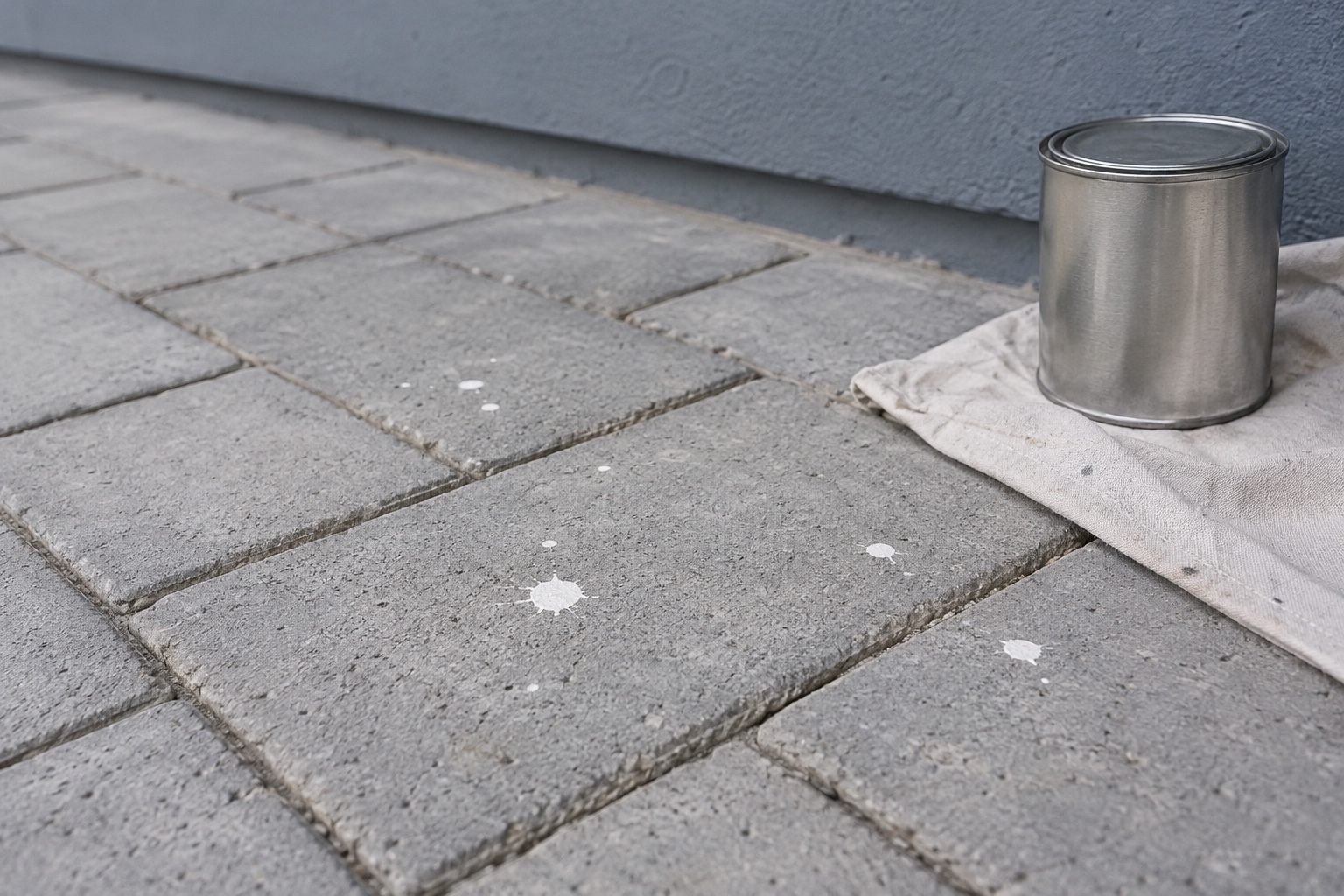
AI-generated illustration of paint drips, not completed work or diagnostic proof.
Paint on concrete pavers may be removable, while selective replacement can make sense for a small area that cannot be cleaned to an acceptable appearance. Compare a limited cleaning sample with available replacement units before authorizing the full job. Bring the paint container details and the pavers’ coating history to the assessment. For fresh drips, preventing spread comes first. For dried marks, the immediate task is documenting the affected area and any previous cleanup attempts.
For Fort Lauderdale homeowners, paver cleaning and sealing services are the starting point for discussing the spill and whether the proposed work also needs a repair component.
Record what landed on the pavers
Keep people, pets and movable belongings from carrying fresh paint beyond the affected area. Photograph the paint container, including its product name and identifying label. Ask the painter which material was being used at that location; a nearby can is a clue, not confirmation. Save the job paperwork and note when the spill was noticed.
CMHA’s Cleaning, Sealing and Joint Sand Stabilization of Concrete Pavers advises blotting fresh paint with rags or paper towels instead of wiping, which spreads it. It also supports testing a stain-specific cleaner in an inconspicuous area and considering replacement for small stained areas.
Describe what you can see: liquid drops, a dried raised film, scattered flecks or a fine mist across several pavers. Distinguish when the painting happened from when you discovered the marks. A dry-looking surface does not identify the paint or establish how it will respond to treatment.
For an old or unidentified coating, pause before attempting removal. Keep scraping and improvised chemical trials out of the information-gathering stage. Report anything already attempted, including the product name and where it was applied, so the assessor can distinguish the original spill from later changes.
Build a useful photo and surface history
Start with a wide view showing the affected area in relation to the house or courtyard. Add closer views of the largest drips and the faintest overspray. Photograph beyond the obvious marks so the contractor can see where the affected area appears to end. Keep unedited originals alongside any annotated copies.
Include a view from the doorway or seating position where the marks bother you most. This explains the visual priority better than a closeup alone. Mark locations on a simple sketch, especially if scattered spots belong to different painting sessions.
Gather the paver invoice, any spare units, previous sealing records and known touchups. Identify sections installed or treated separately. If you do not know whether the pavers were sealed, say so. Also identify nearby wall paint, doors, metalwork and other finishes that need to stay outside the treatment scope.
Ask what the sample will reveal
Before approving treatment across the affected area, agree on a limited sample and a review afterward. Ask the contractor why the selected spot represents the spill. A large drop and fine overspray are different observations to document; a result on one should not silently become approval for both.
Have the contractor name the proposed treatment and explain its suitability for the identified paint, pavers and coating history. Record the sample location and what happens if the result is disappointing. Your decision concerns the remaining paint and the appearance of the surrounding surface, including visible edges or uneven sheen.
The Paint, Tar and Rubber Remover technical data sheet, US edition updated January 13, 2023, requires a hidden-area test and states that this particular product dissolves sealant. That is a product-specific example of why paint removal can involve coating work, not a recommendation or a statement that Perfect Pavers uses it. Any subsequent sealer depends on the selected material’s compatibility and the surface’s readiness.
If coating removal becomes a separate part of the proposal, our guide to agreeing on a paver sealer stripping test area explains that approval boundary. Ask where the proposed coating work would stop and how that boundary would look from your usual viewing positions.
Compare the resulting appearance and scope
A proposal should make the alternatives understandable before you approve more work. Compare what would remain visible, how much surrounding material would be disturbed and which decisions are still open.
| Option | What supports considering it | What to settle before approval |
|---|---|---|
| Localized cleaning | The sample leaves an appearance you can accept. | Remaining marks, treatment boundary and any coating work. |
| Selective replacement | A confined group of stained pavers remains unacceptable. | Available units, visible match and the area that must be lifted. |
| Combined work | Different parts of the spill call for different approaches. | Which pavers stay, which change and how the finishes meet. |
For replacement, compare actual candidate units beside the existing surface before agreeing to an order. Check the shape, face texture, edge profile and color together. Ask whether stored spares are usable. A matching product name is not a promise that a repaired area will disappear visually.
Have paver repair and selective replacement scoped beyond the stained faces alone. Ask the contractor to show the lifting boundary and identify any neighboring units that need to be moved for access. The proposal should address resetting retained units, joint restoration and how newly discovered conditions would be handled before additional work proceeds.
Request a consultation with Perfect Pavers using the container photos, spill overview and surface records. The next step is to discuss what needs assessment and ask for a proposal that separates the sample, localized cleaning and any replacement option. This gives you a decision to make before authorizing the full area.
Agree on protection and residue handling
Identify a household route that stays available while the affected area is being assessed or treated. Tell the contractor about scheduled painting or other work nearby, so another trade does not enter the same space or add fresh overspray during restoration.
Assign responsibility for protecting adjacent finishes and collecting, containing and removing paint residue and treatment waste. Ask how the crew will keep residue from being carried across clean areas. Include moving and returning furniture, handling disturbed joints and leaving the work area ready for its agreed next use. Have the contractor explain when access can resume under the selected treatment requirements.
A Broward coating restoration example
Our Broward cleaning and sealing project documents removal of an old coating, cleaning, resanding and application of a new coat. It is not documented as a paint-spill job. Its relevance here is the scope: cleaning, joint work and coating renewal are separate items worth identifying in a restoration proposal. The project does not establish a paint-removal result for your property.
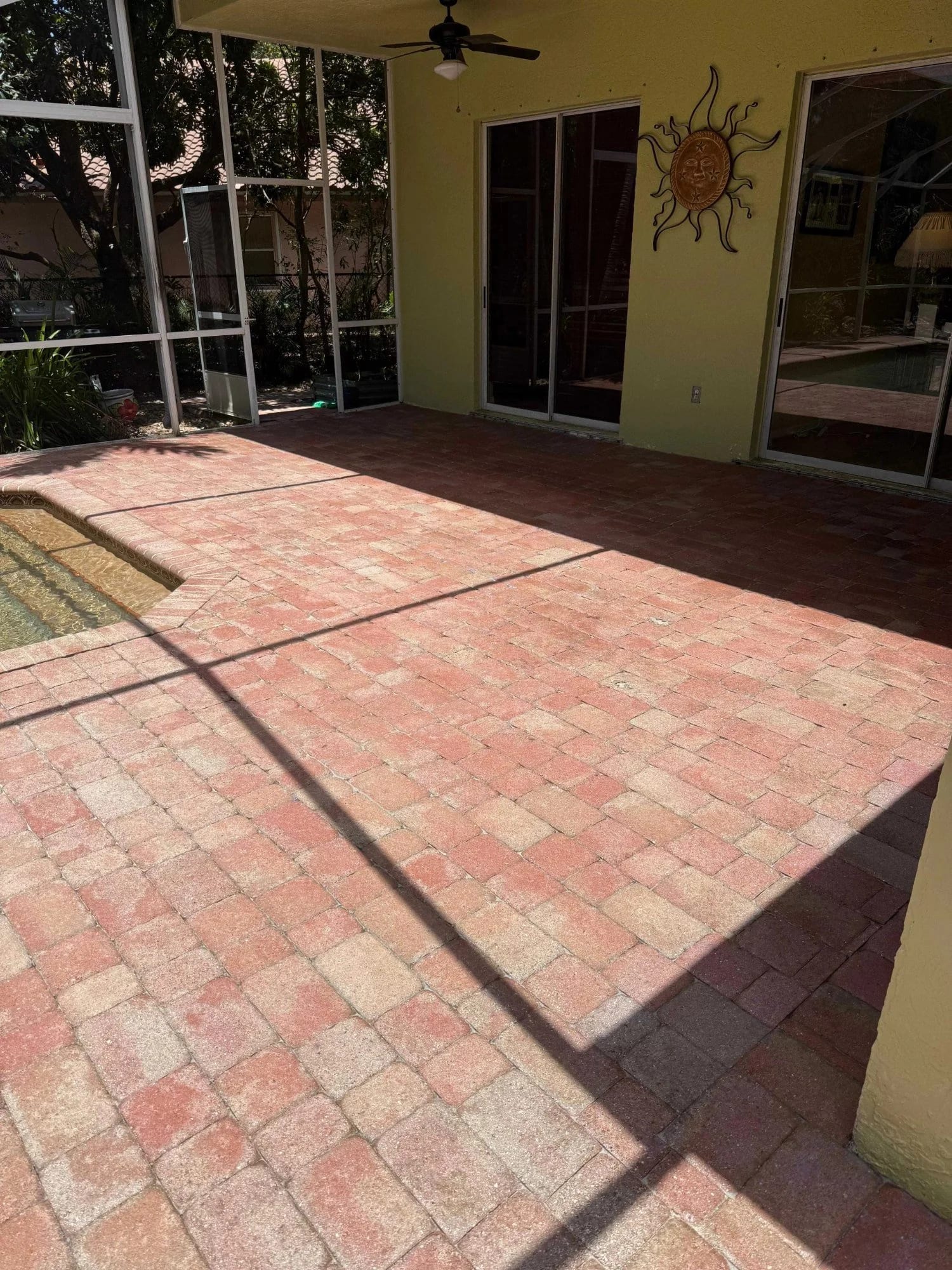
Actual Broward County restoration photograph; this project is not documented as paint-spill cleanup.
Set visible completion criteria
Before work starts, agree which remaining marks would be acceptable and which require another decision. Review the completed area when the contractor confirms it is ready for assessment, using the original photographs and your normal viewing positions. Check paint flecks, color variation, sheen, replacement boundaries and restored joints. Record unresolved items rather than accepting an undefined promise that they will blend later.
For your Fort Lauderdale property, request a paver cleaning and sealing consultation and share the paint information and photographs. Ask the team to assess the surface, discuss the sample findings and put the chosen cleaning or replacement scope in writing, including protection, cleanup and the appearance you have agreed to accept.