
Pavers Ideas
Paver Patio and Sprinklers: Plan the Irrigation Before Installation
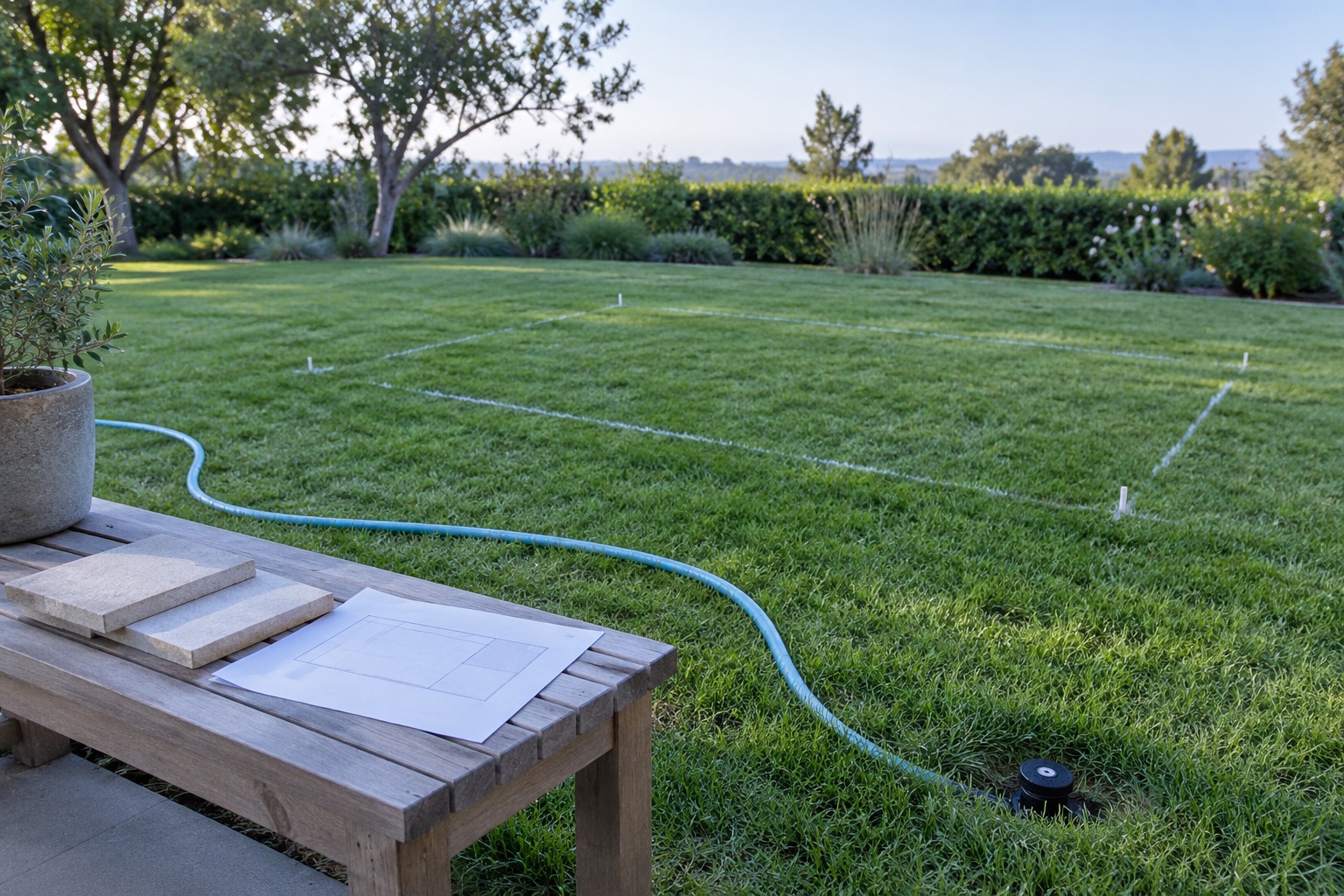
AI-generated planning illustration, not completed work or diagnostic proof.
Plan irrigation before installing a paver patio wherever the footprint replaces lawn or changes planting beds. Have an irrigation professional review existing sprinklers, valves and lines against the proposed layout, then decide whether adjustment, relocation or broader redesign is appropriate. Record how the system operates beforehand, agree who handles interruptions and repairs, and arrange a final watering review. The aim is to keep the remaining landscape served and equipment maintainable while coordinating the work with the patio installation.
For a Fort Lauderdale home, bring those questions into your paver patio installation planning. Settle the irrigation responsibilities while the border can still change on paper, before excavation makes a layout conflict harder to resolve.
Show what will remain green
Draw the proposed patio over a simple sketch of the existing lawn and beds. Identify grass being removed, plants staying in place and any bed edge that will move. Include planted areas beyond the immediate patio border when they share the affected watering zone, meaning the group operated together by the controller.
Use the patio size and furniture layout guide if the footprint is still undecided. Once you have a preferred outline, give the irrigation professional that version and flag any alternatives. A review based on yesterday’s smaller patio may miss today’s expanded corner.
Photograph visible heads, valve-box covers and the controller. Add known line routes from service records, labeling uncertain information as unconfirmed. Ask the responsible professional to establish what the proposed excavation will affect; surface photographs cannot establish buried routes.
Record the system before anything changes
Arrange for the irrigation professional to observe the existing system operating before site work starts. Keep dated photographs or short videos showing the affected areas, along with notes about existing leaks, inactive heads and places the owner has been hand-watering. If the system cannot run, record that limitation and agree how its condition will be assessed.
UF/IFAS’s Frequency of Residential Irrigation Maintenance Problems identifies tilted, clogged or leaking heads, vegetation obstructing spray, and overspray onto sidewalks or streets among maintenance problems. An irrigation audit can help identify issues. Use that background to request a condition review before deciding what the patio project must address.
Separate existing service needs from changes triggered by the new footprint in the proposal. A dated baseline gives everyone a shared starting point for later discussions; it does not settle responsibility for damage. Keep the original observations even when repairs happen before excavation.
Bring the controller model, existing zone labels and service notes explaining which areas they serve. Tell the professional if a gardener normally manages the settings or if you use an app. Decide who will receive the revised zone information, so a later maintenance visit does not restore an outdated setup.
Compare adjustment, relocation and redesign
Ask the irrigation professional to explain which level of work fits the revised landscape:
- Arc adjustment: A change to the area a head sprays may suit a limited boundary change, subject to checking coverage of the plants that remain.
- Relocation: A head or service component conflicts with the patio or needs a different position. Request its proposed location and the work needed to connect and test it.
- Broader redesign: The patio substantially reshapes the irrigated area or divides the remaining planting into awkward sections. Ask for an assessment of the affected system before accepting isolated changes.
UF/IFAS’s Turf Irrigation for the Home explains that sprinkler type, spacing and operating pressure affect coverage, with equipment choices governed by manufacturer guidance. For patio planning, that means moving or capping a head can affect coverage elsewhere. Have the professional assess the affected zone rather than treating each head as independent.
Request a patio consultation with Perfect Pavers once the preferred outline and irrigation questions are assembled. Share your sketch and baseline records, then ask to review the patio scope, work sequence and irrigation tasks requiring a separately identified professional before approving installation.
Assign the handoffs before excavation
The proposal should name who handles each irrigation task. A general note to protect sprinklers leaves important decisions unresolved, especially when the homeowner hires the irrigation company separately.
- Inspection and preparation: Who evaluates the system, confirms affected components and communicates findings to the patio installer?
- Interruption and plant care: Who authorizes shutdown, operates the controller and arranges any temporary watering needed while work proceeds?
- Changes and repairs: Who performs agreed irrigation work, and who documents an unexpected conflict, explains the options and obtains approval for additional work?
- Retesting and handover: Who returns to check operation, who reviews the findings and who addresses unresolved items?
Discuss responsibility for line damage explicitly. Identify what each agreement includes, excludes and requires if damage is discovered; do not assume patio installation includes irrigation repairs. Keep the relevant service contact available to both teams.
Ask how irrigation work fits around excavation and base construction, including any review needed before affected work is covered. If the layout changes onsite, update the irrigation instructions before the next stage proceeds. The owner should receive a clear decision to approve, with the effect on both scopes explained.
Keep service access in the finished plan
Walk through future maintenance on the drawing. Identify how a technician will reach valves, remove covers and work on heads beside the new border. Ask the relevant professionals to resolve conflicts with finished levels and edge construction. An access cover shown on a plan still needs a usable location after installation.
Include permanent features in this review. A seating wall, built-in cooking area or storage element can change access even when it sits outside the original patio outline. Coordinate those elements through outdoor living space planning and have their locations reviewed alongside the irrigation work.
Keep surface drainage as a separate design responsibility. Changing sprinkler coverage does not establish where rainwater will travel across the new patio. Share existing wet-area photographs and ask the patio designer to address surface levels and drainage independently of the irrigation adjustments. Record who evaluates each concern so it reaches the appropriate professional.
What a regional project can demonstrate
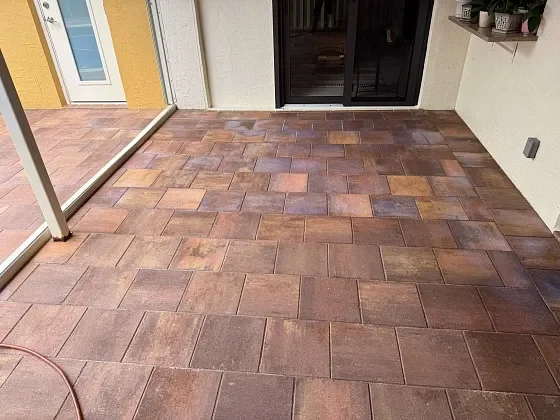
Our Pompano Beach driveway and pool deck project documents base preparation and reconstruction, drainage slope and secured edge restraints within the same project. It illustrates the scope beneath and around the visible pavers. It is a driveway and pool deck reference, not a documented patio or irrigation project; no sprinkler work or watering outcome is established.
Review watering and keep the final record
Arrange the agreed retest when the affected irrigation work and surrounding installation are ready. Have the responsible professional operate and evaluate the system. Compare dated observations with the original record, noting visible leaks, spray reaching the new patio and areas of remaining planting that appear missed. Ask the professional to interpret those observations and identify any further evaluation needed.
Retain the final sketch showing relocated components, updated zone descriptions, controller changes made by the professional and the service contact. List unresolved items with a responsible person and a follow-up arrangement. A photograph of dry pavers alone cannot establish adequate watering of the landscape.
For your Fort Lauderdale patio, request a consultation through our patio planning and installation service. Bring the footprint sketch, photographs, available controller information and your irrigation professional’s findings. Ask to review the proposed patio work and identify any irrigation scope still needing confirmation, so you can approve the responsibilities and sequence before excavation begins.