
Pavers Ideas
Pool Deck Pavers and Coping: Check the Joint Before Replacement
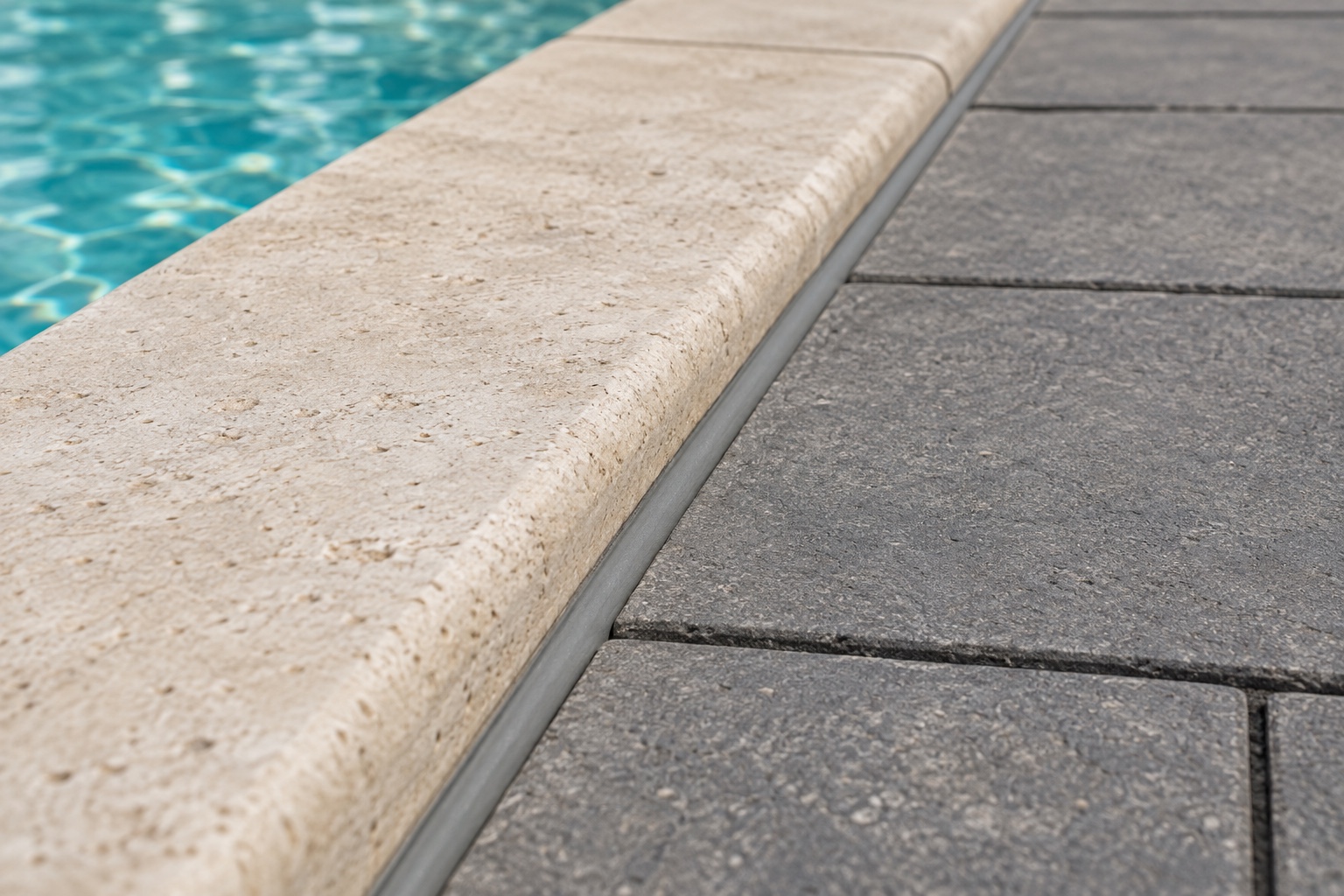
AI-generated illustration, not an actual project or diagnostic evidence.
Before replacing pool deck pavers, have the deck contractor and an appropriate pool or coping specialist assess where the deck meets the coping. Decide whether the coping stays, what the interface joint needs, and which trade owns that work before accepting a quote. A cracked or open line is an observation, not a diagnosis of the pool shell. Loose coping needs specialist assessment; new pavers and a fresh surface coating do not settle that question.
For South Florida homeowners planning pool deck pavers replacement, the useful starting point is a shared scope for the deck edge, coping and connection between them.
Understand which joint the proposal covers
Coping is the cap along the pool edge. The interface discussed here runs between that cap and the adjacent deck. CMHA’s Application Guide for Interlocking Concrete Pavements recommends sealant with backer rod at this connection to accommodate different movement between the pool and deck and limit water entry. That recommendation does not establish a universal detail for your property.
Keep three items separate in the estimate: the flexible movement joint beside the coping, the regular sand-filled joints between individual pavers, and any sealer applied to the deck surface. They serve different purposes. A proposal that says only “sand and seal” leaves the coping connection unresolved unless it describes that work separately.
Ask the responsible specialist to identify the existing assembly and select a detail compatible with the retained coping, new deck materials and intended poolside use. Product selection, preparation and joint design belong in the site-specific scope. A photograph of another pool cannot supply those specifications.
Record conditions before anyone prices replacement
Make a record of what is there before removal changes the evidence. Include the coping material if known, the deck surface, previous work you can document, and the boundary of the proposed replacement. Mark uncertain information as unknown rather than guessing from appearance.
Photograph the whole pool perimeter for orientation, then take closer views of the same locations. Capture open or cracked portions of the interface, visible separation from either edge, damaged coping and uneven adjacent units. Use existing features to identify each location so different contractors discuss the same spot. Do not pry into the joint or try to move coping to produce a demonstration.
Bring these questions to the visit:
- Which coping sections are proposed to remain, and who will assess their condition?
- Is the observed problem in the interface material, adjacent pavers, coping, or still undetermined?
- What can be assessed before removal, and what may require a later inspection?
- Who can authorize a change if removal reveals conditions outside the quoted scope?
Record anything you have already noticed moving during ordinary use, without testing it yourself. If coping is loose, ask a pool or coping specialist to assess it before treating the job as deck replacement alone. Photos help locate a concern; they do not establish its cause.
If you want to keep the coping, make that preference clear while leaving the retention decision subject to assessment. Ask what protection is included for the material you value. If replacement is proposed, request the reason and extent in writing, with optional appearance changes separated from work addressing an assessed condition. This makes it easier to compare a focused replacement with a broader redesign.
Put retained and replaced work in one responsibility table
Use this planning checklist to have the proposed trades confirm their roles and name the person coordinating the interface. “By others” needs an identified contractor and an agreed handover point.
| Retained or replaced item | Responsibility to agree before work |
|---|---|
| Existing coping retained | Pool or coping specialist assesses concerns; deck contractor records the retention boundary and protection scope. |
| Coping proposed for replacement | Identify the trade assessing and performing that work, its limits, and what must be ready before adjacent pavers proceed. |
| Deck pavers replaced | Deck contractor defines removal limits, adjoining work and the proposed connection to the coping. |
| Interface joint renewed | Name who selects the detail, prepares and installs it, and checks the completed connection. |
| Conditions discovered during removal | Name who documents them, arranges further assessment and obtains approval before additional work. |
Request a consultation with Perfect Pavers using this record and your proposed replacement boundary. Use the initial discussion to review the deck scope, identify any pool specialist involvement, and establish which items need assessment before a written proposal can be compared.
Compare scope before comparing the total
Two proposals can show the same pavers while describing different projects. One may retain coping and include interface renewal; another may exclude all work at the pool edge. Ask each contractor to mark inclusions, exclusions and unresolved items against the same table. Do not let an attractive material allowance stand in for an agreed connection detail.
Where a price depends on conditions that have not been assessed, ask the contractor to state that dependency. Agree how any additional work will be described and priced for your approval. An unresolved coping item should remain visible in the proposal, rather than looking settled because the deck total is complete.
CMHA’s Operation and Maintenance Guide for Interlocking Concrete Pavement treats widened paver joints, displaced units and distress at edges as conditions requiring assessment of their causes. Its discussion separates surface maintenance from repairs addressing movement and support. The homeowner takeaway is that a sealer application is not a structural repair or an explanation for a changing joint.
If paver cleaning and sealing services are included for retained areas, keep that surface treatment distinct from work at the coping interface. Ask how the selected products and adjoining materials will be checked for compatibility, and have any unresolved condition listed separately from the appearance work.
For a deck that also meets a channel drain, our guide to pool deck drain access before replacing pavers addresses that separate connection. Keep the drain and coping responsibilities identifiable in the proposal so neither disappears into a general deck installation line.
What the documented Pompano Beach project shows
Our Pompano Beach pool deck and driveway installation records new pavers in both areas, a rebuilt base, slope for drainage and secured edge restraints. Those are documented parts of that installation, useful when discussing what a deck proposal includes beyond the visible finish.
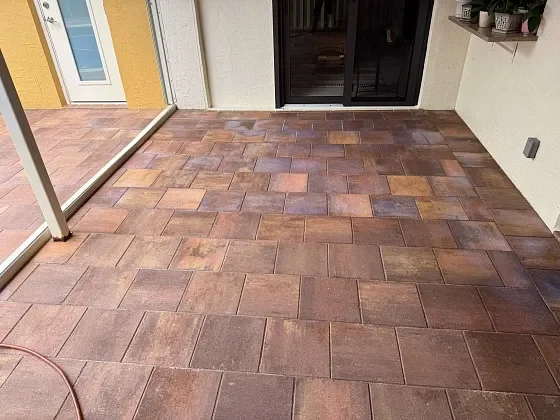
The public description does not document coping replacement, joint dimensions or a particular sealant. This image cannot establish those details. For your project, request a scope specific to the existing pool edge rather than assuming every installation includes the same work.
Agree on inspection and handover before removal
Write the inspection sequence into the scope while the trades are still planning together. Identify who reviews the retained coping before adjacent removal, who evaluates newly exposed concerns, and when the interface is ready for the responsible installer. Include an approval step for any changed work before it proceeds.
At handover, walk the agreed boundary with the contractor and compare the completed work with the marked scope and starting photographs. Ask the responsible trade to explain what was retained, what was renewed and any remaining concern. Obtain the selected product information, care instructions and contact for follow-up. A neat line alone is not evidence of hidden conditions or a waterproofing guarantee.
Keep that record with the pool’s maintenance information. If a concern later appears, the next person inspecting it can distinguish the original observations from the work completed during deck replacement.
Request a pool deck pavers consultation with Perfect Pavers to review your photos, coping plans and proposed trade responsibilities. The next step is a discussion of the replacement scope and any specialist assessment needed before you approve the work.
If you are keeping a neighboring patio, our pool deck and existing patio transition guide explains how to define the retained edge, compare finishes and record the join in the estimate.