
Pavers Ideas
Protecting Plants and Nearby Surfaces Before Paver Cleaning

AI illustration: patio planting and pot staging, not a real project.
Before professional concrete-paver cleaning, map vulnerable plants, neighboring finishes and runoff paths with the contractor. Identify protections for the actual products, materials and weather, then agree who moves belongings, coordinates irrigation, maintains household access and restores the area. Provide photos, previous product records and irrigation control information. Include possible resealing in that discussion. A useful protection plan names the boundaries and responsibilities before work starts; it does not rely on a universal promise that a cleaner is safe for every plant or surface.
When arranging paver cleaning and sealing services for a Broward home, including Parkland, make this walkaround part of the preparation discussion. Start at the edges, where landscaping and finished surfaces meet the work.
Walk the planted borders before moving anything
Photograph each bed from far enough away to show its relationship to the pavers. Add close views of foliage touching the surface, low branches, exposed irrigation components and plants you particularly want discussed. Note existing browned leaves, damaged stems or disturbed mulch without trying to diagnose the cause.
Separate fixed planting from movable containers. A rooted shrub needs a different planning conversation from a pot that can be relocated. Let the contractor explain the proposed protection and its limits for each border. Avoid prescribing the same covering for every plant; the actual conditions should guide that choice.
For containers and outdoor furnishings, settle three decisions:
- Who moves them: name the person responsible for heavy pots, fragile ceramics, furniture and any specialist help.
- Where they go: identify a holding area outside the agreed work and runoff areas, with a clear route to reach it.
- Who returns them: assign the return task and have the contractor confirm when the surface is ready.
Where driveway pavers installation is also planned, coordinate the holding area with that separate work. Pots moved out of the cleaning area should not occupy the next crew’s agreed staging space.
Inventory the surfaces beside the pavers
Walk the perimeter looking outward as well as down. Mark material transitions on a photo so the crew can distinguish the concrete pavers from nearby finishes. Record uncertainty instead of guessing a stone type or coating.
- Natural stone: identify borders, steps, caps and decorative inserts, including pieces within the cleaning footprint.
- Painted surfaces: note walls, posts, doors and trim, with close photos of existing peeling or discoloration.
- Glass: point out low windows, doors and adjacent frames; show where the work approaches them.
- Metal: identify railings, gates, furniture and decorative hardware, noting known finishes and existing marks.
Provide any available finish or product records. Ask the contractor to explain which surfaces will be cleaned, which will only be protected, and which require clarification before work approaches them. A successful test on concrete pavers does not answer every question about an adjoining finish.
Pay special attention to objects that cross boundaries, such as a bench with feet on the pavers and its back against a painted wall. Agree whether it moves or remains, and identify who handles it.
Tie protection to the proposed products
CMHA’s Cleaning, Sealing and Joint Sand Stabilization of Interlocking Concrete Pavement calls for protecting adjacent vegetation from overspray, warns that acidic cleaners may harm vegetation, and advises anticipating drainage and low spots. It also addresses sprinkler coordination and testing the selected cleaner. Those points support a site-specific discussion, not a blanket plant-safety claim.
For one product example, the Gator Efflorescence Cleaner application instructions call for a small hidden-area test, restrict use on new concrete pavers and under extremely strong sun, and warn that excessive concentration can discolor pavers. This illustrates why actual directions matter. It is not a product recommendation or evidence of what Perfect Pavers uses, and it does not establish plant safety or suitability for adjacent materials.
Have the contractor name the proposed products and explain how their directions affect protection at your property. If resealing remains an option, distinguish the cleaning plan from any additional protection needed for that stage. Agree who reviews a proposed test location and result before broader work proceeds.
Ask who decides whether changing weather makes the proposed protection unsuitable, and how that decision will be communicated.
Bring your annotated photos and product records to a discussion through our project consultation process. Request a site assessment focused on planted edges, neighboring finishes and access conflicts so the proposed protection can be reviewed against the actual property.
Trace runoff and assign irrigation responsibility
Show the contractor where you have observed water collecting or leaving the pavers. Include bed edges, low corners, drain openings and thresholds in the same overview. Describe observations plainly: where water stood, what area it crossed and whether the photograph followed rain or irrigation.
Ask the contractor to explain the proposed runoff boundaries and handling arrangements before cleaning starts. A nearby drain is something to identify, not an instruction to send cleaning water into it. If a route or destination is unclear, leave that question open for the contractor to resolve before approving the affected work.
Provide irrigation zone information, the usual schedule and the name of whoever normally operates the controls. Agree who will coordinate any necessary interruption, communicate it to the household or landscape service, and confirm restoration. Include plant care during that interruption in the discussion. Keep the operating responsibility with the agreed person instead of assuming someone else has changed or restored the settings.
What the Broward case establishes
Our Broward cleaning and sealing project documents removal of previous epoxy sealant, joint resanding and resealing. That work involved more than an ordinary rinse, which is a reason to disclose previous product history during preparation.
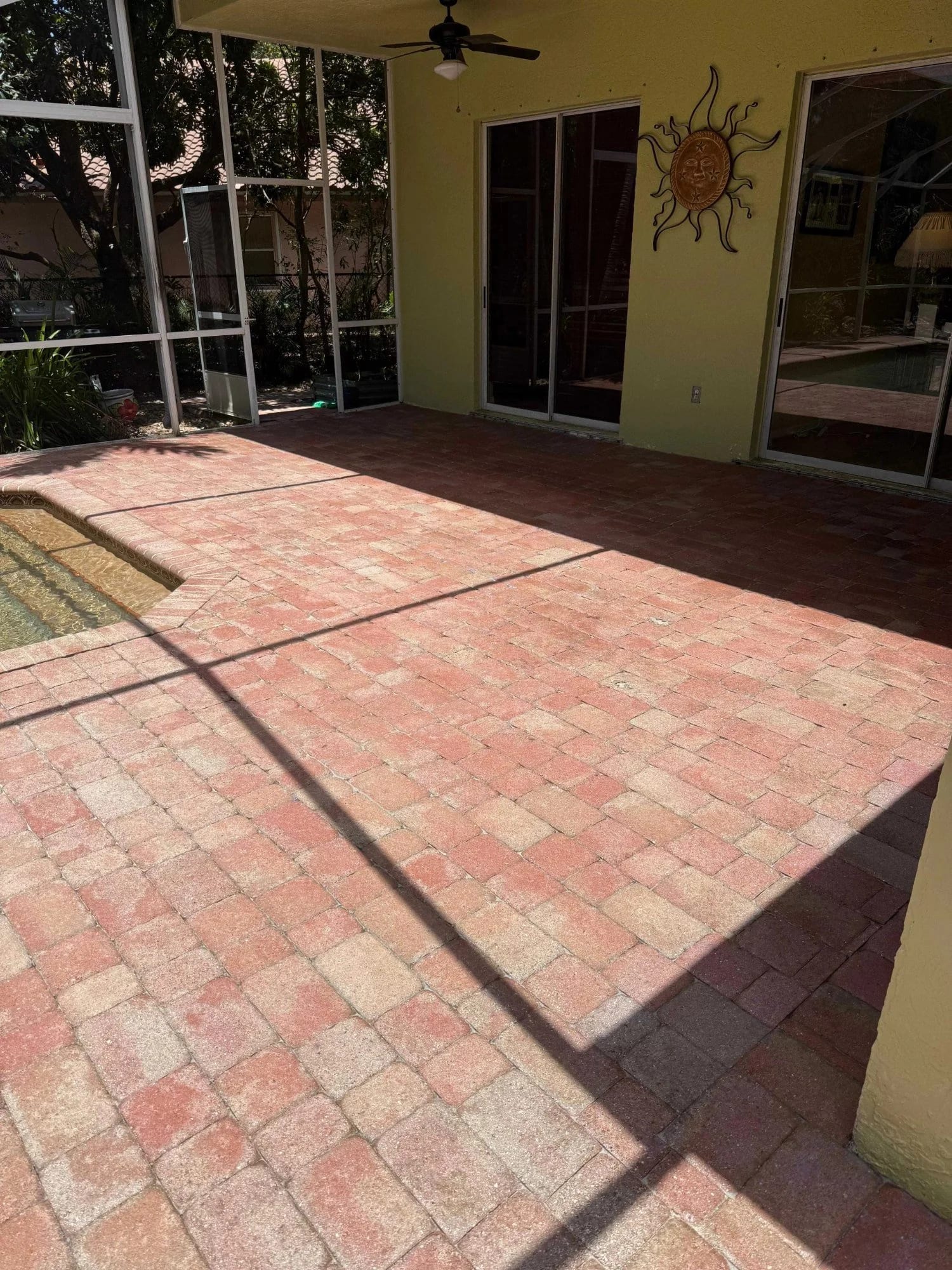
Real Broward project photo: the documented work included previous epoxy sealant removal, joint resanding and resealing.
The project record does not document a landscape-protection method or establish that plants were undamaged. Use it to understand why the proposed work matters to preparation, not as evidence that a particular protection method will suit your property.
Keep household access workable
Point out the entrance the household needs, pet access and any mobility requirements. Walk the proposed alternative route before approving the arrangement. A passage that looks open in a photograph may still conflict with stored furniture or the swing of a gate.
Name the household contact and the crew contact responsible for communicating access changes. Agree who keeps the route clear and who confirms reopening after each relevant stage. Do not assume that completion of cleaning also means a surface is ready for use after resealing. Get instructions for the actual work and products before returning people, pets or belongings.
Close the loop with a restoration checklist
Use the same perimeter photos for the completion walkaround. Keep the checklist specific:
- Plants and beds: compare visible condition and note any concerns for follow-up.
- Adjacent finishes: review the identified stone, paint, glass and metal against the starting photos.
- Protection and cleanup: assign removal of temporary protection and inspection of the agreed runoff and storage areas to a named person.
- Belongings and access: confirm assigned returns, clear walking routes and gate operation.
- Irrigation: have the named operator confirm the agreed settings are restored.
- Remaining items: record unresolved observations, the responsible contact and the next agreed action.
Keep the product record and any care instructions with those notes. An immediate walkthrough cannot prove that every possible effect has been prevented; agree how to report a later concern. For organizing the broader proposal, use our paver cleaning and sealing estimate scope guide.
Request a paver cleaning and sealing consultation for your Parkland or other Broward home with these photos, records and responsibility notes. Ask for a specific protection scope covering planted borders, adjacent finishes, runoff, irrigation, access and restoration before authorizing cleaning or possible resealing.