
Pavers Ideas
Reuse or Replace Driveway Pavers? Plan What Can Be Saved
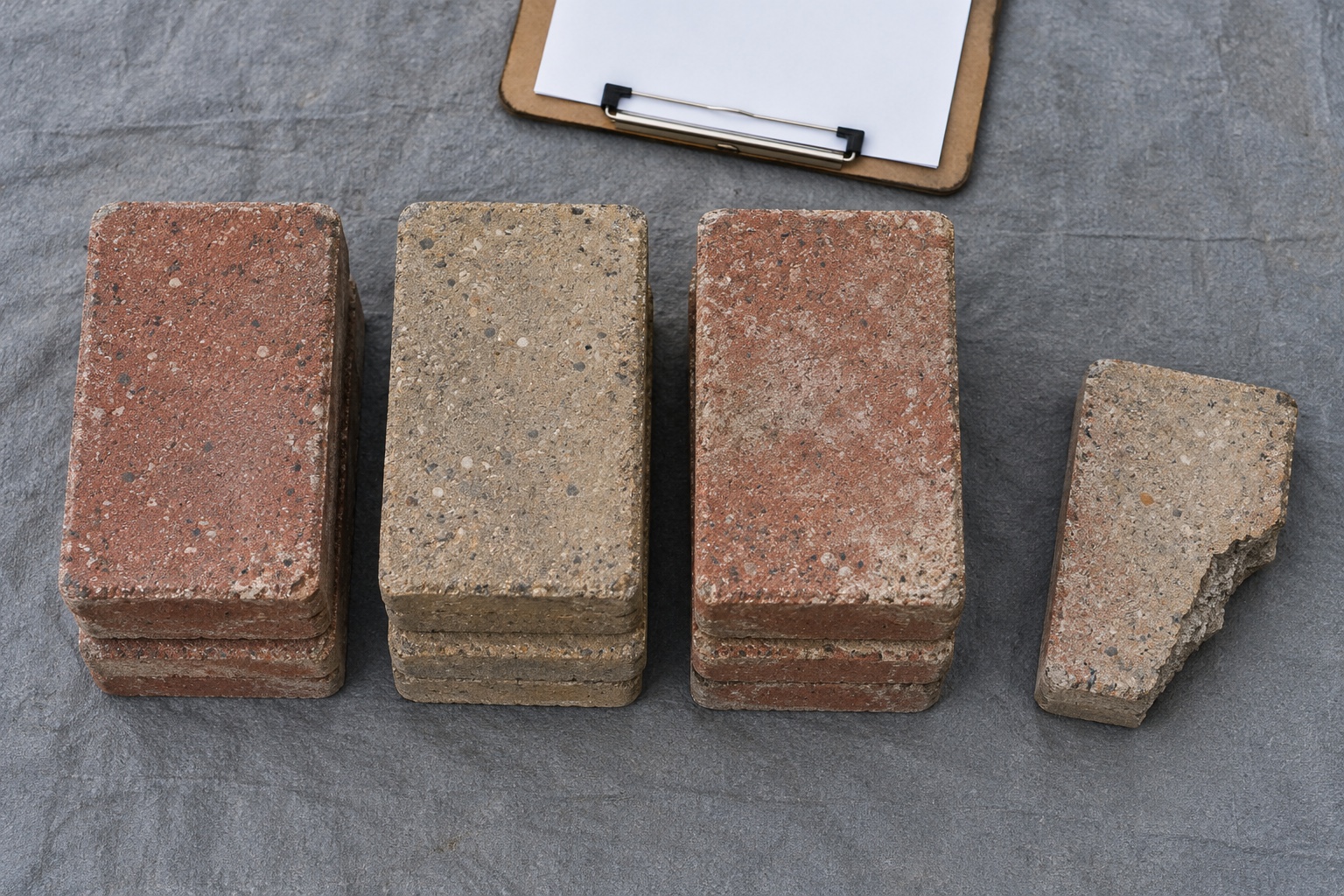
AI-generated illustration of a sorting concept, not completed work, diagnostic proof or a recovery guarantee.
Reuse existing concrete driveway pavers when a professional assessment supports their suitability, enough usable material remains for the intended layout, and you accept its appearance. Choose new units when those conditions cannot be met or recovery work makes the proposal unattractive. Keeping the surface material does not establish that the base can stay. Before approving removal, agree what will be assessed, what may be retained and what happens if too few usable units are recovered.
For a Broward homeowner comparing driveway pavers installation options, that decision belongs in the estimate discussion. A proposal should explain both the material choice and the work beneath it.
Give the surface and the base separate decisions
The CMHA Operation and Maintenance Guide for Interlocking Concrete Pavement describes retaining undamaged concrete units for reinstatement. Old stabilized joint material can make removal labor-intensive, and new units can sometimes be more economical. The guide also links repair decisions to the cause of distress and the supporting system’s condition.
Ask the contractor to distinguish what can be judged before removal from what requires exposure. Which observations support keeping the base? What would trigger a wider investigation or rebuilding? Have those answers recorded separately from the proposed recovered-material inventory.
If only part of the driveway needs attention, a professional paver repair assessment can help define whether a limited intervention is appropriate. Compare it with replacement against the same objective: the driveway you intend to use, with its underlying problems addressed. An attractive pile of recovered units does not answer that question.
Build an inventory with clear condition categories
A preliminary inventory is a planning document, not a promise that everything visible will survive removal. Ask for photographs and a breakdown by size, shape, color group and proposed use. Keep these categories distinct:
- Intact candidates: Identify full units the contractor considers worth evaluating for reuse. Their place in the final plan remains subject to recovery and suitability checks.
- Damaged or chipped pieces: Record existing damage separately. Do not count rejected units or miscellaneous offcuts as interchangeable with sound full pieces.
- Units with old joint residue: Ask what preparation they would need and whether that effort is included in the recovery scope.
- Stained or color-worn units: Identify material whose appearance needs your decision, even if the contractor considers it otherwise suitable.
- Unconfirmed replacement stock: Keep possible purchases outside the recovered count until the supplier confirms what is actually available and compatible.
Have the estimate identify anticipated demolition and handling losses as an uncertainty. Ask when the provisional inventory becomes a verified usable count, who records it and who receives that record. Do not base a new layout on the assumption that every existing unit will return.
Decide what appearance you will accept
Weathering, wear and stains can make installed units look different from stored spares, as the maintenance guide explains.
The CMHA Cleaning, Sealing and Joint Sand Stabilization of Interlocking Concrete Pavement recommends evaluating cleaning on a small test area. The material, type of soiling and cleaning method matter. Treat the result as evidence for your decision, not a promise that every mark will disappear or the original color will become uniform.
Ask the contractor to show the proposed retained material beside any available replacements. Review the actual combination in person, including the dry appearance after any agreed cleaning trial. Decide which variations you accept and which would make you prefer new units. A photograph of a different installation cannot make that choice for you.
Name what you value about the existing material. If you like its aged appearance, record that preference in the brief. If your priority is a new pattern, more consistent color or an expanded footprint, ask how the recovered inventory would serve that goal. Do not let limited stock quietly dictate a layout you do not want. The comparison should show whether reuse supports your design priorities once the contractor has assessed its practical suitability.
Give retained pieces a destination before removal
Mark the proposed destinations on a layout: the main driveway, a defined border, another agreed area or a reserve kept for later consideration. Avoid an instruction as vague as saving whatever looks useful. It leaves the crew without a clear target and you without an agreed result.
A separate walkway may be worth discussing for suitable retained pieces, but successful use in a walkway does not establish suitability for a new vehicle area. Ask the installer to confirm the intended application before treating either location as an outlet for leftover stock.
If available pieces cannot complete the preferred arrangement, compare a deliberate change of layout with buying new material. Resolve visible transitions on the drawing before work begins. Do not leave the location of mixed old and new units to an improvised decision during installation.
Contact Perfect Pavers for a consultation with driveway photos, any material records and your preferred layout. Ask to review the reuse candidates, appearance expectations and unanswered site questions, then define what further assessment is needed before an installation scope is agreed.
Compare the full recovery scope with new supply
Request alternatives that use the same footprint, intended vehicle use and base assumptions. Otherwise, a proposal with more new material and one with less underlying work are not comparable. Ask the estimate to separate:
- Careful lifting, sorting and storage: Include responsibility for handling, the agreed storage location, protection and any later relocation.
- Cleaning and preparation: Identify what is included for retained units and what remains subject to a trial or further approval.
- Base assessment and rebuilding: Distinguish investigation from confirmed work, including how newly exposed conditions will be documented.
- New replacement units: Identify confirmed supply, delivery and installation, with unresolved compatibility or availability stated clearly.
- Disposal: Specify which rejected units and removed materials leave the property, who handles them and when.
- A shortfall contingency: State the response if recovered material is insufficient, including the approval process for changed supply, layout or scope.
Ask where reinstatement, joint work and edge work appear in each alternative so those tasks are not lost between headings. Reuse is a material decision with its own handling requirements; compare the complete proposals before deciding whether it offers value for your home.
What the Pompano Beach example establishes
Our Pompano Beach driveway and pool deck installation documents new pavers, a prepared and rebuilt base, slope for drainage and secured edge restraints. It is a new-installation example showing that base work is a distinct part of the project. The published record does not establish that its pavers were reused or that reuse saved money.
Use that distinction when reading your own estimate. A material line alone does not describe the complete driveway work. Ask how the contractor’s findings connect to each proposed task, whether the final surface uses recovered units, new units or an agreed combination.
Set the stopping point and fallback in writing
Agree when the contractor will report the recovered inventory and any exposed conditions before proceeding with dependent work. Identify who can approve a change and what information they need. This is especially useful if someone else manages the property while you are away.
Settle custody of retained material, temporary storage and household access before removal. Coordinate other planned work using our guide to underground lines before a paver driveway, so recovery and storage arrangements fit the broader sequence.
For your Broward project, arrange a driveway installation consultation with Perfect Pavers and bring the alternatives you want compared. Ask to establish the assessment steps, retained-material destinations and written shortfall plan before approving removal. The decision should leave you knowing what is being saved, what remains uncertain and how the finished driveway scope will be agreed.