
Pavers Ideas
Underground Lines Before a New Paver Driveway: Plan the Work First
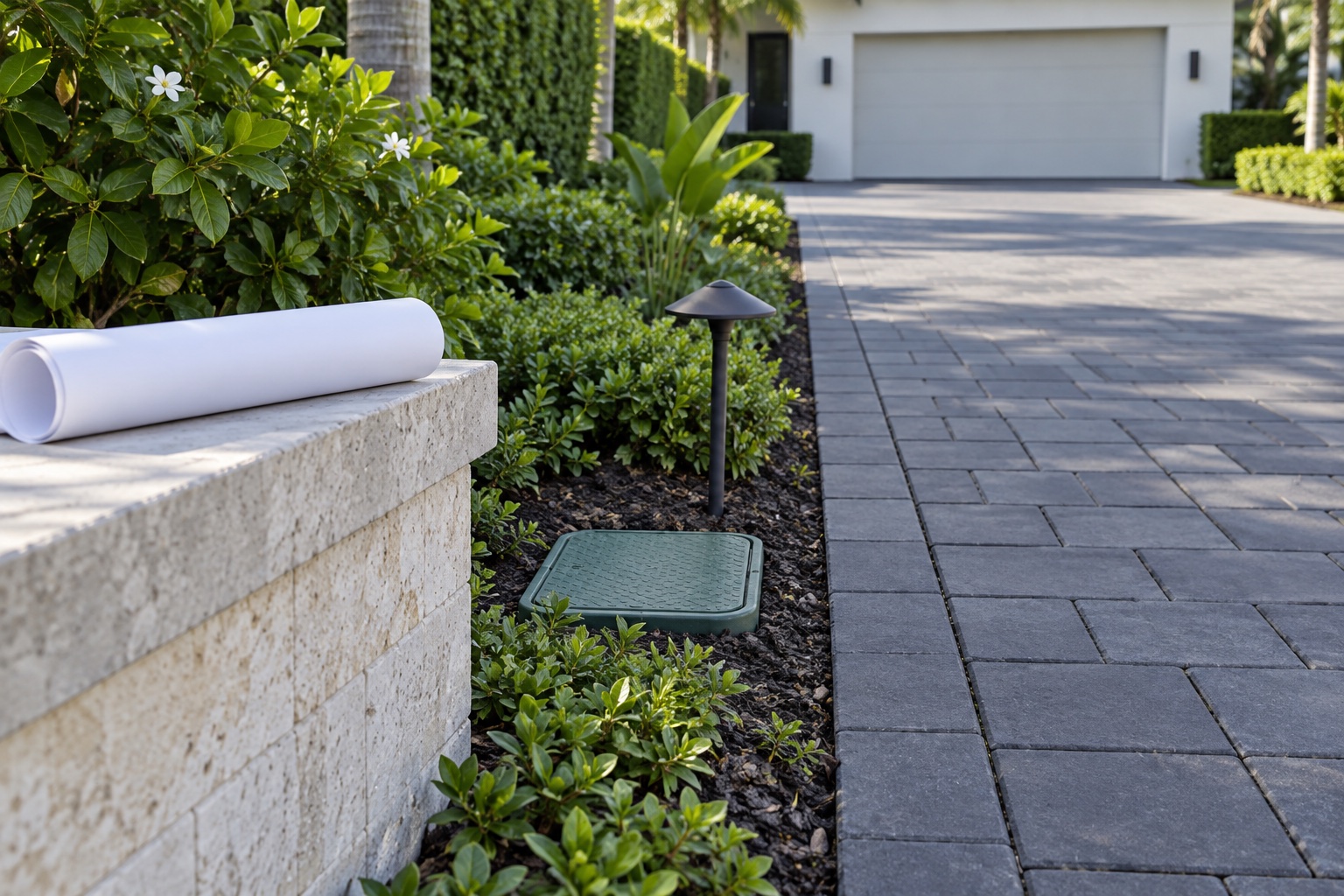
AI-generated illustration: An intact driveway before work, not a company project.
Before replacing a paver driveway, identify the services that may cross the work area and agree who will investigate, protect or relocate them. Utility locates and privately owned irrigation, gate power, lighting or pool lines need separate coordination. Give the contractor your existing records, identify the relevant service professionals and settle the sequence before base and finish installation. Your job is to provide information and approve a clear scope; leave locating, exposure and electrical work to the responsible professionals.
Make this part of your driveway pavers installation plan for a Broward or Palm Beach County home. A finished surface should come with a clear understanding of what remains accessible beneath and beside it.
Build a property record without disturbing anything
Collect old plans, installation invoices, service notes and photographs from earlier landscape or driveway work. Include the date and who supplied each item. A drawing from a previous owner can suggest where to investigate, but it does not prove that a line follows that route today.
List the systems you currently use: irrigation, powered gates, landscape lighting, pool equipment and drainage equipment. Record the company or person who maintains each one. Include unexplained covers or equipment in a separate list of questions instead of deciding that an unfamiliar installation is abandoned.
Take photographs only from safe, accessible locations. Show visible covers, lights, controllers and their relationship to the driveway. Do not expose, test or disconnect lines, open equipment or plant stakes to investigate a suspected route. A homeowner’s photograph documents what was visible; it is not evidence that the space between two visible points is clear underground.
Separate the utility locate from private-line coordination
Sunshine 811’s Homeowner FAQs distinguishes facilities owned and marked by member utilities from private facilities, which remain the homeowner’s responsibility. It assigns contacting 811 to the contractor doing the excavation and describes marks as approximate locations. Have that contractor follow the current guidance for the proposed work.
For privately owned systems, establish the actual owner and the appropriate service professional. Do not assume that utility-member markings include every irrigation pipe, pool connection or landscape-lighting cable. Ask who will arrange any separate locating and who will interpret the results for the installation team.
Keep uncertainties visible in the project notes. Write that a route is unconfirmed when that is all you know. A line on an old sketch and a professional’s current finding should not carry the same weight in a construction decision.
Assign responsibilities before approving the work
The most useful coordination document can be a short list with a named person beside each task. Avoid an agreement that says everyone will coordinate but leaves nobody responsible for the next call.
- Locating: Who contacts 811, who arranges private locating if needed, and who passes the results to the excavation contractor?
- Trade work: Which irrigation installer, gate technician, electrician or other relevant professional evaluates protection or relocation and defines their work?
- Access: Who arranges locked-gate access, appointments and any service interruption that the responsible trade identifies?
- Decisions: Who explains an unexpected conflict, proposes a revised scope and obtains your approval before affected work proceeds?
Clarify who hires and pays each outside professional. If a proposal excludes private locating or trade work, get the missing scope defined separately. Two driveway proposals are difficult to compare when one includes coordination and another assumes the owner will arrange it. Ask how unresolved items will be priced or approved, without treating an allowance as a confirmed solution.
Request a consultation to review the scope through our paver installation process, bringing your equipment list and available records. Ask the team to identify the driveway work, coordination questions and separately arranged services so you can review responsibilities before approving the project.
Review the whole footprint, including its connections
Discuss the proposed driveway outline together with adjoining paths and planting beds. If the project also changes the entrance path, review the walkway and driveway installation options together. A boundary between two surfaces should not become a boundary between two incomplete scopes.
Show where the gate operates, where people reach controllers and where maintenance crews access equipment. Ask the contractor to include relevant work-access and material-staging areas in the coordination discussion. A cover outside the finished driveway can still matter to the way the work is organized.
If you are adding width, settle the proposed outline before asking professionals to assess its conflicts. Our Parkland driveway widening guide addresses the separate choice of retaining existing pavers or replacing them at the join. Keep that surface-design decision connected to the review of what the enlarged footprint may affect.
Set the sequence before base and finish installation
Ask for a simple sequence showing when locating information is reviewed, when relevant trades complete agreed work and who confirms that the affected area is ready for the next stage. Record dependencies as well as appointments. A scheduled delivery does not answer an unresolved question about a private line.
The CMHA Guide Specification for the Construction of Interlocking Concrete Pavement includes checking the locations, types and elevations of utility structures and drainage inlets before installation. It is a technical guide specification, not Florida law. For the homeowner’s review, ask the contractor to explain how existing access points and drainage features fit the proposed finished levels.
Keep required covers accessible and operable in the agreed layout. Have the responsible professional resolve conflicts between a cover, an edge and the intended surface. Do not approve moving an inlet or changing drainage by guess simply because a different position makes the paver pattern easier.
If you might add a powered gate or lighting later, raise that possibility now. Whether a future sleeve belongs in the project is a question for the relevant installer or electrician and the approved design. Confirm its purpose, responsibility and documentation if included; a speculative sleeve is not automatically a necessary upgrade.
What a real installation reference can show
Our Pompano Beach driveway and pool deck installation records full installation in both areas, including base preparation and reconstruction, drainage slope and secured edge restraints. Those documented elements show why a driveway scope reaches beyond the visible pavers. The project description does not establish utility locating, line relocation or sleeve installation, so it cannot serve as evidence of those services.
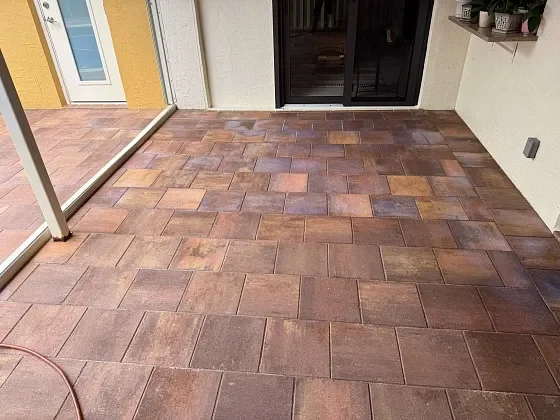
Real Pompano Beach installation reference only. This project photo does not document underground-line work.
Leave with records that help the next owner or installer
Before work starts, agree what the contractor and relevant trades will record and hand over. Request an updated record of any actual agreed route, relocated component and accessible service location associated with their work. Any photographs of concealed work should come from the responsible professionals, without the homeowner entering the work area.
Ask for a dated as-built sketch or other agreed evidence, identifying who prepared it and which work it covers. Keep unresolved or unverified routes labeled. Such records help future planning; they do not replace the locating process for later excavation.
At handover, review access points with the contractor and obtain any agreed system checks from the responsible trades. Save the approved changes, records and service contacts together with your driveway documents.
Arrange a site visit through our driveway pavers installation service. Bring the records and questions you have gathered, and ask to review the proposed footprint, trade responsibilities and handover scope. Confirm which locating or coordination services are included in the written agreement so the finished driveway and its future maintenance are planned together.